

‘A balance to it all’: Penn West prof uses plants, herbs in alternative medicine class
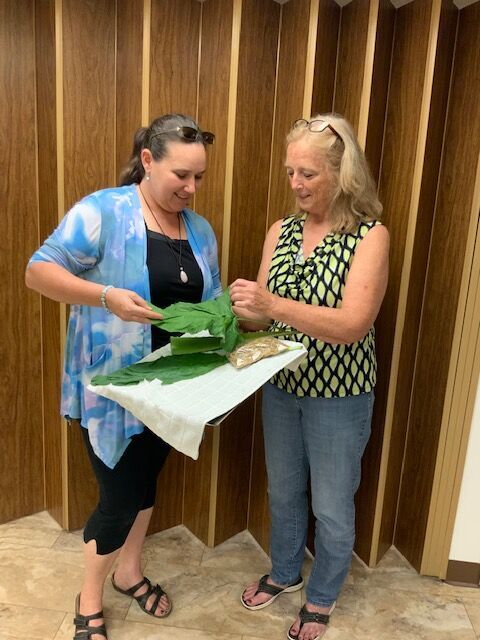
Dr. Jamie Weary, associate professor at Penn West California, shows a comfrey leaf during a recent presentation at Town & Country Garden Club. Weary, a licensed physical therapist and athletic trainer, presented a program, “Your Backyard Pharmacy, Using Common Plants for Health and Healing.”
Karen Mansfield
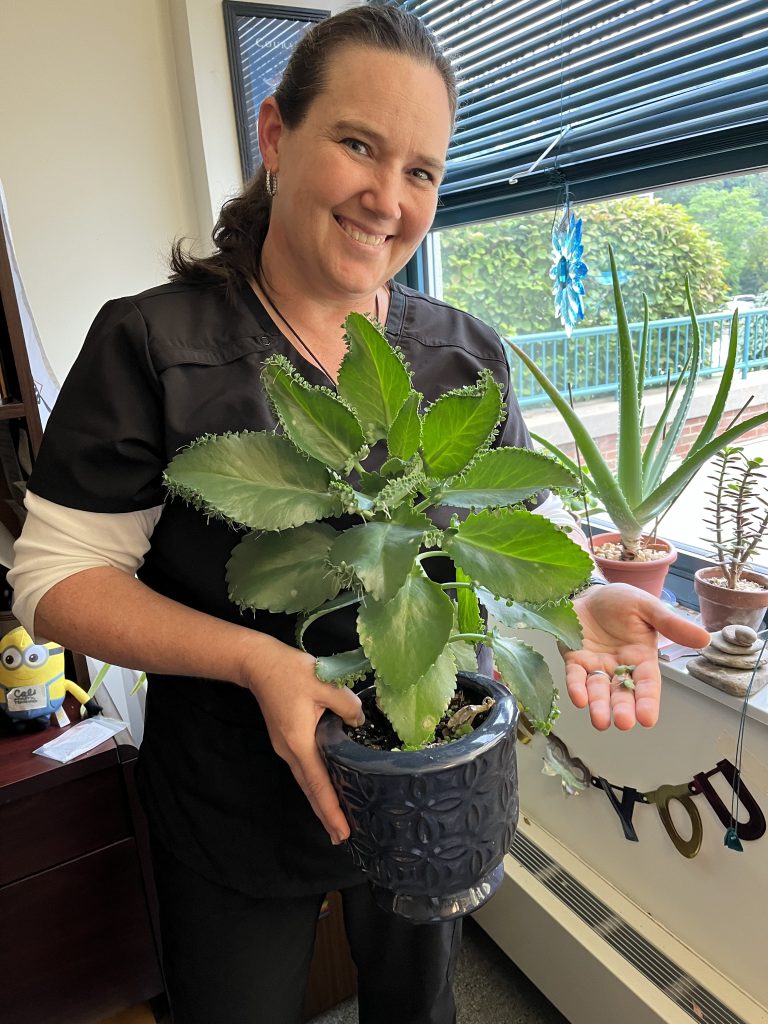
Dr. Jamie Weary, associate professor in the Department of Health and Science at Penn West California, displays mother of thousands, a plant that she uses in her holistics and alternative medicine class. Weary is holding some tiny plantlets, which grow along the outer edges of the leaves.
Karen Mansfield
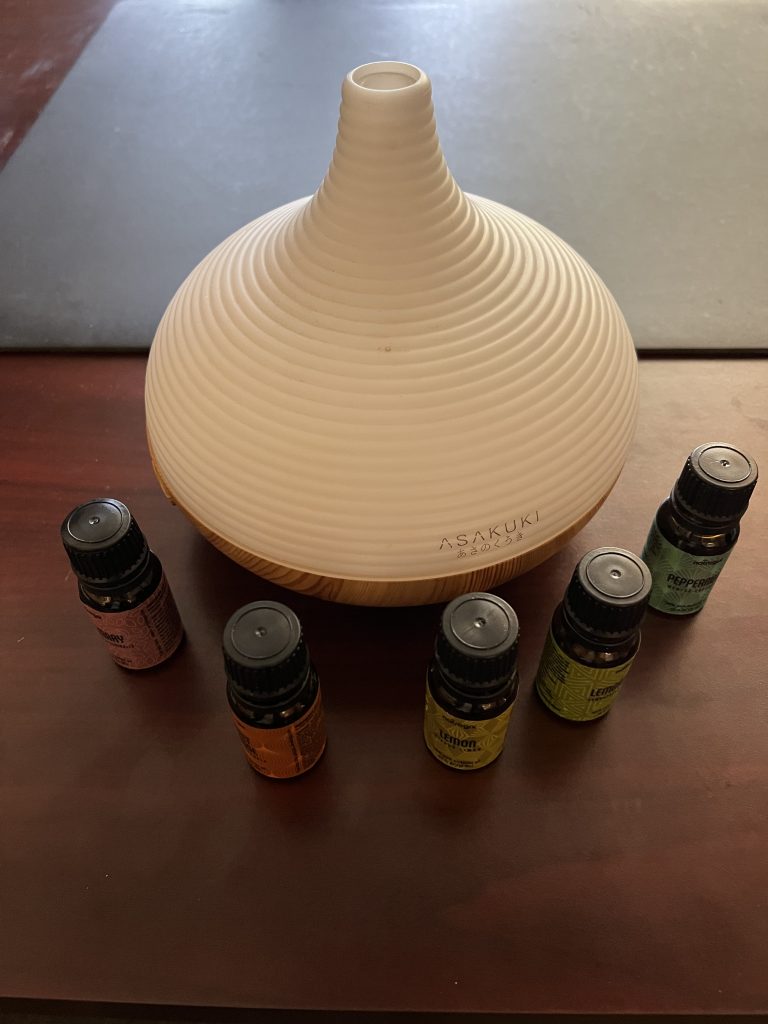
Dr. Jamie Weary’s office at Penn West California is often filled with the scents of essential oils she uses in her diffuser.
Karen Mansfield
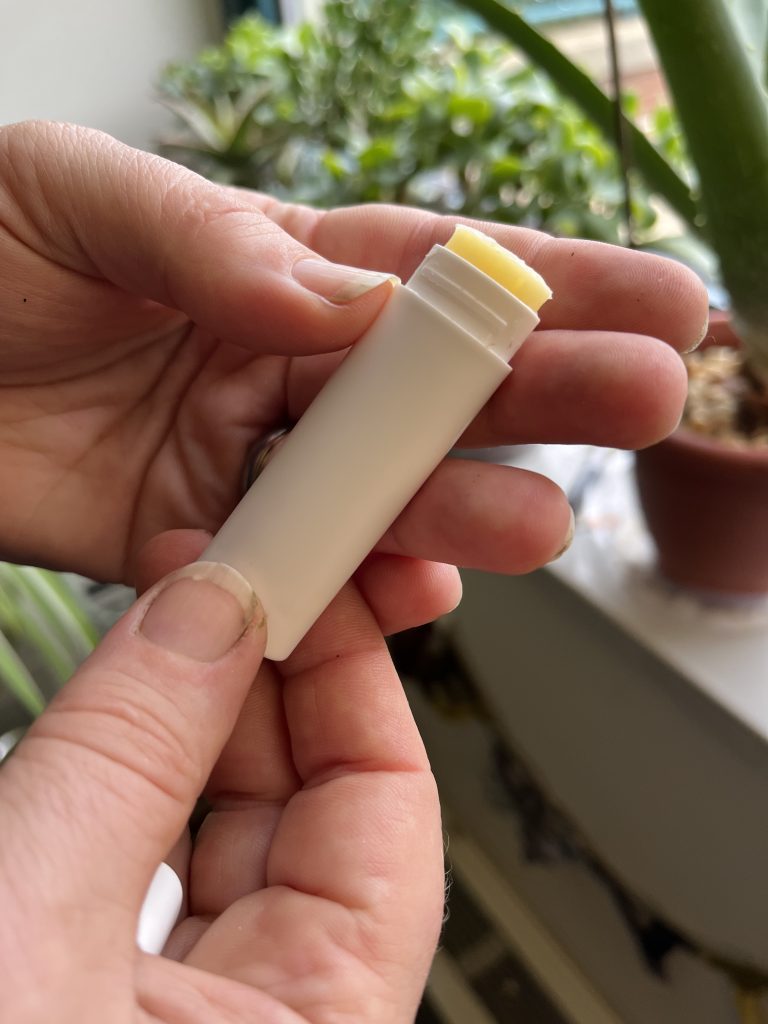
Dr. Jamie Weary displays lip balm that she and her students make in Weary’s holistics and alternative wellness class at Penn West California.
Dr. Jamie Weary’s office at Penn West California is a tranquil place, with the scent of lemongrass wafting from a diffuser, plants and succulents lined along a windowsill, and essential oils on display.
The aloe plants and essential oils aren’t merely decorative, though.
Weary, associate professor in the Department of Health and Sciences, licensed physical therapist with a doctorate in physical therapy and an athletic trainer, uses common plants, herbs, and natural elements in the holistic and alternative medicine class she teaches at the university.
Weary’s class explores alternative methods for treatment and prevention of ailments, injuries and disease – how plants like aloe, comfrey, burdock, jewelweed and plantain leaves can be used to heal ailments such as minor burns, bug bites, poison ivy, blisters, wounds, and headaches.
Weary, who was trained in traditional Western medicine, learned about the “backyard pharmacy” from the Amish in Mercer County, where she grew up.
Throughout the COVID-19 pandemic, Weary provided medical care for Amish families, many of whom are wary of traditional medicine and technology, and whose trust she had earned over the years.
“When COVID hit, they couldn’t get into a doctor’s office, and they don’t have phones, so they couldn’t do telemedicine. They don’t do vaccines and boosters, so they couldn’t go anywhere, so I was taking care of the Amish in their homes,” said Weary. “Normally, they wouldn’t ask the ‘English’ to walk into their houses to take care of their children or family, but they knew me as ‘just Jamie’ growing up, so they invited me in.”
Over the past few years, Weary was “on call” for Amish families, who contacted her to check out fractured wrists and legs, burns, wounds, and other maladies.
Weary accommodates the beliefs of Amish patients, viewing them as the ultimate decision-maker, while offering her best medical advice.
“I can give them as much information as possible, and they have to make the decision. I talk to them, and I’ll explain if I saw signs of infection or signs that this was getting bad, and I’ll do my best to educate them on what it was I was seeing, and what I would think would be the best thing, and they have to make that call,” said Weary.
In one case, a man who fell 20 feet from a hunting stand contacted Weary and told her he believed he dislocated his shoulder. Weary believed it was broken, so the man went to the hospital for X-rays to confirm the break. But, he declined any further treatment, “so we had to come up with a plan for him to heal and then function, get as much range of motion as he could,” said Weary.
In turn, the Amish have educated her.
“There is so much they taught me. They’re very holistic, they have a completely different perspective. They don’t go to the pharmacy and get medications off the shelf. It’s all plant-based, natural-based remedies.”
Her “go-tos” include helichrysum, hyssop and frankincense for injuries and wound care.
On a recent trip to New York with an Amish family, a little boy stepped on a piece of glass. Weary cleaned the puncture wound, used a few drops of helichrysum, a vasoconstrictor, to stop the bleeding, and then applied tea tree and lavender as an antibacterial.
She also was introduced to the comfrey plant, whose large, hairy leaves contain an oil that is used as an anti-inflammatory to help heal open wounds, sprains, and other injuries.
In Weary’s classroom, students are introduced to other holistic wellness avenues such as reflexology, traditional Japanese and Chinese medicine, and Indian Ayurveda medicine.
They make essential oils, soaps, balms, and tinctures. A favorite of Weary’s is a combination of thieves, raven and peppermint that is used for bruises and other soft tissue injuries.
Weary has been teaching the class for four years, and it’s growing in popularity – especially among psychology students, she said – doubling from 14 students to as many as 30 each semester.
Weary’s exploration into holistic medicine began about four years ago, after she suffered kinesigenic dyskinesia (a movement disorder) while taking a medication. She was forced to take a semester-long medical leave and was not able to serve as athletic trainer for the football team. Currently, she is a patient at the Cleveland Clinic for treatment of chronic migraine, chronic pain and fibromyalgia.
There is little published research on plants, essential oils and other natural remedies, and they are not regulated by the Food and Drug Administration.
Weary encourages more research into alternative medicine for evidence of its benefits.
“From what I have seen firsthand, I can’t argue that there are benefits to this medicine. I’ve seen it, and I’ve seen it work,” said Weary. “A big thing with insurance companies is they don’t want to reimburse unless there’s research. Because there’s no research, insurance doesn’t pay for it, so people pay for it out of pocket, and they’re willing to because they are so tired of what the options are with only medications.”
She advocates a “balanced” approach to medicine that integrates conventional and alternative medicine, and said it’s valuable for people to know about complementary and alternative medicine in addition to conventional medicine.
“I do see the relevance and purpose of traditional Western medicine, and I do believe there are cases where you need a little more intervention than throwing some oils at (a health problem). There are times you have to visit the doctor, you have to go to the ER. If things are wrong, you have to take care of them. But is that the role for everything?
“There is a holistic side,” said Weary. “It’s good to know as much as you can about as many options as you can. If you’re open to a lot of new ideas and new perspectives, there’s so much you can learn. Whether it’s holistic, alternative, traditional, Western, there’s a balance to it all.”