

Egyptian exhibit allows the public to see preservation techniques
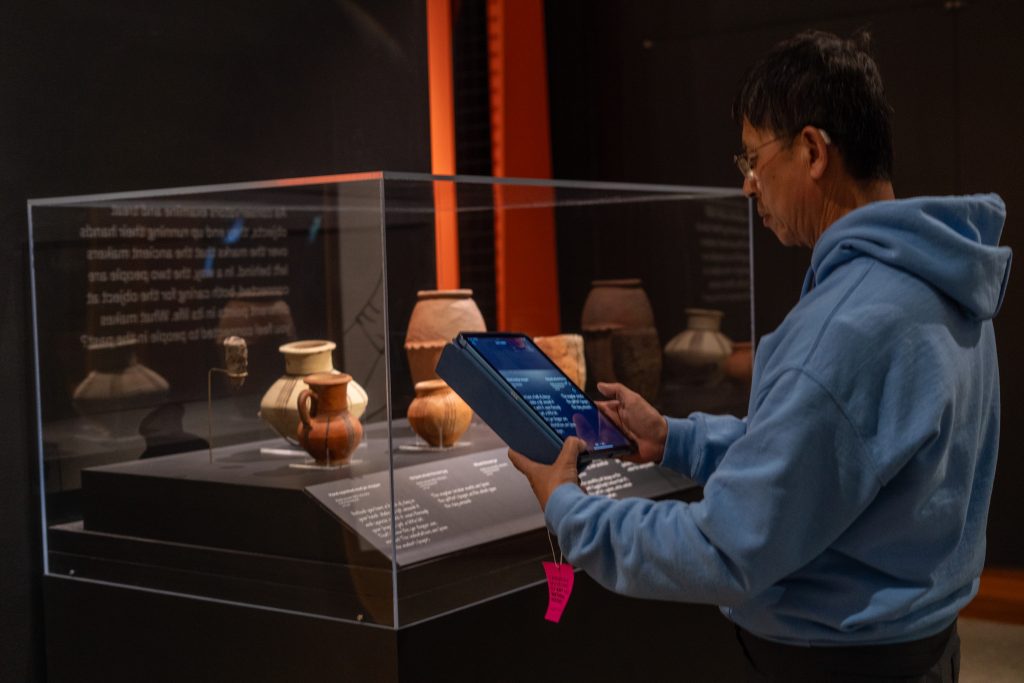
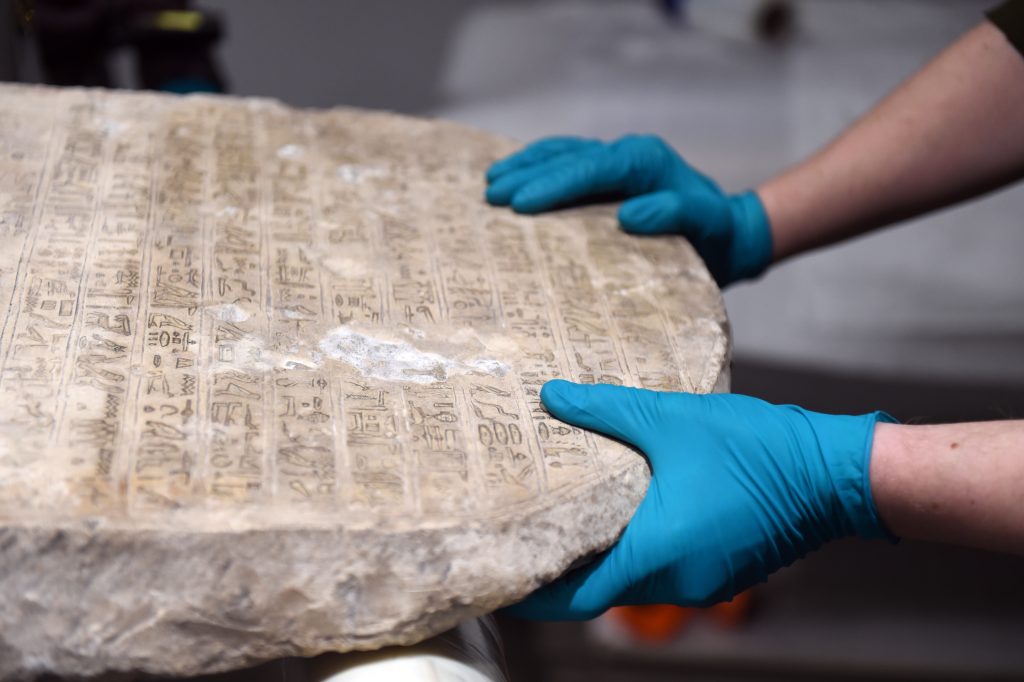
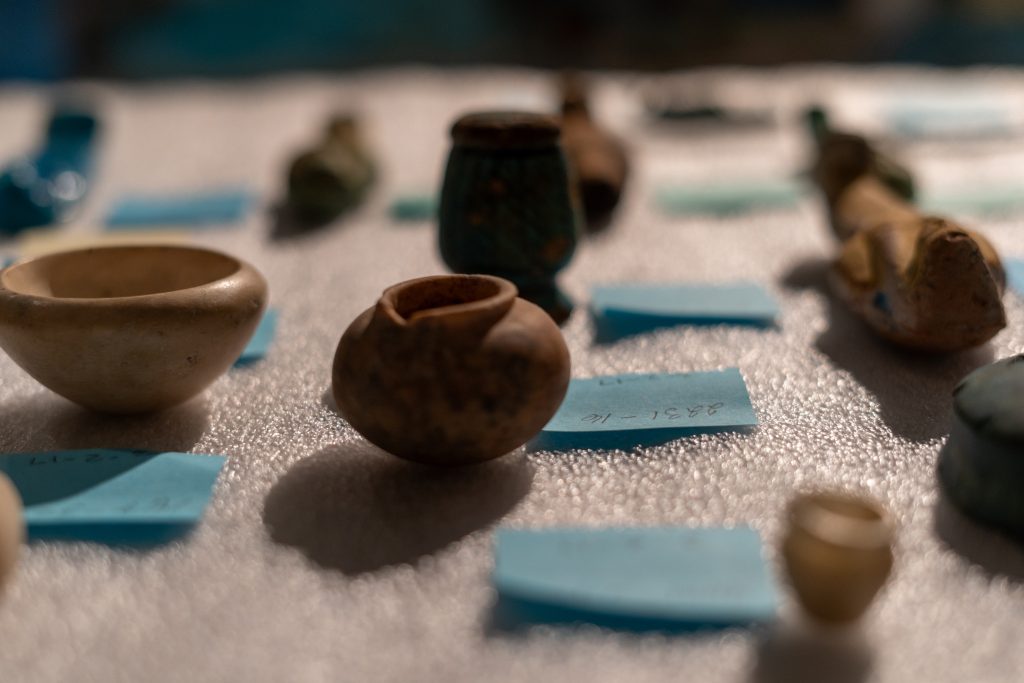
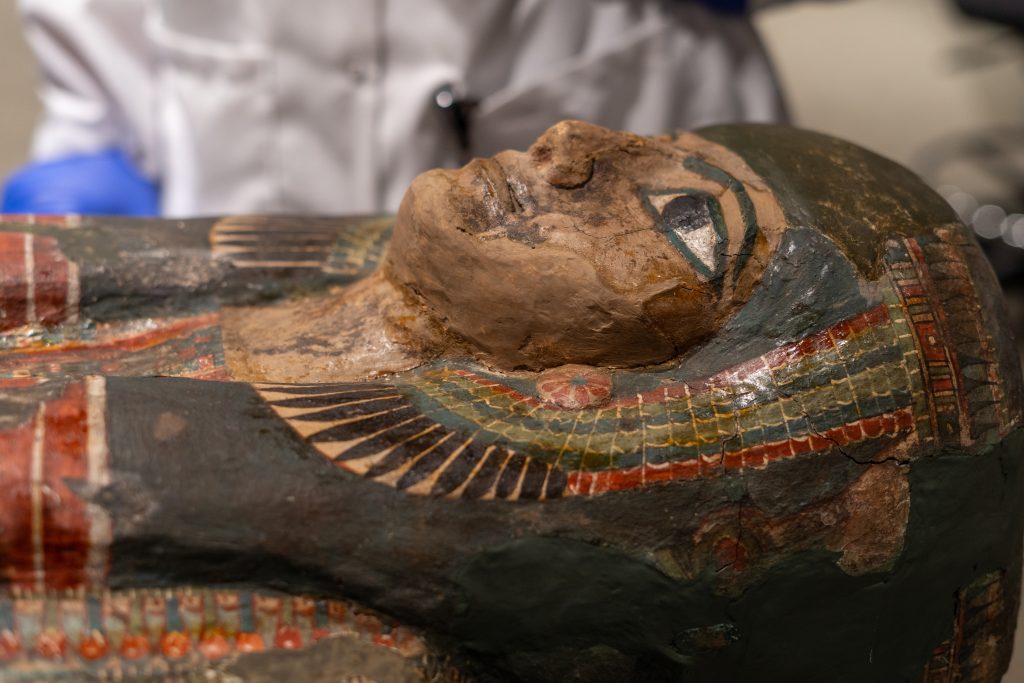
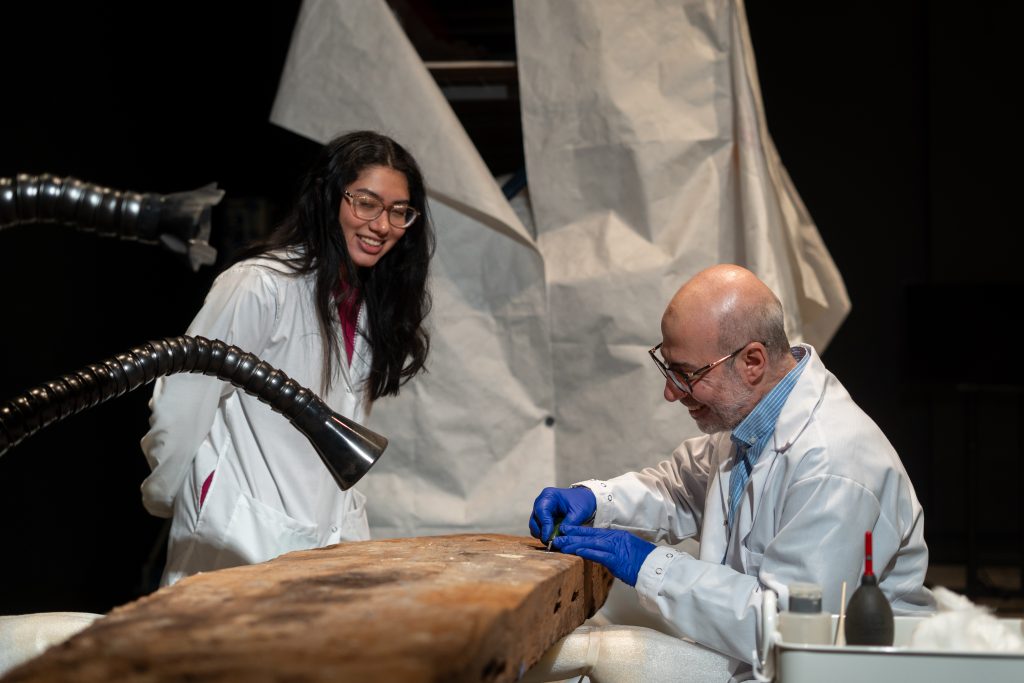
The newest exhibit at the Carnegie Museum of Natural History (CMNH) gives visitors the opportunity to view artifacts from ancient Egypt.
“The Stories We Keep: Conserving Objects from Ancient Egypt” promises to be interesting not only to those who enjoy “getting into the weeds” of historical preservation, but also to those who are simply curious. The exhibit allows visitors to view the artifacts that have been tended to for more than a century and learn how they are being preserved for future generations.
“The Stories We Keep” flings open the curtain on behind-the-scenes conservation work, while permitting the public to ask questions.
“Pittsburghers are very curious people,” said Sara Crawford, the director of exhibition and design, adding that the museum decided to respond to the public’s curiosity by allowing them to observe preservation work up close and personally. “We recognized that anytime we were doing work in the galleries, we would get questions, so this time we’re going to allow the public to pose questions to staff members directly.”
Crawford hopes that the exhibit will also pique the curiosity of younger students who have yet to consider a career in science at a museum.
“When I was young, I didn’t realize you could work in a museum, so it wasn’t a primary goal of mine. We hope that interacting with the staff will spark curiosity,” Crawford said.
The exhibit also marks the return of the artifacts to public view after the museum closed the Walton Hall of Ancient Egypt in 2023 for conservation.
“Our long-term goal is to open a new Egypt Hall eventually,” she said.
Dr. Lisa Haney, assistant curator and Egyptologist, said, “The exhibit is focused on teaching people what conservation science is and letting them in on all the different behind-the-scenes practices and research that is involved to make such exhibits possible.”
Approximately 80 artifacts will be part of the exhibit, including a 4,000-year-old boat which hails from the Egyptian village of Dahshur and is one of only four in the world.
“The life-size boat was excavated at the Dahshur funerary complex of Senwosret III,” said Haney, referencing an Egyptian pharaoh and adding that it’s likely that a number of royal women were buried at the complex.
“It’s likely that the boat would have been used in the funerals of those women,” she said, explaining that in ancient Egypt most of the cemeteries were located on the West Bank of the Nile River, and this is how they were ferried across for burial.
CMNH recruited Dr. Mostafa Sherif, an expert on ancient wood restoration, to treat the boat.
“The public can view him working on and preserving each plank of the boat,” said Haney.
Museum conservators will hold daily demonstrations and answer visitor questions about the objects and conservation techniques.
“They will learn about how many things the museum has to take into consideration to display objects – things like humidity and temperature, for instance,” Haney said.
The public will also learn about how the museum recreated the world’s first human-made pigment called Egyptian Blue.
“Travis Olds, assistant curator of minerals at CMNH, tested out different ratios of ingredients with a modern kiln. He took samples of the pigments from objects in our care to study the mineral composition and learn which raw materials we needed to recreate the pigment,” said Crawford, adding that Olds worked with a team from Washington State University. “Students there used their glass-making furnaces to test out the mixtures of ingredients and firing temperatures and time and then compared the color with ancient examples. This is just one example of new and innovative research that people will encounter at the exhibit as well.”
Interactive activities are also part of the exhibit, like reassembling replicas of ancient objects which were created with 3-D scanners.
“There is an entire department of educators to assist with fun, hands-on activities,” said Crawford, adding that the CMNH is actively attempting to answer the call by the public to create more immersive experiences.
According to staff at CMNH, the exhibit was created to tell a larger story about nature and culture.
“We live in a city with three rivers and this culture — living on water and what it meant for people at this time, the interaction with plants, animals and seasons — it’s a story that we think will naturally connect with Pittsburghers,” said Crawford.
To learn more about ticket prices and times, visit the CMNH website at https://carnegiemnh.org. The display will be available through March 9, 2025.