

Cold case solved but motive remains a mystery
Retired trooper shares details of \\\\\\\'85 Somerset Inn murder investigation
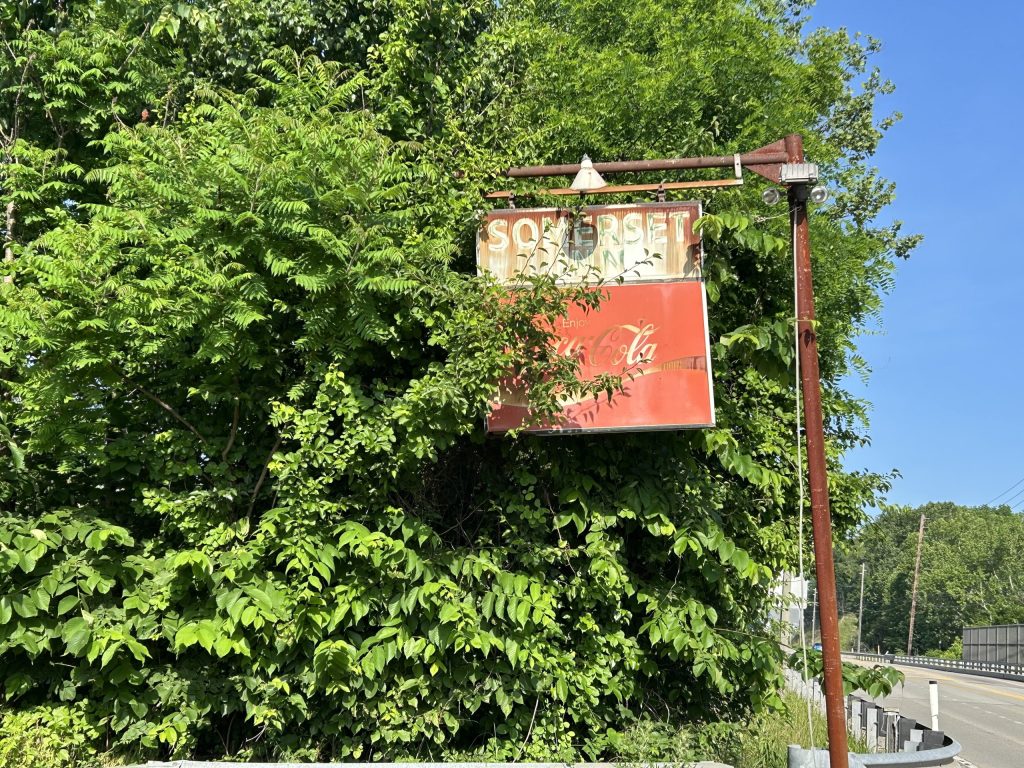
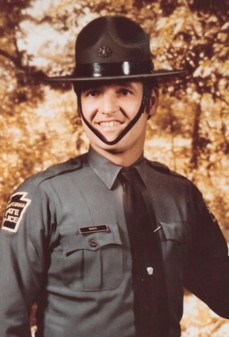
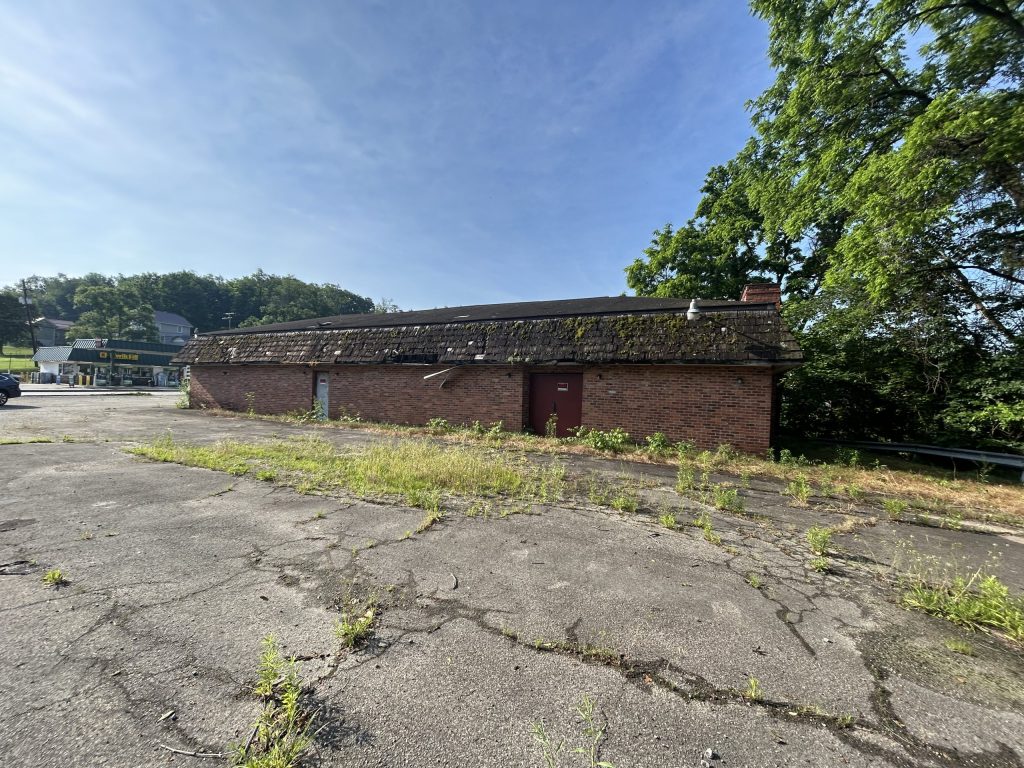
A dilapidated bar at the crossroads of Routes 519 and 136 in Washington County is a somber reminder of a murder that rattled the Eighty Four community in 1985.
March 11 started out like any other day for 46-year-old Robert Dickinson of Chartiers Township, a well-respected businessman who owned Eighty Four Packing and was a former business partner of Pittsburgh Steelers offensive guard Jon Kolb. After work, he stopped by the Somerset Inn, not far from his office, to enjoy drinks with his friends. Before the evening鈥檚 end, he was lying dead in the parking lot with a gunshot wound to the head.
A clerk and customers at a nearby gas station heard the gunshots at around 10 p.m., and it wasn鈥檛 long before they realized that someone across the street had been shot. Soon, the state police arrived to tape off the crime scene and start their criminal investigation.
I was a state trooper on highway patrol, so I wasn鈥檛 dispatched to the scene that night. It was initially thought that Dickinson had been mistaken for someone else and that the intended target was his friend and drinking buddy, who was an off-duty, undercover state trooper. This theory was debunked and the case was eventually placed on the back burner where it remained unsolved.
Eight years later, after being promoted to the role of state police investigator, this case was given to me as part of the agency鈥檚 protocol to have 鈥渇resh eyes鈥� look at the cold cases. The Dickinson murder ended up being one of the most interesting cases I would work on.
My first task as the lead investigator was to crack open the case files to study the report and familiarize myself with the facts. It turned out that Dickinson left the bar and was shot in the parking lot by someone wielding a high-powered rifle. There were no witnesses and by the time I got the case the trail had gone cold. I tracked down some of the folks who were interviewed during the initial investigation and these interviews, along with the information from other investigative resources, brought the names of two new suspects to the surface. The thread that connected them to this crime was the fact that they had used the same methods to commit similar crimes. With several people on my radar, I headed to Steubenville, Ohio, where I was able to interview some residents and investigators from the local police department.
Most of the people I interviewed were willing to talk, but they feared for their own safety and didn鈥檛 want to be named publicly in the investigation. One of the more interesting people I talked to was George Franklin Ely Jr., a known career criminal who was serving a life sentence for a similar crime. As the story unfolded, I discovered that Ely and John Dino Martin, formerly of Steubenville and Brooke County, W.Va., along with Franklin Tesack of Weirton, W.Va., had been arrested and convicted of breaking into a home and shooting two people (killing one and injuring another) in Hancock County, W.Va., on Sept. 26, 1985, just six months after the Dickinson homicide. All were sentenced to life without parole. Ely was convicted under the Racketeer Influenced and Corrupt Organizations (RICO) Act, and was serving a life sentence in a federal correctional facility in Lewisburg, Pa. Martin, one of his co-conspirators in the Hancock County case, was also in federal custody under a protection program after testifying in a federal racketeering trial against Paul 鈥淣o Legs鈥� Hankish of Wheeling, W.Va. At the time, Hankish was the head of a crime ring that had a stronghold in Washington County.
My initial focus was on Martin, and I spent many hours contacting various federal agencies to set up an interview. Once we had the green light, Crime Supervisor Sgt. James Altman and I headed to a secret and secure location in Minnesota where we were given a limited amount of time to meet with Martin.
Prior to the interview, Martin was transferred to Minnesota from another facility, but I was not told which one. Upon our arrival, we were taken to a sterile room where we waited for Martin. When he arrived, I noticed that he was very neat and meticulous in appearance, with a slight build. Even though he had cold, dark eyes, and a reputation and tendency for criminal behavior, I was surprised that he was suspected of many homicides and associated crimes. It was apparent that Martin, a high school honor graduate, was intelligent. In addition to holding his own during the interview, he was smart enough to know that cooperating with the federal authorities in high-profile organized crime investigations would provide him with certain perks, liberties, and a better life behind bars. His personality and engaging demeanor made him the type of person, who under different circumstances, would have been invited into someone鈥檚 home. After all, anyone who encountered him would be shocked to learn that he was a cold-blooded killer who had reportedly done 鈥渨ork鈥� for an organized crime group in the Wheeling/Steubenville area.
During what I would describe as a five-hour 鈥渃asual conversation鈥� with Martin, I was able to piece together some of the missing pieces in the Dickinson homicide case. Martin said he and Ely were hit men who were paid to commit the crime. Unfortunately, Martin, a street-wise and extremely cagey man, wouldn鈥檛 reveal who paid them or why, saving this information for future negotiations. Martin was willing to talk all day, but I knew I had been given all of the pertinent information that he was willing to share, so I gathered my belongings and ended the interview.
On the return trip, Sgt. Altman and I decided to interview Ely, so a couple of weeks later we traveled 225 miles to the federal prison in Lewisburg. It was obvious that he wasn鈥檛 as dynamic as Martin, the leader of the duo who called the shots. After about three hours, Ely confirmed most of the information we had received from Martin.
When we returned to Washington, I reviewed all of the physical evidence and interviews, and compared the statements of Martin and Ely. I concluded that prior to the Dickinson murder, both Martin and Ely made the trip from Wheeling to Eighty Four several times to case the area and locate his residence and business. During these visits they were able to watch his movements, study his habits, and see which vehicles he drove. Once they had a plan, they made a final trip to Eighty Four and followed Dickinson from his meat packing plant to the Somerset Inn, where they waited in the parking lot. Eventually, Dickinson left the bar and walked to his truck to unlock the driver鈥檚 side door. That鈥檚 when Ely drove up to Dickinson鈥檚 truck, stopping long enough for Martin to get out of the vehicle and fire a high-powered rifle. A bullet fired at close range struck Dickinson in the head, killing him instantly. Martin hurried back to the get-away car and Ely drove west on Route 136 toward Washington.
On Nov. 22, 1996, I traveled back to the Lewisburg Federal Correctional Facility, this time with Trooper John D. Liggett, to serve the arrest warrant on Ely. He was given his constitutional rights and we headed back to Washington County with Trooper Liggett driving while I sat in the backseat with our prisoner. Ely, who had been eating prison food for years, mentioned that he would really like something from McDonald鈥檚. So, Liggett pulled up to a drive-thru and we placed his order. Ely talked freely as he enjoyed a Quarter Pounder, fries and a chocolate milkshake. We escorted him to the scene of the crime, where he explained what he remembered and pointed out the location of the shooting. He was later arraigned and lodged in the Washington County Jail.
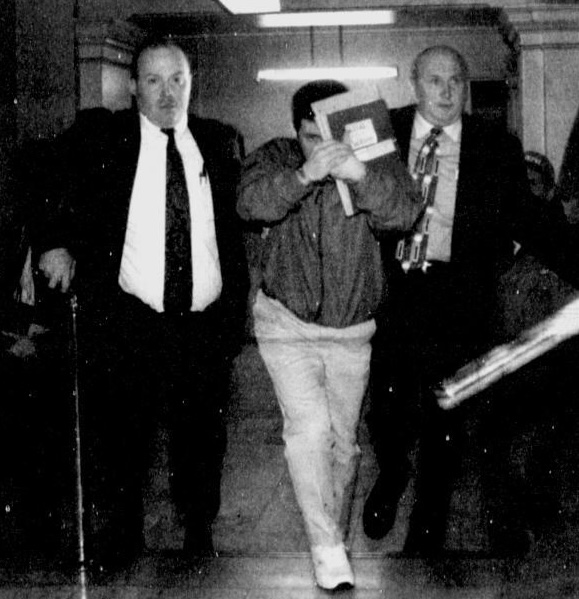
An arrest warrant was also issued for Martin, but because of his federal protection status, the request had to go through a complex process with the U.S. Attorney鈥檚 office. When he was finally brought back to Washington County for his arraignment in January 1998, the security was tight and the 47-year-old Martin was heavily guarded by federal marshals.
On Sept. 26, 1997, 51-year-old Ely, who was paid $1,000 by Martin to drive to Eighty Four, pleaded guilty to criminal conspiracy and criminal homicide. He was sentenced to 5 to 10 years for the first charge and life in prison for the homicide charge. It was reported in the Observer-Reporter in September 1997 that part of Ely鈥檚 plea agreement was for him to testify against Martin. If he failed to do so, then-Washington County District Attorney John Pettit said the agreement would be revoked and he would stand trial, facing a death penalty conviction for first-degree murder.
Martin pleaded guilty on July 29, 2003, to criminal conspiracy to commit homicide and received 5 to 10 years in prison. As far as I know, Ely and Martin are both still alive and serving out their life sentences behind prison walls. Unfortunately, Ely and Martin have never revealed why they were hired to shoot Dickinson or who ordered the hit. It is information they will likely take to the grave.
Larry Maggi is a retired trooper with the Pennsylvania State Police, a former Washington County Sheriff, and a member of the Washington County Board of Commissioners.