

Albert Gallatin school board OKs widespread staff cuts
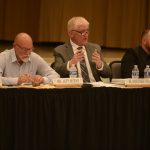
The Albert Gallatin School District will cut between 24 to 30 positions throughout the district as it looks to close a projected budget deficit of more than $6 million.
The board voted 8-0 Wednesday night to give permission to eliminate the jobs. That includes nearly 15 teachers across elementary, middle and high schools, along with substitute teachers, support staff and administrative positions.
Superintendent Christopher Pegg said the estimated $3 million in savings the cuts would generate are necessary as the district deals with continued declines in enrollment. Albert Gallatin had 2,870 students in 2025-26, down 17% from a decade ago.
“We’ve eliminated positions through attrition the last several years, but you can only eliminate so many positions, and we’re at the point where with having that deficit looming over us, and the danger of not being able to pass a balanced budget … it was necessary to do the difficult thing and make these cuts to our personnel,” he said.
About 50 parents, staff and community members attended the meeting.
Amanda Riley, the district’s union representative and a fifth-grade teacher at Smithfield Elementary School, said if the board had taken action a few years ago to improve the district’s finances, they might have been able to avoid the severe cuts. While she understands the district’s situation, she’s saddened by the cuts.
“It’s devastating on a variety of levels,” she said. “We’re seeing our kids who are going to miss out on opportunities. We have experienced staff that are going to be lost at a cost to the kids and the curriculum.”
The district would gain about $520,000 in additional revenue by raising taxes to the maximum amount allowable, Pegg said, allowing it to balance the budget. But the district would still only have about $2 million in fund balance left at the end of next year, likely forcing another round of cuts to stay solvent, he said.
“That’s why I encourage the district to consider strongly making the change and consolidating, realigning,” he said. “You’ll never be able to get out of that mess.”
Pegg said the district has been talking about consolidating school facilities since shortly after he became superintendent in 2018.
In March, the board voted 5-4 against giving permission for public hearings on closing district buildings.
A feasibility study presented to the district last year had recommended several buildings for consolidation.
Pegg said he would like to see the high school expanded to sixth through 12th grades. The district’s two middle schools would be converted into elementary school centers, joining Al Wilson Elementary, the newest and largest of the district’s elementary facilities.
At the time Pegg presented the option to the board, it was projected to save about $4.5 million a year, he said.
The combination of declining enrollment and rising costs have been hitting other districts in Fayette County, which have been contemplating their own belt-tightening measures.
The Connellsville Area School District, which closed several buildings, has been able to make a financial recovery, Pegg said.
“They did what was necessary and realigned, closed schools, consolidated, and their fund balance is healthy, and they’re not having to go through what we’re doing now,” he said.
The cost will hurt both teachers and parents in the district, said Angela Merschat of Smithfield.
She would have liked to have seen the district take proactive measures that didn’t involve steep cuts.
Merschat has three children at Smithfield Elementary. One of them is heading into third grade, where one of the two positions was cut Wednesday.
“One does the (English/language arts), one does math, so now that teacher is going to have to teach all subjects to a larger classroom,” she said. “That’s a big deal for the elementary.”
During the meeting, Pegg ran through projected class sizes throughout the district if the cuts went through. Most class sizes would remain in the low- to mid-20s, with a high of 32. Pegg said some furloughed teachers could be recalled if necessary and class sizes grow too large.
“We want to have a maximum of 35,” he said. “If it’s a kindergarten, first (grade), we don’t want that number to go above 32,33.”
If the board had refused to make cuts and could not balance the budget, Pegg said, it could have created a situation where the state assumed control over the district.
He gave the example of the Duquesne School District in Allegheny County, where the state has had control over the district’s finances since 2012. That’s resulted in moves like preventing the district’s move to reopen its high school.
Next, Pegg will go through the furlough process with the union. Any employee being furloughed will have to be notified through certified mail by June 1.
Pegg said the district hopes to approve next year’s budget at its regular June meeting.
In the coming year, Riley said the union will continue watching the staff positions, and make sure there are enough teachers where they’re needed.
“We’ll do everything we can to make sure we can bring back teachers from furlough,” she said. “We’ll keep eyes on class sizes to encourage the administration that when class sizes do get to an unreasonable level, that teachers should be brought back into those positions.”