

A new way to drive
Simulation teaches new drivers how to navigate snow squalls
As disruptive as winter driving can be for seasoned drivers, it poses another challenge for those who are just learning the rules of the road.
Harry Metz, driving instructor for ETI Driving School, said he won鈥檛 go out for lessons when there鈥檚 packed snow or ice on the roads, since ideally, 鈥測ou shouldn鈥檛 be driving in that situation.鈥�
鈥淚f you must drive in that situation, you should drive basically half the speed limit,鈥� he said.
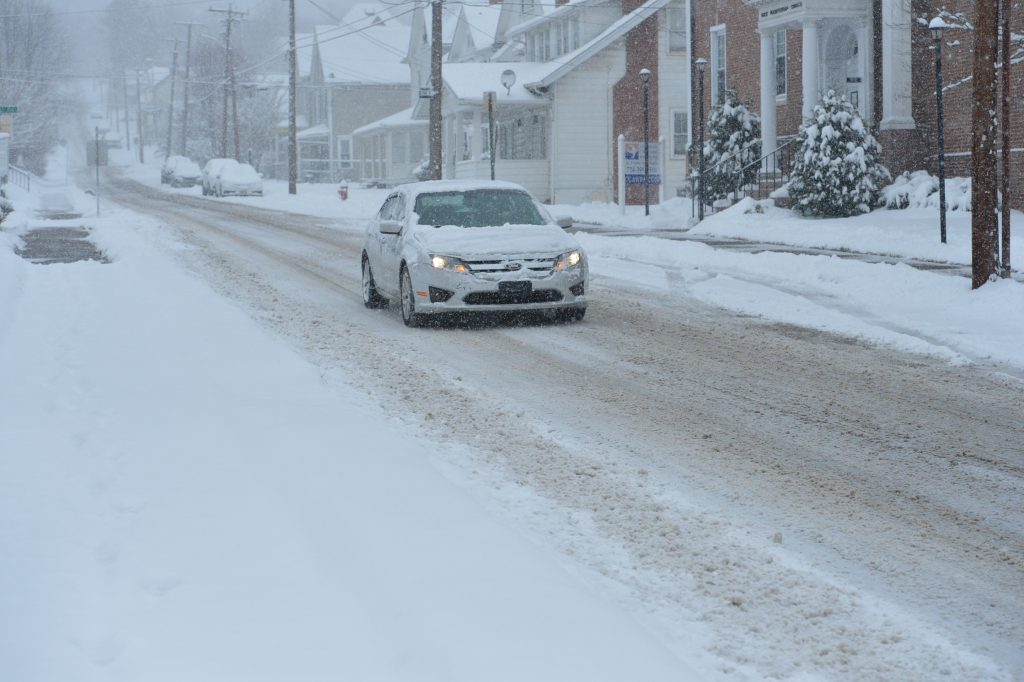
Metz will take students out in wet snow, a common condition in the area. That still merits slower speeds, he said, at least 5 to 10 miles below the posted speed limit.
Duane Day, owner of Day Driving School in Washington, teaches students about low gear, taking them out on steep hills for their first lesson in country driving. Many of the students don鈥檛 even know they have low gears, giving them better traction on slick surfaces, Day said.
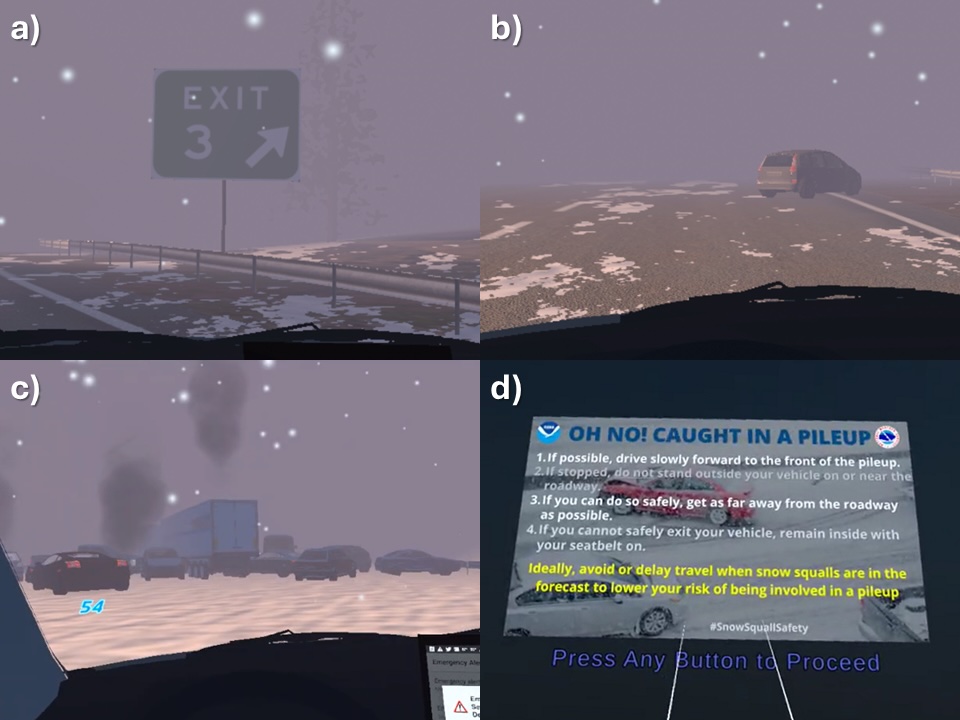
Now, new drivers can practice driving in a snow squall with the help of a virtual reality simulator. The rapid-onset storms combine snows of up to 2 inches in half an hour and winds of more than 30 mph to create whiteout conditions, leaving drivers unprepared.
Through a grant, Jase Bernhardt, an assistant professor in sustainability, climate change and weather for Hofstra University, worked with meteorologists from the National Weather Service office in State College to develop the simulator. The state Department of Transportation assisted with developing the look of the roads.
It鈥檚 set in a generic Northeastern environment, filled with trees and little hills 鈥� and suddenly, snow.
The road is modeled on highways, where drivers are the most vulnerable.
鈥淚f you鈥檙e on a highway and a big stretch free of exits, you can鈥檛 get off,鈥� Bernhardt said. 鈥淵ou might even get the snow squall warning and see that it鈥檚 bad. But if it鈥檚 20 miles to an exit, you鈥檙e trapped.鈥�
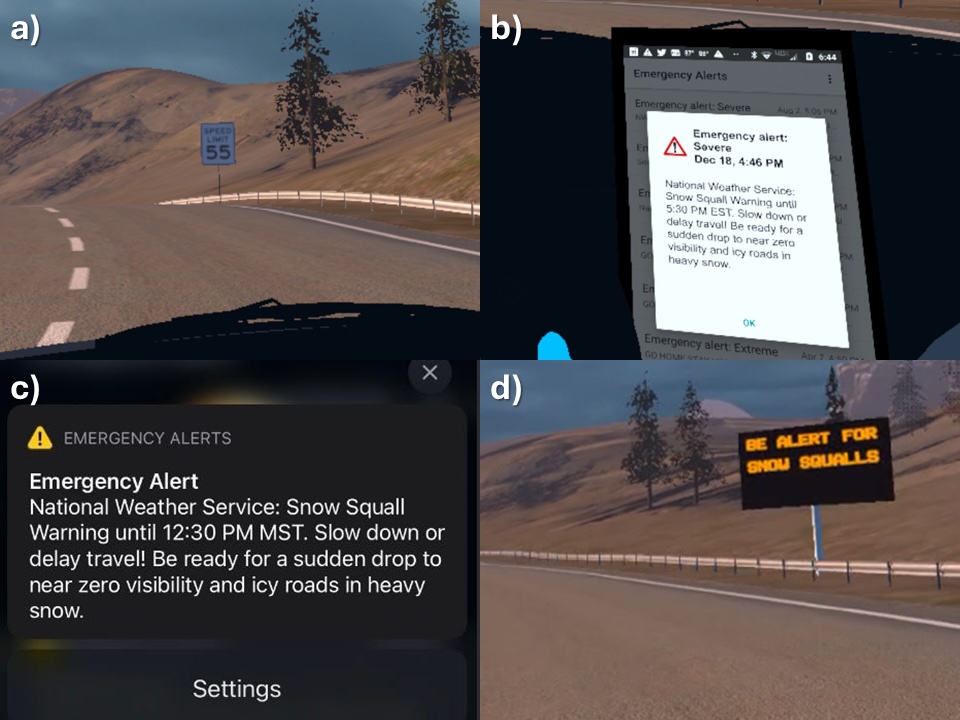
Through early tests from the simulation conducted in high-traffic areas, such as State College and the Pittsburgh region, researchers got a sense of how drivers respond to snow squalls and the changeable message signs put out as warnings. That, in turn, helps states develop better timing and better strategies for advising drivers approaching snow squalls.
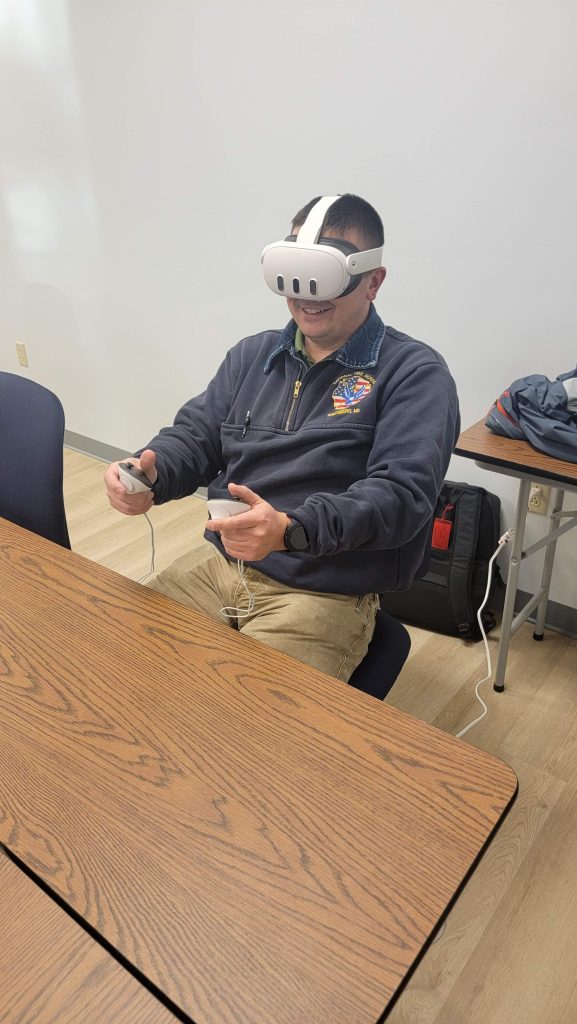
Using the VR controllers as a steering wheel, drivers can get a sense of how disruptive a snow squall can be, and how best to avoid an accident.
Some drivers jump to what they think is the most prudent option: Pulling over immediately.
Doing that can actually be more dangerous, Bernhardt said, since it leaves cars defenseless if a larger vehicle coming up behind spins out.
Drivers should be looking for the nearest exit, Bernhardt said. If they must park on the shoulder, they should get out of the car and try to find an embankment.
鈥淭he least-bad option is to just kind of drive slowly with your flashers on,鈥� Bernhardt said. 鈥溾�t鈥檚 better to just kind of limp along and drive slowly than to just totally pull over to the side, because then you鈥檙e a sitting duck.鈥�
State police Trooper Kalee Barnhart said most winter-related issues tend to crop up on the interstates, particularly the high-traffic areas of Interstate 70 and Interstate 79.
鈥淥n those interstates, they cut through open areas where snow can drift and freeze quickly,鈥� she said. 鈥淓ven though some of the roadways look clear, the shaded areas and bridges can hold ice. We see that happening a lot with the overpasses being completely iced over.鈥�
That weather can change from mile to mile, with wet pavement turning to black ice almost instantly, Barnhart said.
鈥淪ometimes I鈥檓 up on the interstate going to work, I鈥檓 going 45 miles per hour, and there鈥檚 snow and ice on the interstate, and these people are going 65 like it鈥檚 a sunny day,鈥� said Day.
State police advise matching caution with a visual cue: turning on hazard lights to warn others you鈥檙e driving at a slower speed.
If something happens further up the road, slippery roads can make it more difficult to stop. Barnhart advises increasing your following distance to at least 6 seconds.
Before they head out, drivers should also clear off all snow and ice from the roof, windows, mirrors, headlights and taillights.
鈥淭hat is a citable offense if the snow does blow off of your vehicle and endangers others,鈥� Barnhart said.
When possible, she said, people should stay off the roads.
鈥淚f you don鈥檛 need to be out during a storm, then wait it out,鈥� she said. 鈥溾�eschedule your doctor鈥檚 appointment. Usually, if you give PennDOT some time, they鈥檒l clear the roads.鈥�