

National treasure
Rain was threatening at Mill Run on Oct. 29, 1963, and its sound would have created a kind of chorus with the waterfall nearby.
A tent was set up in case Gov. William Scranton and other dignitaries needed to escape an autumn downpour. With no way of imagining the horror that would unfold in Dallas, Texas, a little more than three weeks later with the assassination of President John F. Kennedy, it was a day of celebration.
It was on that Tuesday that Fallingwater, the Frank Lloyd Wright-designed, three-story vacation home nestled in an eastern corner of Fayette County, was turned over to the Western Pennsylvania Conservancy so it could be preserved and opened to the public and appreciated by the wider world.
鈥淭hese buildings and these lands will be conserved,鈥� Scranton said, according to Uniontown鈥檚 Evening Standard. 鈥淣ot as empty shrines, but as a living vibrant agency for service to mankind.鈥�
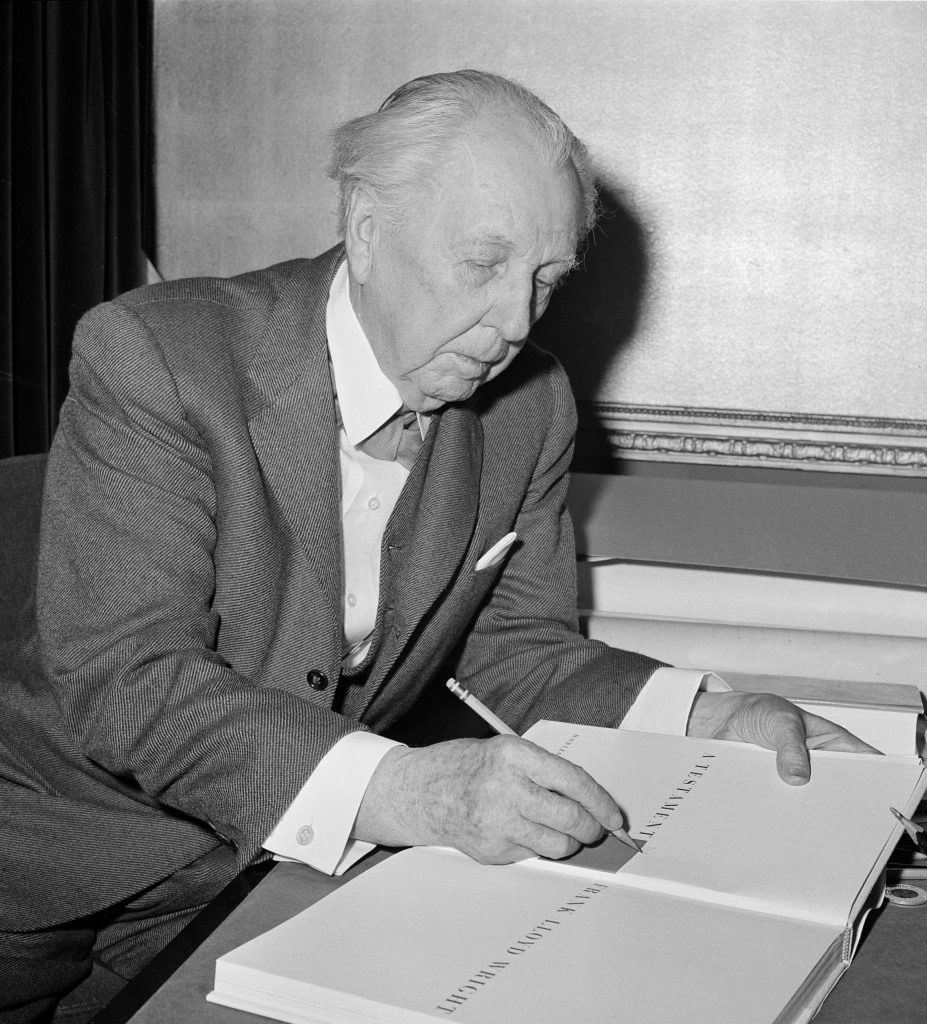
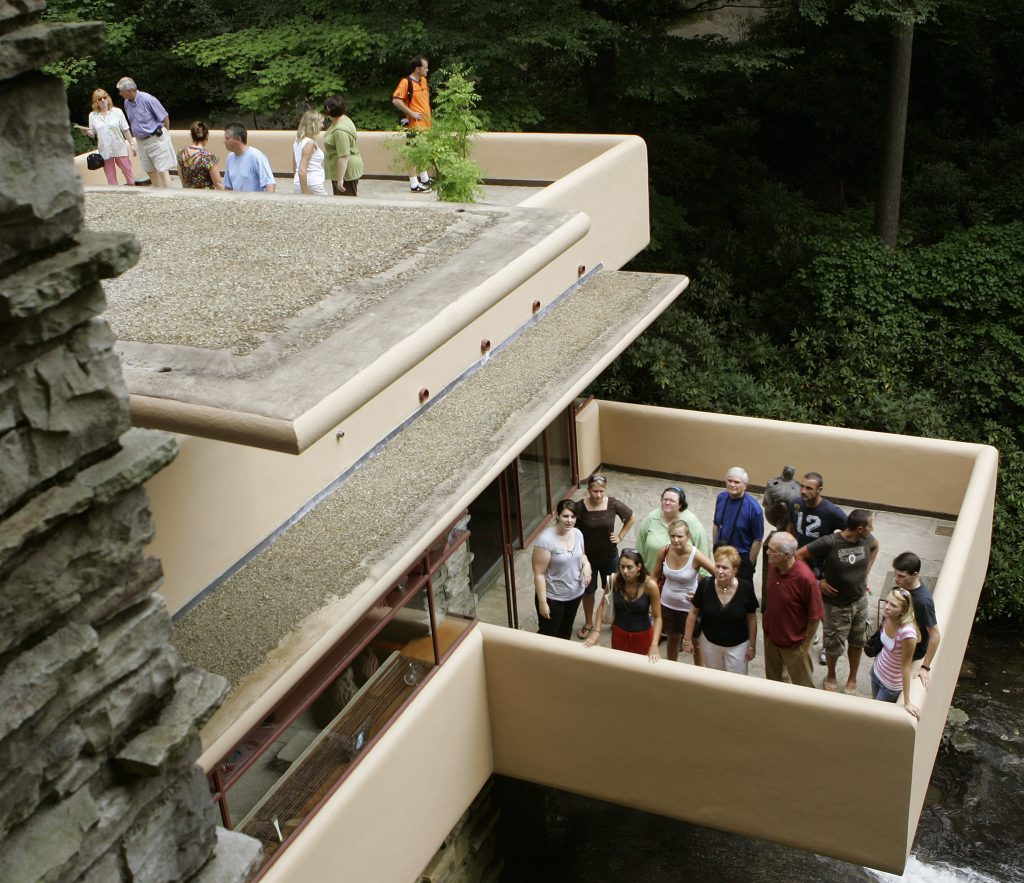
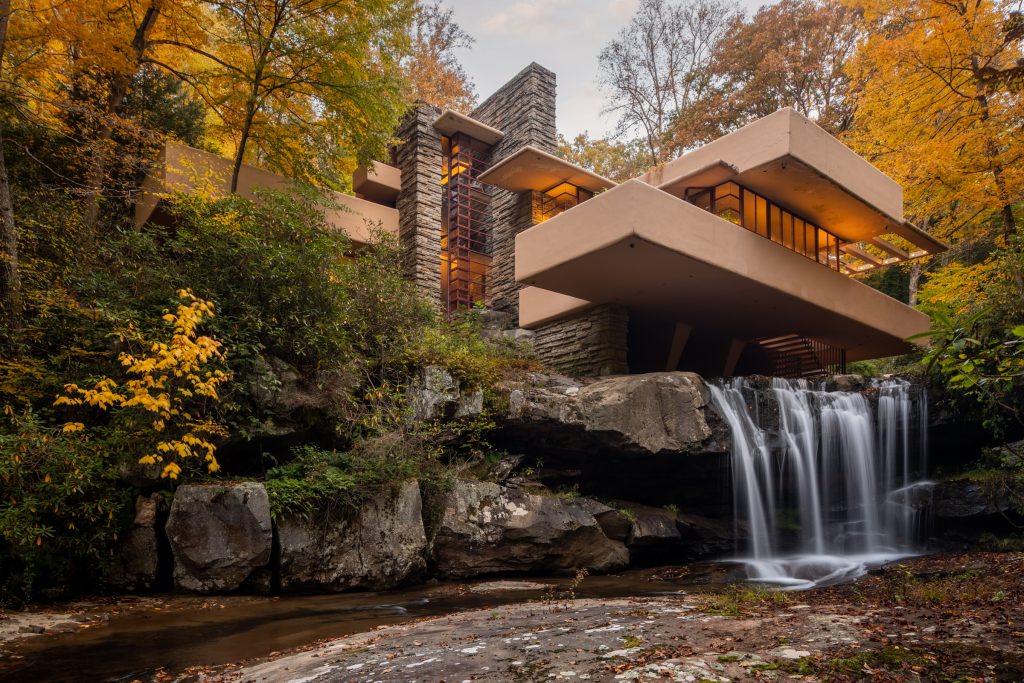
Those are pretty high-flown words for a house. But Fallingwater has never merely been a house. One of a little more than 1,000 structures Wright designed in his lifetime, Fallingwater is perhaps the most famous of the architect鈥檚 creations, along with the Guggenheim Museum in New York. Its one-of-a-kind design has terraces stacked over a waterfall that鈥檚 part of the mountain stream Bear Run. It is a National Historic Landmark and has joined UNESCO鈥檚 list of World Heritage sites, which also includes the Pyramids in Egypt, Mount Fuji in Japan and Westminster Abbey in London.
The word 鈥渋conic鈥� is overused, but Fallingwater fits that designation. And though it was once a symbol of modernity, it is celebrating its 90th anniversary this year.
鈥淭he house rapidly became a symbol of modern architecture,鈥� R. Jay Gangwere wrote in Carnegie Magazine in 1999. 鈥淐reated in the midst of the Great Depression, the woodland retreat over the waterfall had a fast track into the American psyche. It was a personal escape into nature, produced at a time when Hollywood was creating escapist fantasies of its own about avoiding economic hardship. Millions of Americans, including unemployed workers in western Pennsylvania, could dream about life in a private retreat created by the most famous architect in America.鈥�
Fallingwater鈥檚 life began as a vacation home. In the 19th and 20th centuries, it was not uncommon for Pittsburgh鈥檚 captains of industry and financial titans to have weekend and summer abodes well to the east of the city鈥檚 grit, grime and smoke. Andrew Carnegie had a summer cottage near Johnstown, the Mellon clan had homes in Westmoreland County, and Edgar Kaufmann, who operated Kaufmann鈥檚 Department Store, was similarly looking for a serene spot to take it easy.
The site had been used as a getaway for Kaufmann鈥檚 employees, but Kaufmann decided to use it for himself. Because his son, Edgar Kaufmann Jr., was an architecture aficionado, the recommendation was made that Wright handle its design.
The design Wright came up with took into account Kaufmann鈥檚 appreciation of the waterfall on the property. Wright later explained, 鈥淗e loved the site where the house was built and liked to listen to the waterfall. So that was the prime motive in the design. I think you can hear the waterfall when you look at the design.鈥�
The relationship between Wright and Kaufmann was at times contentious but ultimately fruitful. Over a quarter-century span, the Kaufmann family commissioned a dozen projects from Wright. This in spite of letters exchanged between the two about Fallingwater where Wright told Kaufmann, 鈥淚 don鈥檛 know what kind of architect you are familiar with, but apparently it isn鈥檛 the kind I think I am. You seem not to know how to treat a decent one.鈥� Kaufmann fired back, 鈥淚 have put so much confidence and enthusiasm behind the whole project in my limited way, to help the fulfillment of your effort that if I do not have your confidence in the matter, to hell with the whole thing.鈥�
Construction started on Fallingwater in April 1936. The June 5, 1936, edition of Uniontown鈥檚 Evening Standard contained a report on the front page about the city鈥檚 former mayor, William C. Hatfield, selling his home, and it noted, 鈥淭hat the Uniontown mountains continue to lure Pittsburghers was evidenced today when it became known that Edgar J. Kaufmann, president of the Kaufmann鈥檚 Department Store, has started construction of a palatial summer home here on Bear Creek in Stewart Township. While the cost of the residence is not known, it is expected to be one of the finest in the mountain district.鈥�
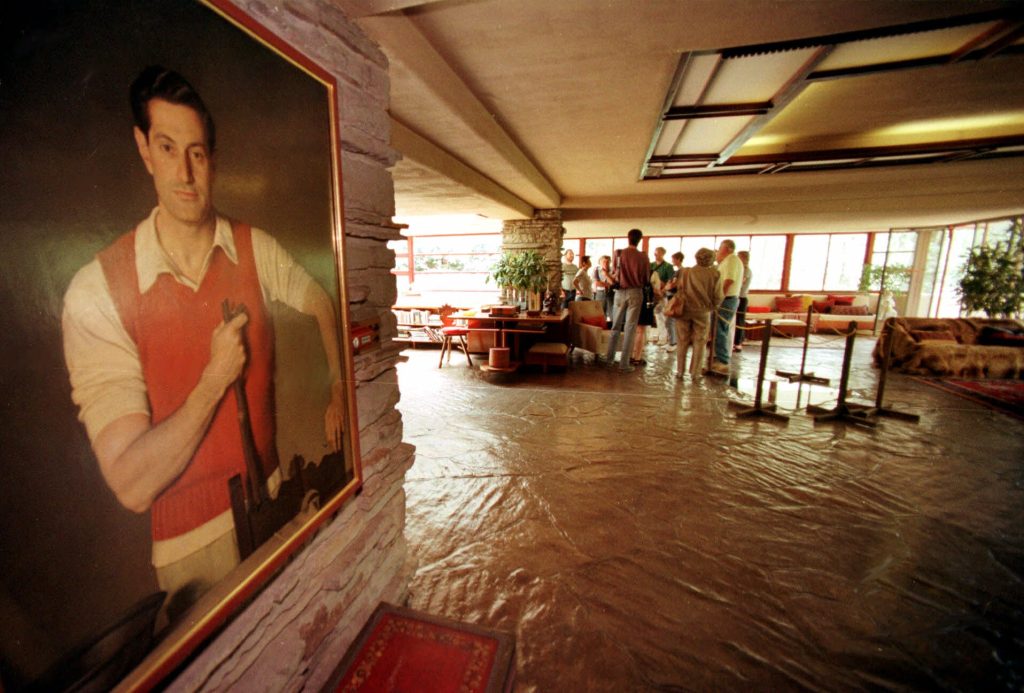
The house was finally completed in 1939. It was given to Kaufmann鈥檚 son on his death in 1955, and he then gave it to the Western Pennsylvania Conservancy in 1963. In the 62 years that the house has been available for tours it has become one of the commonwealth鈥檚 top tourist draws and is a key draw in the Laurel Highlands region, which includes Fayette, Westmoreland and Somerset counties.
A number of events are planned at Fallingwater this year to mark the 90th anniversary of its construction, including a gala celebration Aug. 29 and Fayette County Appreciation Day Nov. 22. For information, go online to fallingwater.org or call 724-329-8501.