

Uniontown native Erik Huey releases solo album, visits Fayette County roots

Country artist Erik Huey is a former Ăĺ±±˝űµŘ paperboy.Â

Submitted photo
Uniontown native Erik Huey is co-founder of the Real McCoys.
Submitted
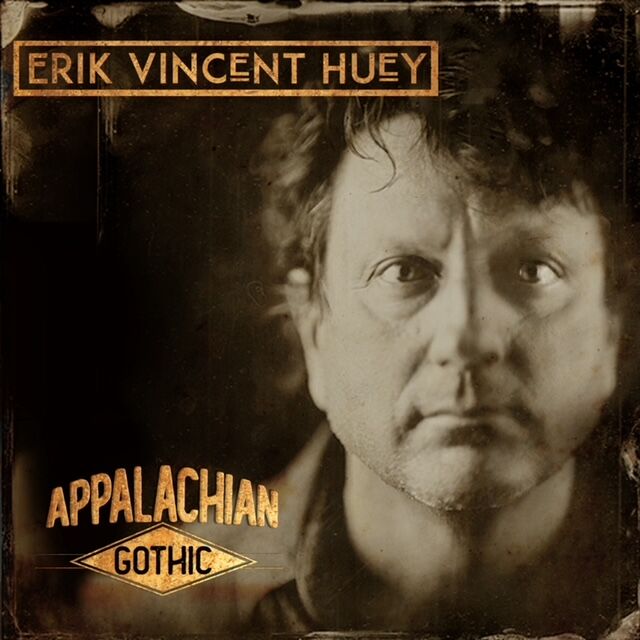
Uniontown native Erik Huey’s debut solo album
A West Virginia singer/songwriter is going back to his Uniontown roots with his new solo album.
Erik Huey, aka Cletus McCoy, co-founder of The Surreal McCoys, released his debut solo album, “Appalachian Gothic” in January, kicking off his Appalachian AF Tour in Washington D.C. before heading into the deep south, including stops in Nashville, Atlanta and Birmingham, Ala.
“We’re looking at dates for Southwestern Pennsylvania and West Virginia, too,” Huey said. “I’d love to play in the area.”
Huey was born in Uniontown and lived in the area until he was 9 years old when his father moved the family to Morgantown, W.Va., to be closer to the mine where he worked.
Huey said he comes from a long line of coal miners in Fayette and Greene County.
“My father, grandfather and great-grandfather all worked in the mines,” Huey said. “In fact, my great-grandfather Peter McDonough came over from Ireland during the Potato Famine to work the mines in the Monongahela Valley.”
Huey remembers his grandparents religiously listening to WMBS (590 AM, Uniontown) when Huey wasn’t switching to Pittsburgh rock stations and recalls being a paperboy for the Ăĺ±±˝űµŘ.
He ultimately found himself drawn to music as a member and co-founder of the cowpunk, outlaw country band The Surreal McCoys as Cletus McCoy in 2015.
The band produced such songs as “Whole Lotta Folsom,” “Turn and Run” and “You Can’t Afford It.”
For “Appalachian Gothic,” Huey dug closer to home for the songs and stories on his debut, mining his own history of coal mining in his family.
“This album is what I’d like to call a reflection of the region — the good, the bad, and oftentimes the forgotten,” he said, adding that state lines might separate people, but it’s just one culture. “The readers of the Ăĺ±±˝űµŘ — they are gonna relate to these songs because these are our families and these are our stories. It’s about time someone sang about us. We helped to build this country.”
One song in particular on the album, “The Battle of Uniontown,” is about growing up in a coal town during tough times and what is happening in those towns now, illustrating the story with such lyrics as “these jobs have come and gone so fast/from fracking back to coal/they chewed us up and spit us out/and left nothing but a hole” and “they say the future’s post-industrial; what the hell’s that mean for us? The Union’s gone but we’re still here, who’s fighting for us now?”
“People love this area, and they love their families,” Huey said. “They don’t want to leave, but a lot of them have to so they can find work. Some of them stay and have a hard time making a living.”
“Appalachian Gothic” finds Huey taking a nostalgic deep dive into the Appalachia of his West Virginia youth while wrestling with the contemporary realities of a hardscrabble region that’s been left behind in many ways.
While the album explores darker themes and raw subject matter such as the legacy of coal mining and the ravages of the opioid crisis on songs like “The Devil is Here in These Hills,” “Dear Dad,” and “The Appalachian Blues,” it also taps into a defiant streak of optimism on twangy upbeat rockers like “Winona” and the pro-union anthem “Yours in the Struggle.”
For more information on Huey and any upcoming shows and album information, visit www.erikvincenthuey.com/.