

Pennsylvania begins phasing out sales of Bradford pear tree
Courtesy of Mason Heberling
Courtesy of Mason Heberling
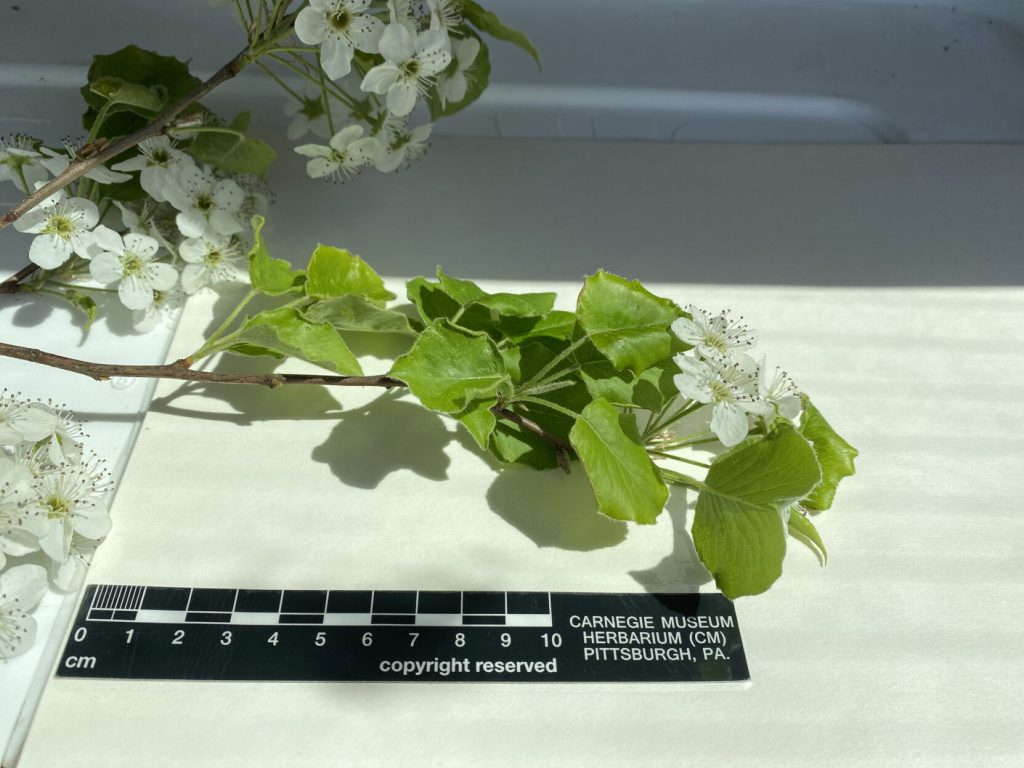
Leaves from a young Bradford pear tree planted at the carriage entrance to the Carnegie Museum of Natural History were cut and documented by the museum’s herbarium department.
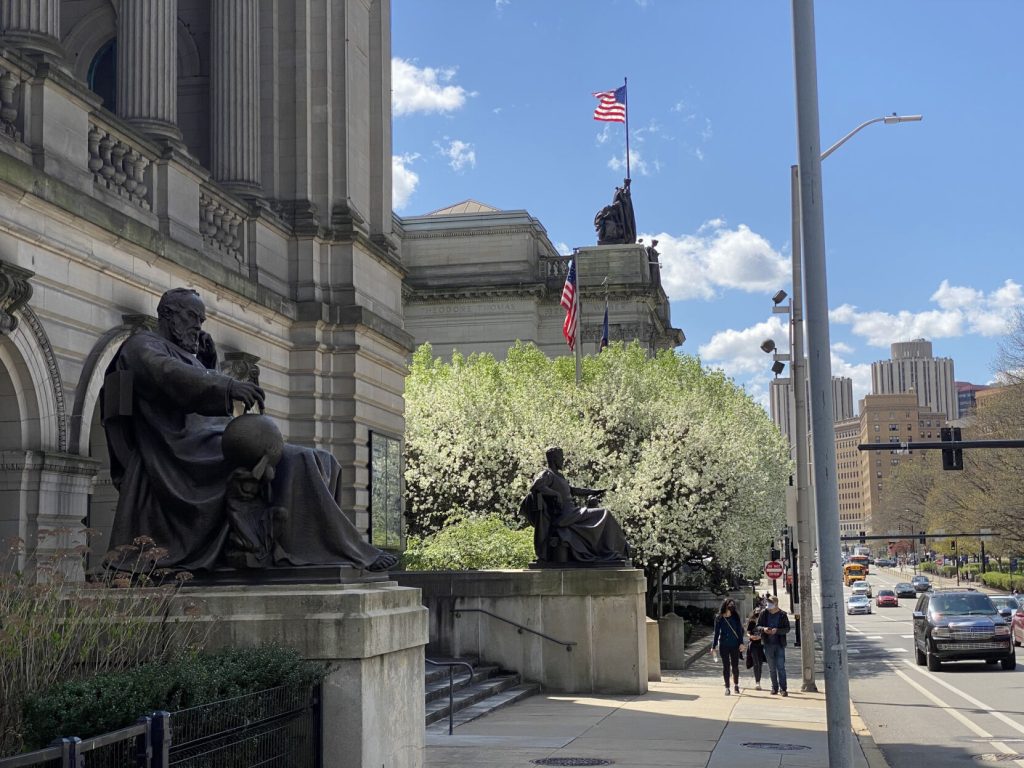
Each spring, Bradford pear trees add a pop of color to the Carnegie Museum of Natural History’s entrance. Planting of the Callery pear tree was banned inside Pittsburgh’s city limits in 2015. (Photo courtesy of Mason Heberling)
Courtey of James H. Miller
Courtey of James H. Miller
Courtey of James H. Miller
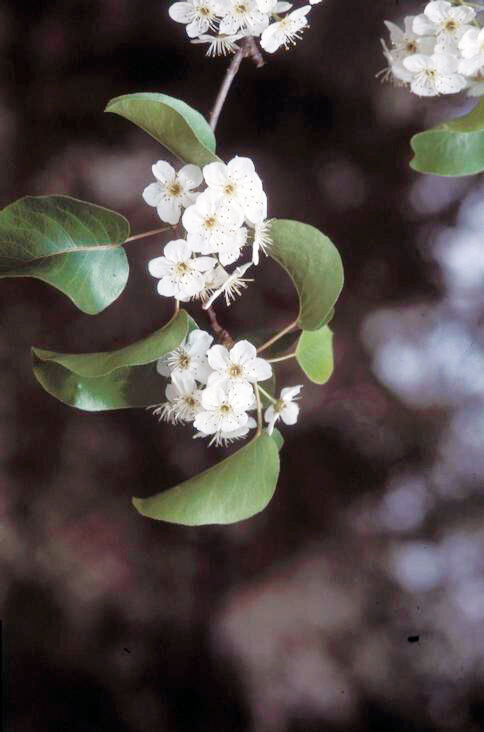
Callery pear trees are known for their pretty white blooms.
Courtesy of David J. Moorhead
Courtesy of David J. Moorhead
Courtesy of David J. Moorhead
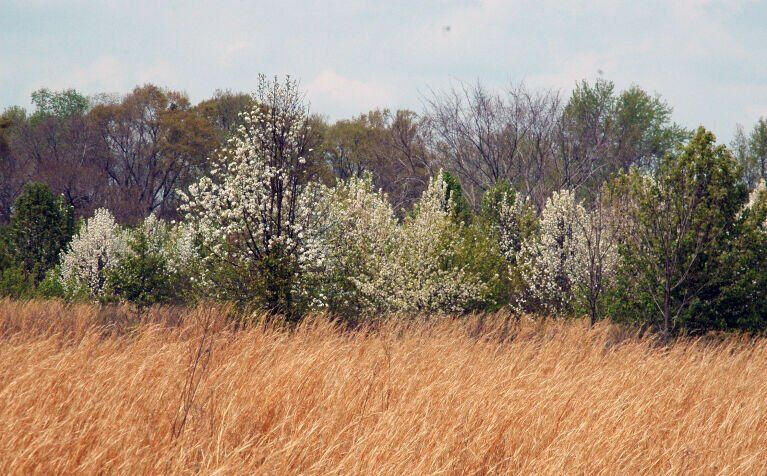
Callery pear trees spread like weeds, especially in bright fields, across the commonwealth. Planting of the trees is being phased out because Callery pears choke out native species.
Katherine Mansfield
Katherine Mansfield
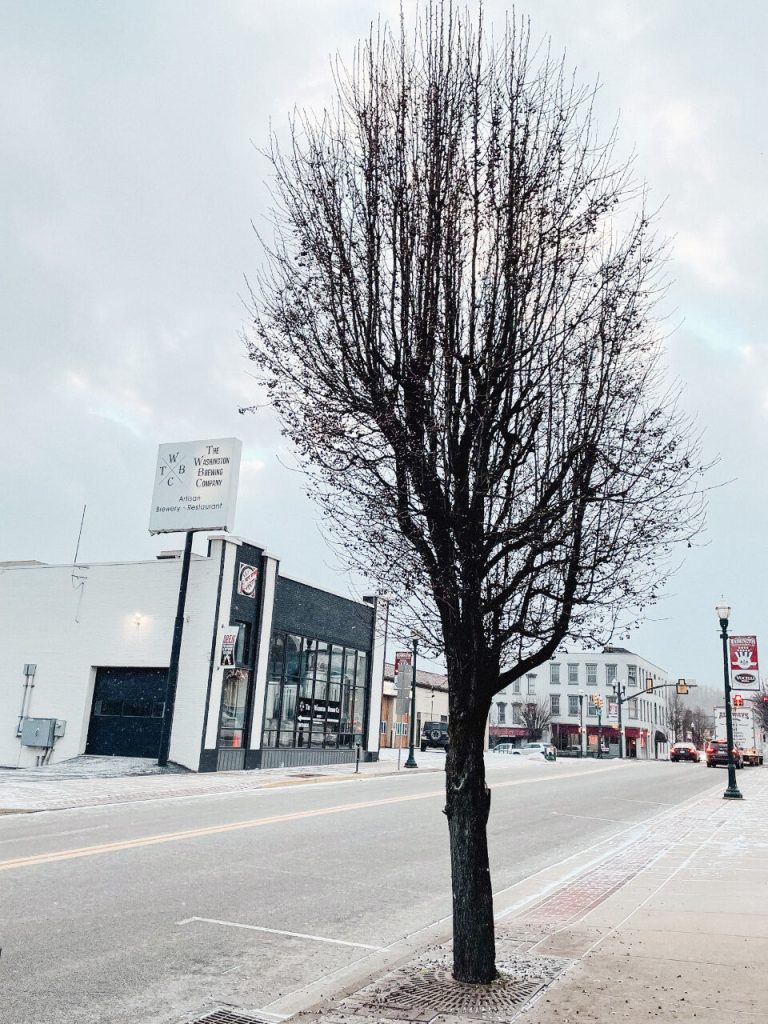
Katherine Mansfield Bradford pear trees line the streets of downtown Washington. The tree was recently added to Pennsylvania’s Controlled Plants and Noxious Weeds List and will be phased out over the next two years.
Courtesy of Dr. Ben Dolan
Courtesy of Dr. Ben Dolan
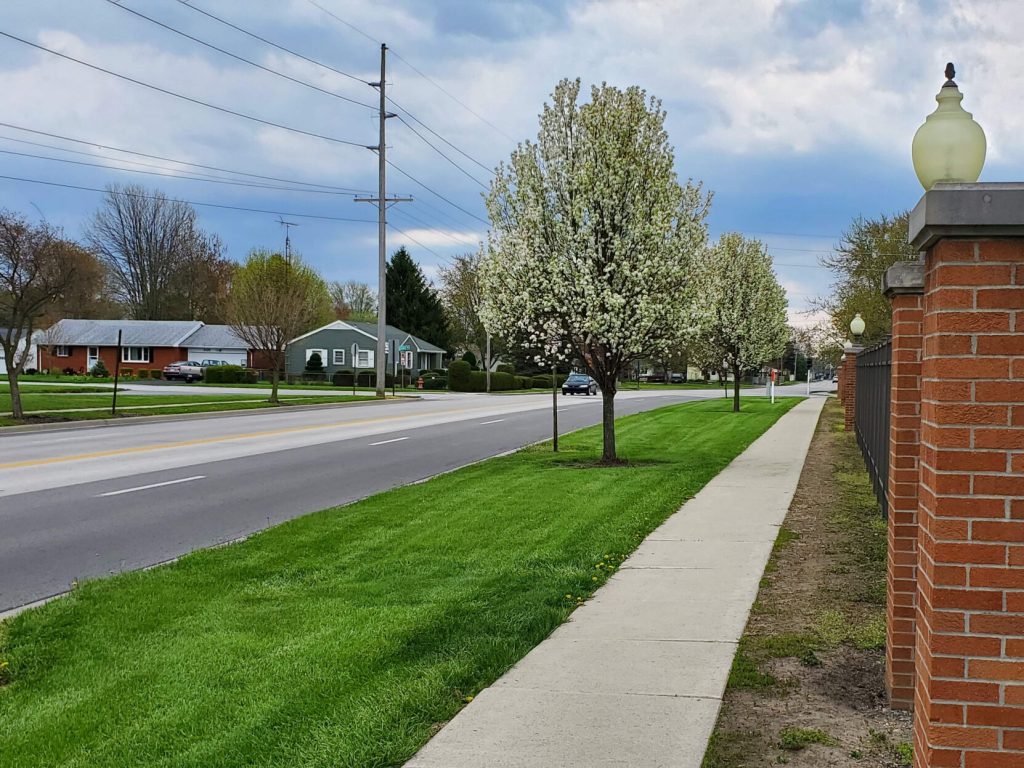
Callery pear trees are often part of public landscaping and, despite a pungent odor when they bloom, are admired for their bright white flowers. These Callery pears line a quiet street in Findlay, Ohio.
The Pennsylvania Department of Agriculture recently announced the addition of Callery pear to its Controlled and Noxious Weed List, along with a plan to phase out the sale and planting of America’s darling by 2024.
“It’s popular as a street tree. A lot of people line their driveways with them; they are in a lot of public places,” said Scott Weaver, fourth-generation owner of Iannetti’s Garden Center in Burgettstown. “It is a very popular tree. It is a very attractive tree. People really like them.”
The public has adored Callery pear trees (also called the Bradford pear tree in Pennsylvania) since the species’ introduction to the United States more than a century ago.
During the early 1960s, the National Arbor Day Foundation’s celebrations included the distribution of the tree nationwide, and as part of Lady Bird Johnson’s beautification program, she promoted the Callery pear tree.
Callery pear was lauded in the New York Times for its supposed immunity to fire blight, a contagious plant disease. It was easy to grow and its flowers – Dr. Jason Kilgore, associate professor of biology at Washington & Jefferson College, describes them as “showy, white, prolific flowers” – were unmatched in beauty.
The Callery pear’s roots were grafted onto other fruit trees to help them grow; the tree was cloned, and varieties of Callery pear lined the streets of grand cities, including Pittsburgh.
The Callery pear was everywhere.
“Everyone thought it was great,” said Mason Heberling, assistant curator of botany at the Carnegie Museum of Natural History. “It’s actually quite common. You don’t have to go very far to find it. I’ve seen a lot in old fields, abandoned fields … or cut-down forest along the highway. Callery pear is definitely a concern.”
The Callery pear has been on scientists’ radars for the past couple of decades.
“Most invasive species take time to become invasive,” said Kilgore, who also founded and curates W&J’s campus arboretum. “Callery pear escaped from cultivation where we intended to plant it in the mid-60s, in Maryland. We’ve known since the ’60s that the plant can escape, but the plant didn’t become noticed as an invasive plant until the early ’80s. Since then, the plant’s population exploded across eastern North America.”
And in the last 10 years, said Shannon Powers, press secretary of the DOA, Pennsylvania has taken note of the species’ spread.
“Just over the last decade, it’s become more and more readily apparent it’s naturalizing, it’s spreading,” she said. “It’s a lovely tree. It’s beautiful when it blooms, but it smells horrible. For some people, it’s an allergen. That in itself is not reason to ban a sale of a tree. The reason to ban the sale of a tree is when it’s a danger to our environment, our ecology and human health.”
The Callery pear tree and its derivatives, including the Bradford, have begun impacting the growth of native species.
“It spreads without human intervention,” said Heberling. “It’s not from our area, so it’s competing with our native vegetation and impacting the natural ecological cycle. Other things won’t grow under the Callery pear; that’s why it’s problematic.”
Another issue with the Callery pear: it supports non-native species, including the European starling, an invasive bird that works with the Callery pear tree, said Kilgore, whose research includes northeastern North American forests. The two species support each other in their spread across the northern part of the continent.
Adding a species to Pennsylvania’s Controlled Plant and Noxious Weed list is a big deal. Before fall of 2021, just 39 species had made the list, which has been around since 1862.
“It’s a legal procedure,” said Powers. “There’s a deliberation that happens over a period of time. It’s not just a decision that’s made and boom, it’s banned. It’s tied to regulations.”
Before it winds up on the list, a plant is voted on and must be approved by the Controlled Plant and Noxious Weed Committee. The species is published to the state’s bulletin and, 60 days after publication, it is formally added to the noxious weeds list.
The Callery pear was added in November.
“It’s very unusual to ban a plant that’s popularly available in nurseries,” said Powers.
Powers said even more unusual is that the Callery pear tree is not the only species recently added to the noxious weed list.
“A couple months ago, we banned Japanese barberry. It’s a shrub; it’s very pretty, it’s prolific. But it is thorny, so it’s resistant to deer. It spreads, it harbors ticks, it takes over the understory in the forest,” she said. “It destroys habitat.”
Because both the Bradford pear and Japanese barberry are sold commercially, the state will phase out the two species over the next couple of years “to allow nurseries and landscapers to replace their stock,” Powers said.
The sale ban of Bradford pear trees goes into effect Feb. 9.
In February 2023, the DOA will issue a letter of warning to anyone still selling the Bradford pear tree. The following February, anyone with Callery pear trees remaining in their inventory will be mailed a destruction order.
“That’s a big deal,” said Heberling. “It just brings a bit of awareness. That state botanists and state legislatures are saying that this plant is a troubling plant and therefore would encourage people to remove any Callery pears they have – this does make it more in the public consciousness.”
The state already announced exemptions to seedless varieties of Callery pear will be granted, after research confirms those varieties are sterile and won’t pose harm to the environment.
But Heberling and Kilgore agree the best thing for the environment is planting more native species.
“I always encourage people to consider native alternatives: red bud, native dogwood, small trees like blackhaw, wild plum, chokecherry and hawthorn,” said Kilgore. “(Those) give a lot of the similar kinds of vibrant, prolific flowers that we would see in Callery pear, that people like. Not only should they be removing, but they should be replacing with native alternatives.”