

Time to retire the perp walk
Editor鈥檚 note: Syndicated columnist Diane Dimond in on sabbatical. This is a reprint of a column from 2019.
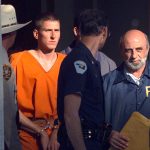
Let鈥檚 talk about a police practice known as the perp walk. It鈥檚 the walk of shame of a suspected perpetrator of a crime, usually in a case that鈥檚 top of the headlines or soon will be.
As police move the handcuffed prisoner from place to place, both the public and the media are allowed to be on hand to shout accusations, take photos and videos and ask loaded questions.
Perp walks are known as the crime reporter鈥檚 red carpet because police make it so easy, alerting reporters in advance about the time and place of the event so cameras can be at the ready. It鈥檚 like a preplanned scene out of a movie complete with uniformed officers; handcuffs, and sometimes leg cuffs; and a suspect who is usually trying to hide his or her face in some dramatic fashion.
The operative word we should all keep in mind here when we watch a perp walk is 鈥渟uspect.鈥� The person in this humiliating walk is only suspected of having committed a crime, not convicted of one.
I must admit, when I was a young reporter, I often took part in perp-walk spectacles.
鈥淎my, did you shoot Mary Jo Buttafuoco?鈥� I remember shouting at then-17-year-old Amy Fisher (aka the 鈥淟ong Island Lolita鈥�) as she was transported from the courthouse back to jail, having been charged with confronting the wife of her much older lover, Joey Buttafuoco, and putting a bullet in her head. That video clip would be played repeatedly until, and even long after, Fischer was convicted and went to prison for nearly seven years.
Perp walks have been a staple in New York since, like, forever. But in the spring of 2011, Dominique Strauss-Kahn, a French politician and then-director of the International Monetary Fund, was arrested in Manhattan on charges of sexual assault against a hotel maid. Police subjected him to a forced public walk, and it created an international incident. The French were outraged at the indignity of police parading a mere suspect in front of cameras. The incident caused one New York politician to declare the practice unconstitutional.
鈥淓ven Mother Teresa dragged out by detectives would look guilty,鈥� said Councilman David Greenfield. His legislation to outlaw the tradition went nowhere.
Perp walks are a staple across America. I recall that following the 1995 Oklahoma City bombing, the only time we got to see suspect Timothy McVeigh in action was during a quick perp walk orchestrated by law enforcement. Prosecutors were likely thrilled that the public鈥檚 only image of McVeigh was of him in an orange prison jumpsuit. In 2011, citizens of San Bernardino County, California, were treated to a multiple-man perp walk when four political operatives 鈥� dressed in green prison garb, orange plastic slippers, and wrist and ankle chains 鈥� were ushered before courtroom cameras for arraignment on charges of having participated in a $102 million-dollar bribery scheme.
More recently, in 2019 in Albuquerque, N.M., TV reporters were seen in a tight scrum around an elderly acupuncturist handcuffed behind his back who was accused of having sexually assaulted a patient. While walking next to Megumi Hirayama, nearly shoulder to shoulder, a reporter asked, 鈥淒id you rape her?鈥� As the media pressed in, the police escort made no move to protect the suspect.
As I watched the video of Hirayama鈥檚 close encounter with the media, I remembered the perp walk of Lee Harvey Oswald in 1963. As police walked him through a public parking area following the assassination of President John Kennedy, a man with a gun appeared. Nightclub operator Jack Ruby fatally shot Oswald on live television.
I鈥檓 sure the Hirayama video has been aired multiple times around New Mexico, perhaps cementing in viewers鈥� (and potential jurors鈥�) minds that he must have committed the crimes police and prosecutors say he did. I mean, there he was being directly asked whether he raped a patient, and he did not answer! He must have done it! Perhaps the acupuncturist is guilty, but isn鈥檛 that for a court of law to decide?
Today, as I am older and (arguably) wiser, I become uncomfortable when the media declares that its First Amendment rights of free press are sacrosanct while ignoring other citizen鈥檚 constitutional protections. Equally disturbing are those ubiquitous press conferences during which police or prosecutors look into the camera and declare that with their latest arrest of a suspect, they have taken a dangerous criminal off the street. Can鈥檛 we wait for due process anymore?
All citizens are supposed to be presumed innocent until proven guilty. Everyone has a Sixth Amendment right to a fair trial and an Eighth Amendment right to not be subjected to 鈥渃ruel and unusual punishment鈥� like public shaming.
It is time the entire judicial system take the overwhelmingly negative effect of perp walks seriously. It is clear prosecutors aren鈥檛 telling the police to stop the practice. It鈥檚 clear judges and lawyers believe they can weed out juror bias by asking a few upfront questions. But to truly be a system fair to all, the practice of perp walks has to be discontinued, like, yesterday.
Diane Dimond is a nationally syndicated columnist.