

‘Game time’: J-M using virtual reality to help autistic students navigate world around them
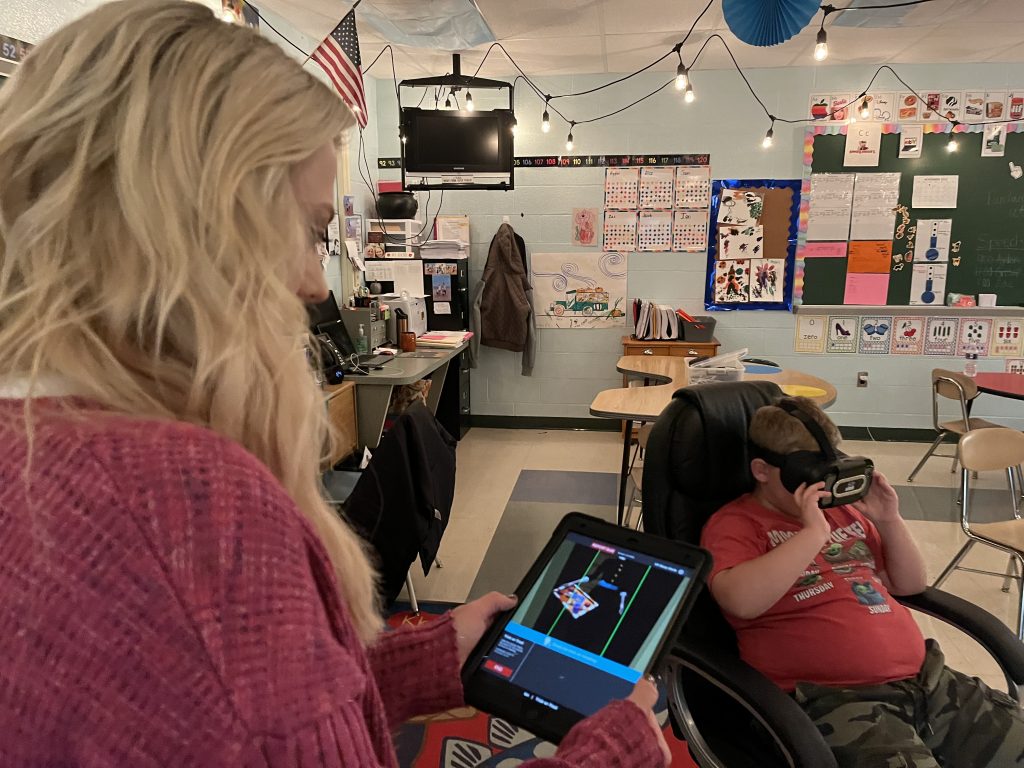
Brittany McIntire, life skills and autistic support teacher at Jefferson-Morgan Elementary School, and student Ian Mason work on a virtual reality lesson that aims to help Ian better navigate social situations. (Photos by Karen Mansfield)
Karen Mansfield
Karen Mansfield
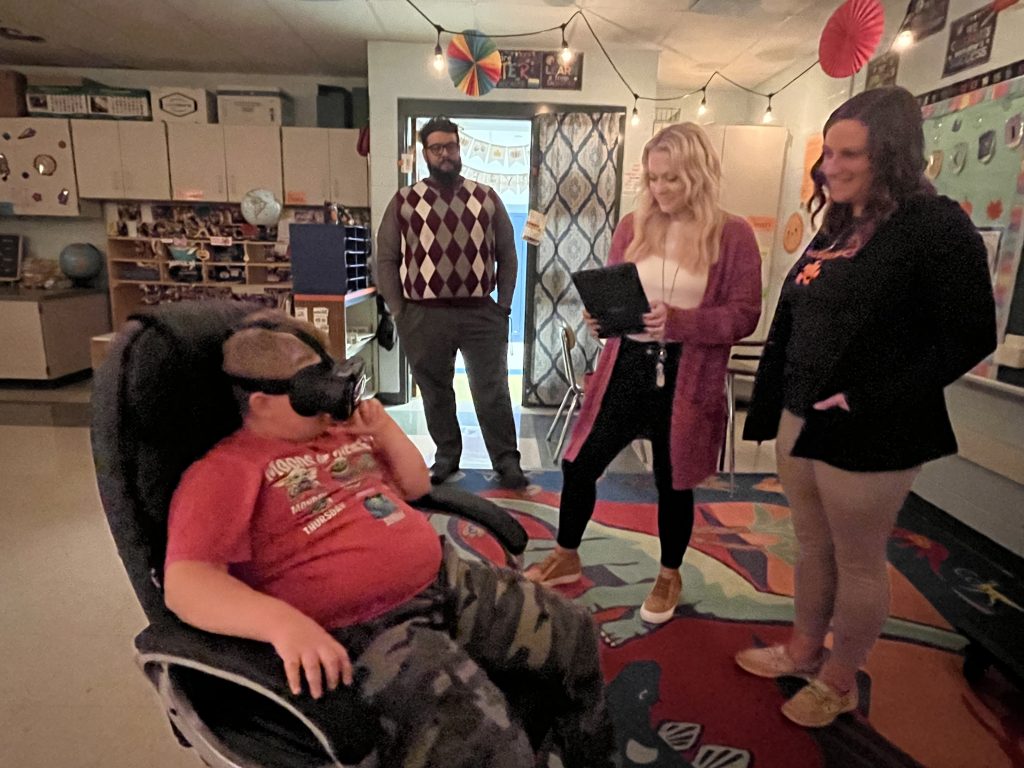
Ian Mason, left, works on a virtual reality lesson in his life skills and autistic support classroom, with Jefferson-Morgan Elementary teacher Brittany McIntire, center, as Superintendent Brandon Robinson, second from left, and Director of Special Services Sara Bates, right, look on.
Karen Mansfield
Karen Mansfield
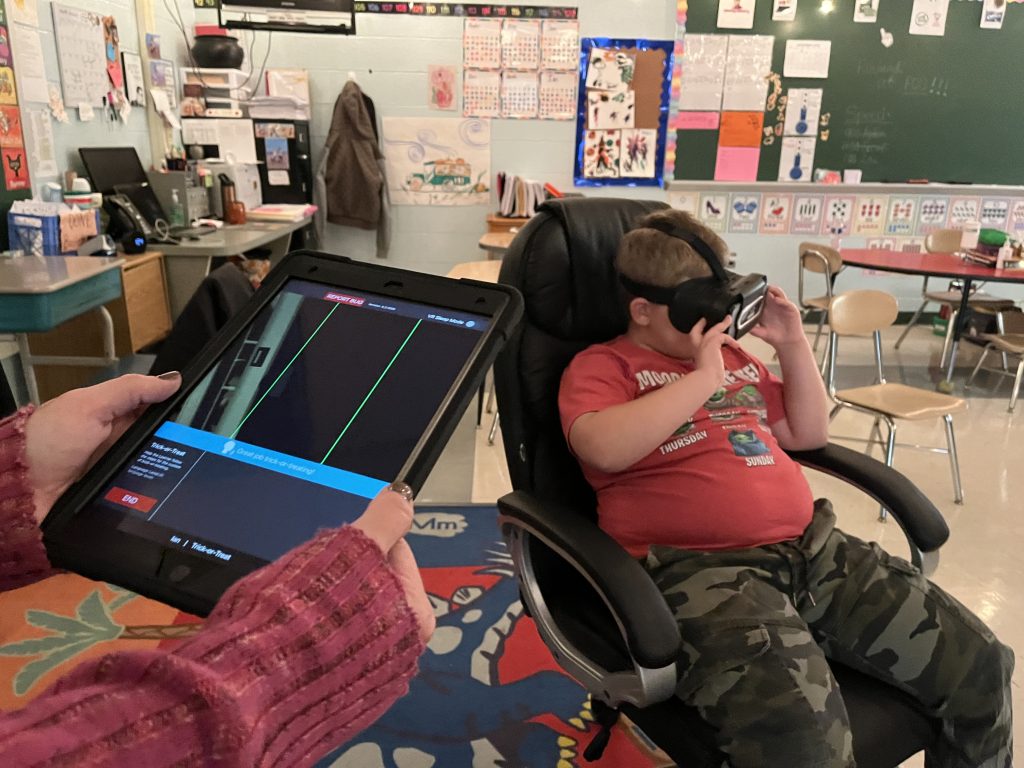
Jefferson-Morgan Elementary School student Ian Mason works on a virtual reality lesson during a recent class with teacher Brittany McIntire.
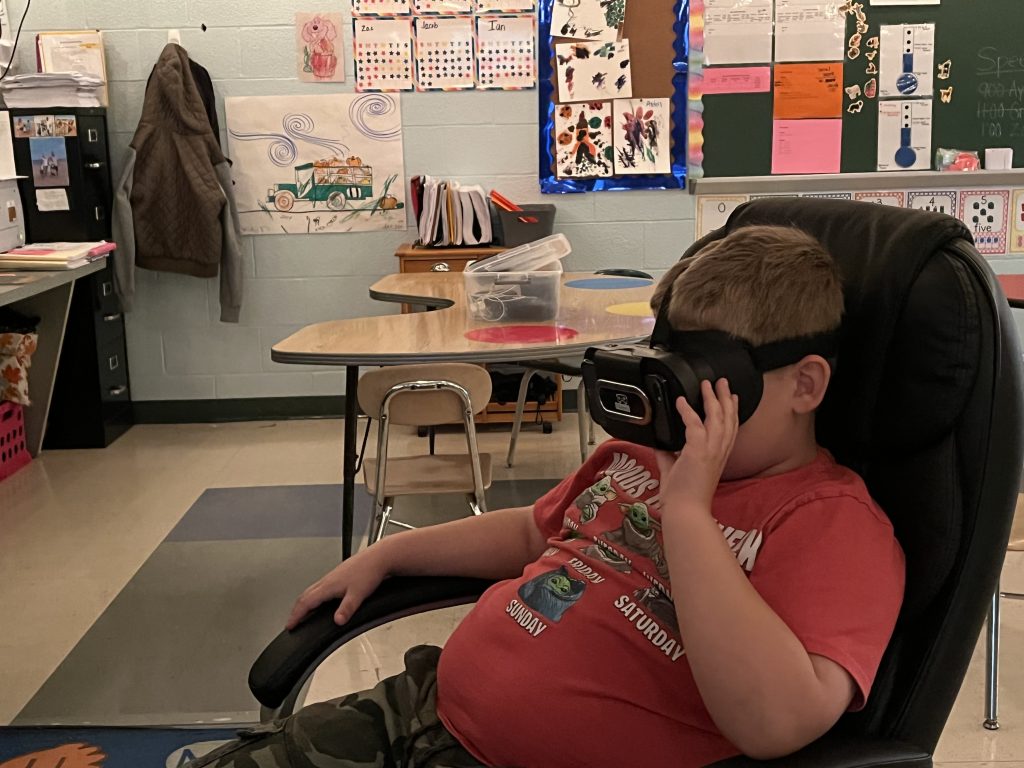
Ian Mason, a student at Jefferson-Morgan Elementary School, uses Floreo, a virtual reality program that teaches a variety of interactive lessons. (Photo by Karen Mansfield)
news@greenecountymessenger.com
Inside a classroom in Jefferson-Morgan Elementary School, life skills and autistic support teacher Brittany McIntire is walking third-grader Ian Mason through a Halloween virtual reality game.
Ian is wearing virtual reality goggles. What he sees, McIntyre sees mirrored on her iPad. For the next few minutes, the two go through a simulation, working through questions and answers.
鈥淒o you want to knock or ring the door bell?鈥� McIntire asks as Ian approaches the door.
鈥淩ing,鈥� says Ian, pushing the door bell.
When a woman opens the door, holds out a tray of candy and says, 鈥淗appy Halloween,鈥� McIntire prompts Ian, 鈥淲hat do you say?鈥�
鈥淭rick-or-treat! Whoa!鈥� Ian answers excitedly, and reaches for a piece of candy.
It seems like a simple educational game any kid would play. But really, it鈥檚 so much more.
This VR system McIntire uses in her classroom is from Floreo, a Washington, D.C.-based company that uses technology to help children with autism and those on the autism spectrum to cultivate real-world skills and handle common social situations and unplanned events without them needing to be physically present in them.
For example, Floreo helps students in McIntire鈥檚 class to practice school hallway experiences, where students encounter peers in the halls and practice interacting and communicating with them.
Floreo also includes lessons on how students can handle cafeteria social skills, classroom social skills, police encounters, and hundreds more.
And, in VR, the lessons are repeatable and personalized.
鈥淚t鈥檚 so good for social interaction,鈥� said McIntire, noting one lesson in which a student is sitting across the lunch table from classmates who are eating pizza. 鈥�(The students) say, 鈥業 like pizza, do you like pizza?鈥� and then the student is prompted to answer and say what kind they like. Just having that spontaneous conversation back and forth really helps them because in the real world, when they鈥檙e in the cafeteria, they can use that practice to actually interact with fellow peers.鈥�
There also are calming and alerting experiences students can practice for those times when they get stressed or anxious.
Studies show a virtual reality environment makes it easier for children with autism, who may struggle to interpret nonverbal clues, to focus on a skill being taught in the lessons, and Sara Bates, J-M鈥檚 Director of Special Services, said the VR program is having a positive impact on the students.
鈥淭here鈥檚 a ton of data that shows video modeling helps kids on the spectrum learn, so this takes that and builds on that concept, where it鈥檚 more than just video modeling. You鈥檙e actually in the video participating,鈥� said Bates. 鈥淚t鈥檚 been hugely beneficial.鈥�
In addition to providing fun and relevant lessons for students, McIntire uses Floreo to track student progress and monitor what鈥檚 working for them.
鈥淚t鈥檚 going better than we even thought it would,鈥� said McIntire. 鈥淭he kids love it. For them, it鈥檚 just fun; they don鈥檛 even realize they鈥檙e learning and practicing skills. We actually call it 鈥榞ame time,鈥� but really it鈥檚 educational.鈥�
Floreo was created by Vijay Ravindran, whose son is autistic. His mission is to help every child reach their full potential 鈥� the name Floreo, in fact, comes from the Latin root for the word 鈥渇lourish.鈥�
Jefferson-Morgan Superintendent Brandon Robinson said the elementary school launched the Floreo pilot program earlier this year and, based on positive results, plans to expand to the high school as early as next semester.
Teachers from other school districts have scheduled visits to J-M to see how Floreo works in the classroom.
鈥淲e look at innovative things for all of our kids, and sometimes it doesn鈥檛 fit in learning skills and autistic support classroom, but this is something that was made with exactly that intention, for those kids, and that鈥檚 what I鈥檓 most proud of,鈥� said Robinson. 鈥淲e鈥檝e got all kinds of technology for all of our students, but this is tailor-made for our students.
鈥淭he first time I saw it in action, it was amazing to watch the students use it. We, all of us here, were smiling. It brings you joy to see what they鈥檙e getting out of it.鈥�