

Awe for fawns
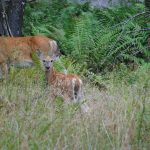
At my age, if you have both nature and children in your life, you鈥檙e twice blessed. This truth came clear on recent occasions when we were traveling around on routine errands, accompanied by our granddaughter. At least twice, we鈥檝e seen white-tailed does, accompanied by fawns, along roads in low-traffic locations where it was safe to tarry and watch.
An encounter like that can lose its impact if you鈥檙e not mindful to the marvel of it, which can happen after you鈥檝e seen such things countless times. But with a child in the car, the scene is charged with all the beauty and wonder as the first time you saw it yourself.
鈥淟ook, there鈥檚 a baby,鈥� our granddaughter squealed. 鈥淚t鈥檚 trying to tell its mama it wants milk.鈥�
Her excitement was infectious, opening a grandparent鈥檚 eyes to the miracle. And despite the sugary language, her assessment was biologically spot-on. One of the fawns was intent on jamming its head between its mother鈥檚 legs, butting at her udder in demand that she stand still long enough to yield a draft of warm milk.
Initially, the doe ignored the butting, stepping forward for a morsel of browse for herself. But then she stopped and accepted her offspring鈥檚 blunt request, not unlike how we deflect our granddaughter鈥檚 plea for a sugary snack, then relent. A child, enamored with a baby deer, doesn鈥檛 yet understand that the physiological demands of lactation 鈥� milk production 鈥� to support twin fawns means the doe needs more nutrition herself.
The other fawn was more patient, waiting its turn on the margins, reflecting the way human siblings can display markedly different personalities.
鈥淲ill the other baby get some milk, too?鈥� granddaughter queried?
鈥淥h yes. You can be sure of that.鈥�
She accepted my reassurance in a wide-open way I sensed she may not do as the years pass by. But it鈥檚 nice while it lasts.
You鈥檝e likely seen white-tailed fawns, too, around the region. Most were born at the peak time in late May or early June. They鈥檙e among the mammals biologists term as 鈥減recocial,鈥� meaning they can stand and walk, though wobbly, shortly after birth. Fawns weigh between four and seven pounds when born. Their coats are well-formed, and the vivid white spots provide a degree of camouflage when a fawn lies curled up among ferns as its mother forages nearby.
Now, at about six weeks of age, they鈥檙e beginning to sample solid food and will gradually wean from dependence on the doe鈥檚 milk.
That point is critically important in the realm of deer management. It鈥檚 important for a fawn鈥檚 survival that it be born at the optimum time鈥搇ate spring. If it鈥檚 born later, it may not be able to grow and accumulate sufficient fat reserves to survive the winter.
White-tailed does begin to be receptive to breeding in the fall, and the gestation period for a fawn to develop inside its mother鈥� womb is seven months. The deer rut 鈥� breeding season 鈥� peaks in our region in early November. Consequently, births should peak in early June.
But, as has happened in Pennsylvania鈥檚 deer-management past, if the proportion of females in the population is too high, not all does conceive fawns during the prime time, because there are not enough males to fertilize available females. Any unbred does become receptive again about 28 days later. Fawns that result from late breeding, then, face a survival disadvantage. In deer herds where the sex ratio is severely unbalanced, some fawns are not conceived until January, meaning birth happens the following August.
The solution is enlightened deer management, which the Pennsylvania Game Commission has employed in recent years. By allowing hunters to take more female deer during the hunting seasons, the population鈥檚 sex ratio is kept close to ideal, so most females conceive at the optimum time, and their fawns are born in a tight window in late spring. Birthing most fawns within a short time span, also discourages predation of fawns by bears and coyotes. Predators simply can鈥檛 find them all when thousands are born within a few days.
That all drifted a bit beyond a child鈥檚 delight at the sight of a baby deer, but it鈥檚 important information for a deer herd鈥檚 health, for which hunters and wildlife managers are responsible in the modern world.
If you happen to see a fawn that appears to be abandoned, don鈥檛 succumb to temptation to pick it up and 鈥渟ave it,鈥� not even if your grandchild fears for its safety. Fawns taken from the wild rarely meet a good end. Most likely the fawn鈥檚 mother is somewhere nearby, and they鈥檒l reunite as soon as you鈥檙e gone.
If watching whitetails has lost its thrill, take a child along. Youth鈥檚 innocence will re-open your eyes to wonder.
Ben Moyer is a member of the Pennsylvania Outdoor Writers Association and the Outdoor Writers Association of America.