

Dark Danger: Bats are part of Halloween fun but a hazard lurks in caves for nature鈥檚 real bats. (copy)
Photos: Ben Moyer
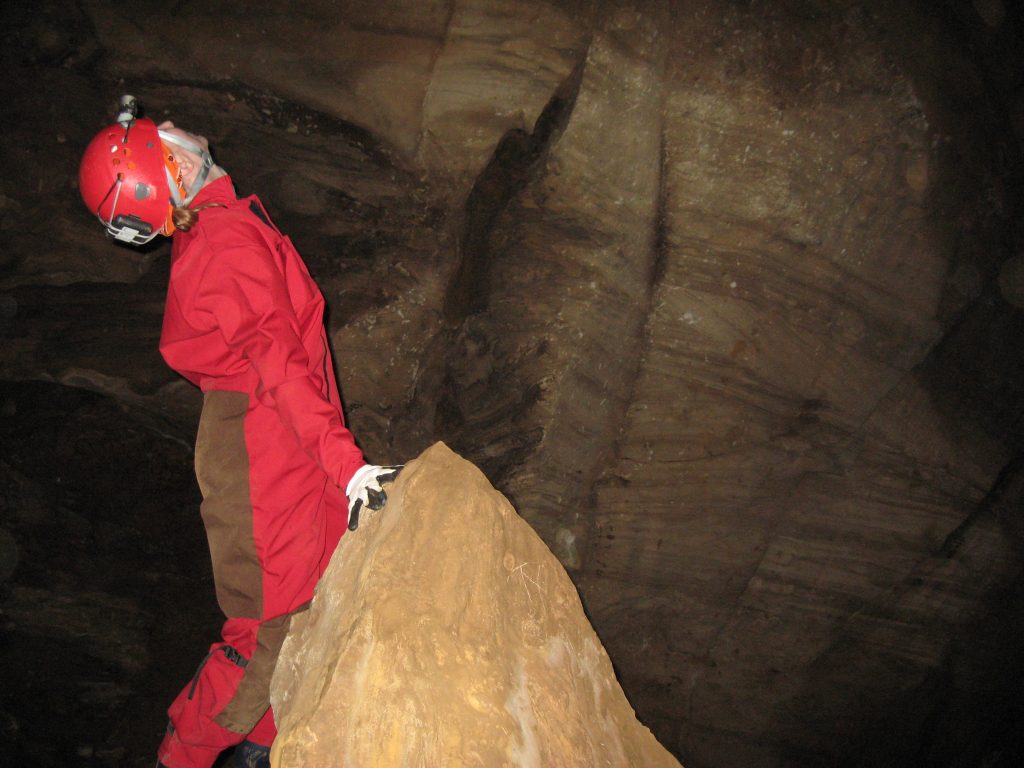
A biologist with the Pennsylvania Game Commission searches for surviving bats infected by White-Nose Syndrome in a cave in Fayette County.
Ben Moyer
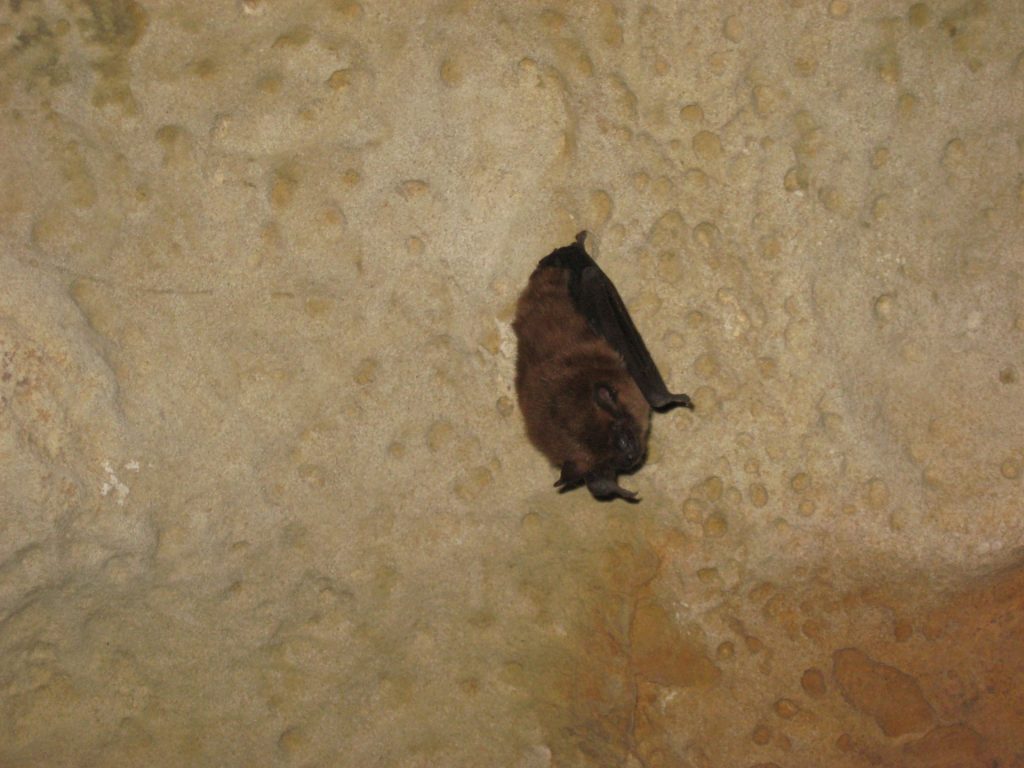
A big brown bat hibernates during late winter in a Fayette County cave. The big brown bat species is somewhat less vulnerable to White-Nose Syndrome because it does not hibernate in dense colonies, discouraging fungal spread.
Maybe the most widely recognized symbol of the Halloween season is the bat.
Bat silhouettes are everywhere, hovering around witches and escorting zombies. You see bats with fangs, bats with over-size eyes, and all kinds of bat images that could summon up nightmares. It鈥檚 easy to assume that bats are creatures of fantasy, just like vampires and ghouls.
In all the Halloween hysteria about bats, it鈥檚 also easy to forget that bats are natural and important elements of ecosystems all over the world. Next to rodents (which bats are not), bats are the most diverse order of mammals on Earth, with over 850 species inhabiting every continent except Antarctica. Eleven bat species are found within Pennsylvania, ten of which are known to inhabit Fayette and Greene counties.
It is true that a small number of bat species do feed on the blood of mammals and birds. These bats, called vampire bats, are native only to Central and South America and do not occur in the United States or anywhere in North America. It seems likely that these naturally blood-feeding bats account for at least part of our cultural associations of bats with the supernatural, but they are real and natural animals.
Some bats, mostly in tropical regions, feed on fruit. Most bats, though, including all those in our area, feed entirely on insects, making them an extremely beneficial asset to have in an ecosystem. Bat researchers have found that the bat you see flying over your backyard cookout on a summer evening consumes about a thousand mosquitoes and gnats. That鈥檚 one thousand insects per bat, per hour.
Since our bats here eat insects, you don鈥檛 see them in winter when insects are unavailable. To deal with winter鈥檚 cold and lack of food, some of our bat species migrate south to warmer climates, like birds. But most of our bats hibernate during winter. They seek out the security and relative warmth of caves or abandoned underground mines, where they may roost in dense colonies, hanging upside down, just like you imagine, to maintain heat until spring.
Bat hibernation in caves and mines is part of one of the saddest and most rapidly advancing tragedies in the history of mankind鈥檚 relationship with other living creatures. Most people are unaware that bats are in big trouble. Just since 2006, a short 17 years ago, our most abundant and beneficial bat species have declined in eastern North America by as much as 99 percent. Before the plummet in bat populations, our most common bat species included the little brown bat, big brown bat, Keen鈥檚 bat, eastern pipistrelle, and red bat.
What happened to American bats (including Pennsylvania and our area) in such a short blink of time is another in the growing catalog of disasters due to invasive species. The offending invasive is not another bat, it鈥檚 a fungus, known as white-nose fungus, which causes White-Nose Syndrome and decimates hibernating bat colonies.
First documented in America in a cave in New York State in 2006, white-nose fungus is believed to have been accidentally imported into North America, and then spread from cave to cave by spelunkers鈥搑ecreational cave explorers鈥搘ho pick up the fungal spores on clothes and gear.
White-Nose Syndrome is an insidious killer. The fungus grows on the walls of caves but can also infest the bats themselves as fuzzy white filaments around a sleeping bat鈥檚 nose and mouth, and on the bare skin of the wings. The fungus does no direct harm to the bat, but it irritates the bat鈥檚 skin and causes it to wake up prematurely during winter hibernation. Awakened, bats then fly outside into the cold winter air, where they fly around sending out futile sonic signals to find mosquitoes and other insects that aren鈥檛 there. Bats awakened by white-nose die from starvation, exposure or a combination of both.
Currently, there is no known way to combat the fungus except to try and restrict its spread. The Pennsylvania Game Commission has erected barriers over cave and mine entrances on state game lands in Fayette County that allow bats to enter and leave but exclude people. The barriers reduce disturbance of the bats and prevent the human spread of white-nose to or from that cave.
A just completed survey done by a research firm for the Game Commission sampled Pennsylvania citizens鈥� knowledge of wildlife disease in the state. Results showed that 75% of Pennsylvanians had never heard of White-Nose Syndrome before they were contacted for the survey. Yet, the disease has nearly removed bats from our skies, especially the little brown bat which, because of its habit of hibernating in dense colonies, is highly susceptible to the spreading fungus.
Far from being the ghoulish demon depicted at Halloween, bats are part of our wildlife heritage, upon which we have unwittingly unleashed a different kind of demon.