

Morel Mystique: Morel season reaching its climax after wet spring boosted growth in area woodlands
It’s been a rainy spring. And while rained-out schedules are a downer, all the dampness has its upside. Many folks in this region report — or is brag a better word? — it’s been a good spring for morels.
Around here, morels are “a thing.” It’s amusing to me, in a good way, that, lately, the first words uttered in happenstance encounters with so many people I know have been: “Finding any mushrooms?”
At this time of year, at least, “mushrooms” translates to morels.
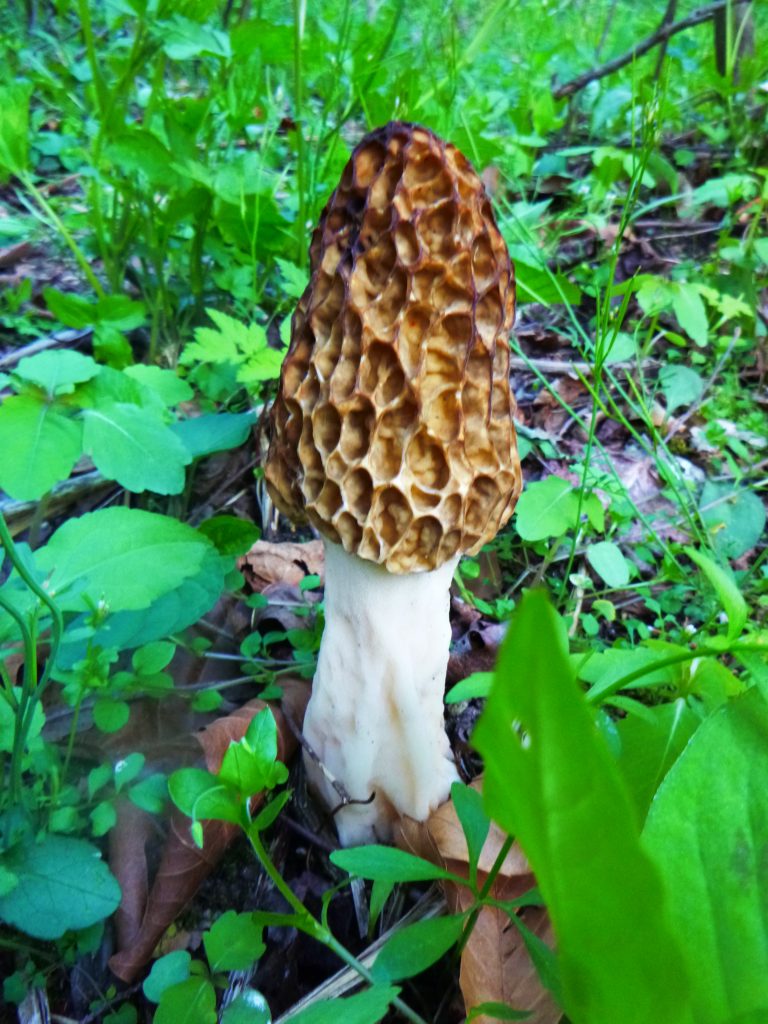
Morels need no introduction among the community of wild-food foragers. But for those uninitiated, morels are the strangely structured fruiting body of a wild fungus that grows in woodlands across roughly the northern third of the United States (and in Europe), especially Appalachia, the upper Midwest, and the Pacific Northwest. Morels are basically a ridged and pitted cone perched atop a hollow stem. They are hollow inside and the outer flesh is firm in the hand, yet easily “crushable.” Some irreverent individuals have described them as a “car wash sponge on a stick.”
The morel fungus likes woodland slopes rich in organic matter, on sites that are somewhat damper than the general surroundings. Its fruiting body, which is the part of the fungus people know as the morel, juts out from among fallen leaves and wildflowers in the spring. Then, for a couple of fevered weeks in late April and early May, many avid “shroomers” forsake all other hobbies, diversions, bad habits, and sometimes work and family obligations to seek them out.
Flavor partly explains the morel’s cult status. Nothing else tastes like a morel. The savory essence of morels is hard to describe. They’re meaty, earthy, and rich, with a mysterious wildness that no other food conveys. They’re simply delicious.
And that’s just the taste. The texture is just as unusual — pleasantly chewy, but still yielding to the tooth. Something like — well, I can’t think of anything that compares.
I like to pair them with a deer steak. It just seems like the right thing to do.
But never eat them raw. Always cook morels and any wild edible fungi.
Besides the pleasure of eating them, morel popularity is ritual. Finding, cooking, and eating them is an annual rite that connects people to land and place, to the natural cycle of seasons.
They bring out good in people too. I was working on a project with some friends about a week ago, along a dirt road deep in the woods. A pickup truck pulled up and stopped. A young man got out and asked me if I liked morels.
“Who doesn’t?” I replied.
“I just found a big mess and I have more than I need,” he said. “Here, enjoy these.”
This smiling stranger handed me a bread bag with a dozen nice specimens, got in his truck and drove away. In our contemporary suspicious and sometimes antagonistic society, the encounter felt strange, but refreshing and welcome.
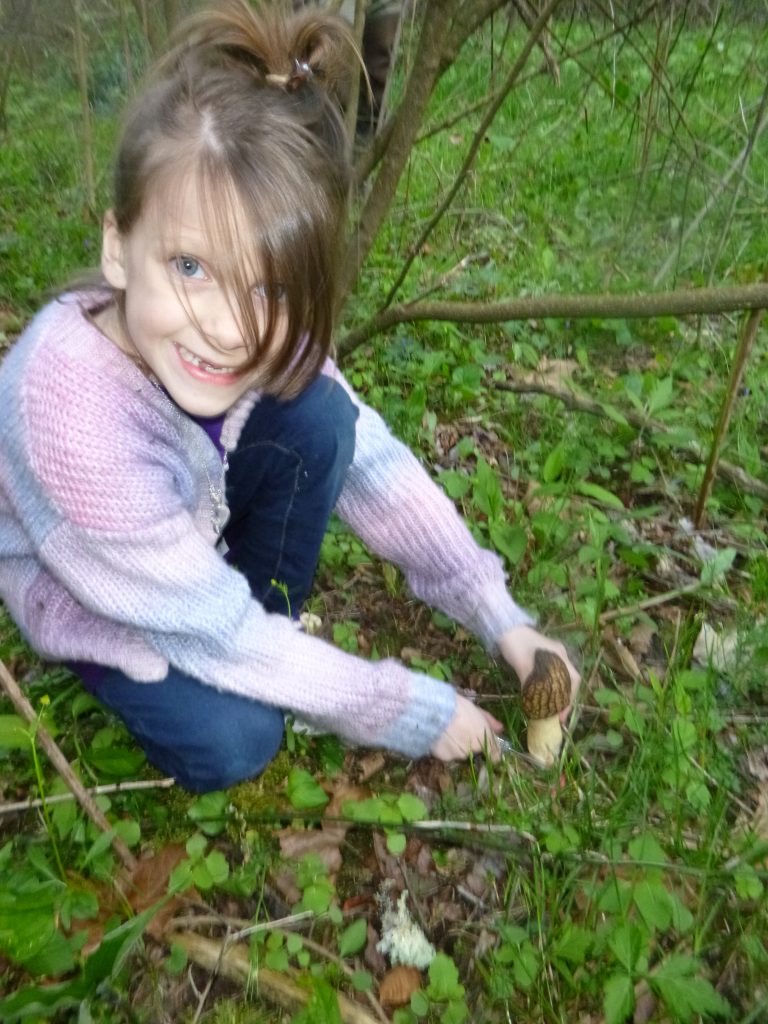
Soon after that I enjoyed taking my 8-year-old granddaughter out to look for morels. We’d gone a few times in recent years but had no luck on those outings. So, she’d heard a lot about the culture of morels but had not actually plucked one from the wild.
Plucked is a poor word. You should cut morels off at the base with a sharp knife.
We hadn’t searched long when we found a batch of big morels growing close together. It was a classic scene for her to observe. She’d know what to look for from that moment on. I gave her the knife and let her cut them. She did the task with care and purpose.
Later, her mom cooked them for her in the best way, simply sauteed in butter, to let their native taste prevail.
Granddaughter called me on the phone to inform me the morels were “awesome.”
I felt proud and fulfilled to have shared this tradition, so closely linked with the natural world, with a grandchild.
That sharing closed a generational loop. I was about her age when my grandfather began taking me to hunt morels. That means the ritual of morels runs through at least five generations of our family now. My grandfather called them “murgles,” which appears to be a locally rooted name, which I’ve heard nowhere else, and never from younger enthusiasts. He always took me to the north-facing slopes of ridges, places where the afternoon sun never reaches to dry out the soil. There we looked for dead elm trees with the bark sloughing off. That’s where we’d find astonishing lodes.
I recall being amazed at how he could see them, camouflaged among dead leaves in the woods. Before your mind imprints that pitted, ridged surface, you can walk right past morels without noticing them.
He always believed that from about May 4 to May 8 was the best time. But that was a long time ago. Now, everything in nature seems to happen earlier, after our mild winters and warm springs.
Once I was sitting in the woods, in a place I’d never been, trying to call a turkey. Suddenly, I spotted a morel growing about 10 feet away. Once that image registered, I could see maybe two dozen more scattered through the woods nearby. I went back there many times after but never found that abundance again.
Morels are mysterious, elusive, delicious, and fun. They’re something to look forward to every spring, and something to share, across the span of lifetimes.