

Olympic achievements of John Woodruff to be remembered at race
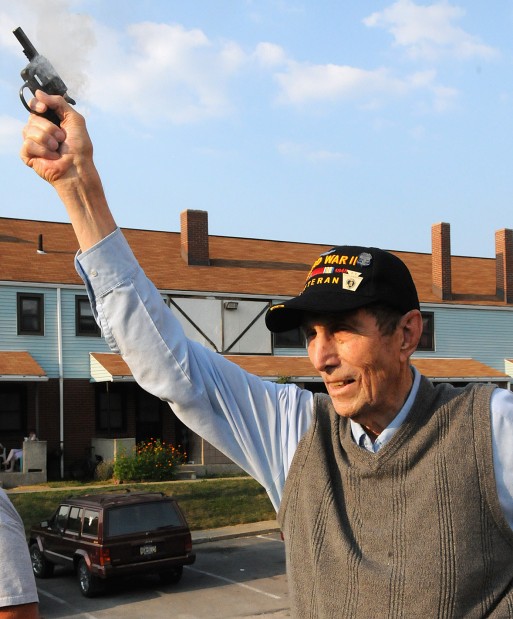
Connellsville's John 'Wally' Schroyer fire the gun to start the 2010 John Woodruff 5K Run and Walk.
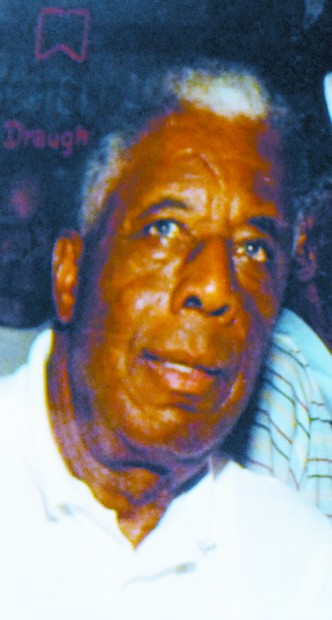
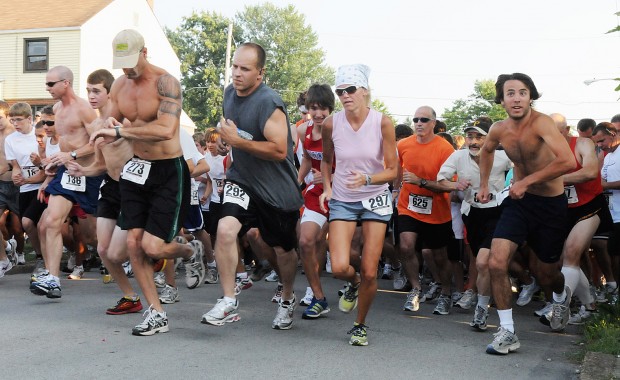
The start of the 2010 John Woodruff 5K Run and Walk in Connellsville.
?CONNELLSVILLE — The accomplishments of 1936 Olympic gold medalist John Woodruff will be remembered Wednesday as the Woodruff 5K Race Committee marks the 75th anniversary of his receipt of the award.
The Woodruff Fun Run, for youngsters age 9 and under will be held beginning at 6?p.m. at Falcon Stadium. Those finishing the 800 meter race will receive a ribbon and an autographed photo of the Olympic gold medalist. There is no registration fee.
The Woodruff 5K walk/run will begin at 7?p.m.
Judy Keller, race committee member, said that the opening ceremony will pay tribute to Woodruff and take place at the Olympic tree — a gift to Connellsville from Woodruff on his return from the Berlin, Germany, Olympic games — that now stands at Falcon Stadium.
“Every gold medalist in the 1936 received a potted English Oak, and of the 24 Americans to receive this unique gift, only six of them are known to exist in the U.S.,” said Keller. “We are proud one is in Connellsville.”
Woodruff, who attended many of the races held in his honor until his health began to fail, died at the age of 92 on Oct. 30, 2007.
Ăĺ±±˝űµŘ author Jim O’Brien said he was “privileged” to have spent time with Woodruff when the athlete returned home for the annual race.
“I have always been fascinated and intrigued by such athletes, such superior men who managed to remain humble despite enormous accomplishments as athletes and as community contributors,” he said.
O’Brien is the author of several books about local athletes, including “Hometown Heroes” and “Glory Years.”
In addition to Woodruff, Connellsville, said O’Brien, has produced outstanding athletes.
“Few communities can boast of having produced both an Olympic gold medal winner and a Heisman Trophy winner,” he said, noting that John Lujack, a Connellsville High School graduate, received the 1947 Heisman Trophy as a quarterback for Notre Dame.
Also, Jimmy Joe Robinson, another Connellsville graduate, who became the first black football player at the University of Pittsburgh.
“That was in 1945, two years before Jackie Robinson broke the color barrier in major league baseball,” said O’Brien.
Woodruff was a standout for many reasons, including his size, skills, strength, stamina and speed, added O’Brien.
“He was raised by hard-working and loving parents who implanted proper values and showed him the way,” he said. “He overcame adversity to succeed in sports and, most of all, in life.”
Woodruff was one of 12 children born to Silas and Sarah Woodruff of South Connellsville and wanted to play football.
However, his mother believed the practices took up too much of his time and did not allow him to complete his chores at home.
The coach of both the football and track team encouraged the young athlete to try running.
“Woodruff was known as “Long John” because of the length of his strong legs and his wondrous stride as a middle-distance runner,” said O’Brien.
His abilities were noticed by many, including the University of Pittsburgh and Ohio State University.
According to historic accounts of Woodruff’s early years, the then-teen was interested in Ohio State because runner Jesse Owens was a student.
A local group of “Pitt men” sought and received a scholarship for the hometown athlete who would become the first member of his family to attend and graduate from college.
During his college freshman year, Woodruff continued to add to his achievements on the track and in June 1936 bested Chuck Hornbostel, who was thought to be on his way to the 1936 Olympics, during a trial qualifying meet.
Two weeks later, he solidified his place on the U.S. team and would compete in the 800-meter race in Berlin, Germany.
Woodruff is reported to have said in various accounts that he did not pay attention to the race issues swirling around the Olympics at that time.
“Things were so different back in those days,” he said in a 2007 interview. “(Adolph) Hitler had his master race theory. Of course, as far as we were concerned, we weren’t interested in politics. All we were interested in was going to Berlin and trying to win.”
On Aug. 4, 1936, Woodruff accomplished what he set out to do and won the Olympic gold medal.
Owens, his role model, secured four gold medals as a sprinter, said O’Brien.
“Their accomplishments were a setback for Hitler’s Aryan supremacy theories,” he said. “So much for the superiority of the white race.”
After his return from Germany, Woodruff continued his college education and competed in numerous track events.
He later earned a sociology degree from Pitt and later a master’s degree from a New York university.
Woodruff served in the U.S. Army during World War II and the Korean War. He retired from active duty service as a lieutenant colonel while remaining in the U.S. Army Reserves.
Most of his adult life was spent in New York where he was a teacher, parole officer, welfare investigator and recreation center director.
In 2000, he moved to Arizona.
Young people, said O’Brien, need to be reminded of Woodruff’s story.
“They need to know that others have come from (Connellsville) and made it big,” he said.
The first 500 registrants for the July 13 race will receive a T-shirt and a commemorative mug.
Registration cost is $20 for those taking part in the competitive walk/run and $10 for high school track team members and non-competitive group members.
Forms are available at Connellsville City Hall, Connellsville Area Chamber of Commerce or at Bud Murphy’s Ăĺ±±˝űµŘ Bar and Restaurant.