

Impact fee revenue predicted to drop
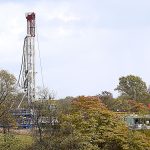
Counties, towns and agencies, beware: Impact fees are projected to plummet 21% across the commonwealth.
Pennsylvania is expected to collect $198.2 million in impact fees from unconventional natural gas operations in the Marcellus and Utica shales last year, the state鈥檚 Independent Fiscal Office reported. That is a $53.6 million decrease from the record $251.8 million that production companies paid in 2018.
That means Pennsylvania counties and municipalities likely will take a hit. They are projected to get $108 million, down from $140.1 million a year ago. Washington and Greene typically are among the top impact fees beneficiaries among the state鈥檚 67 counties, and Fayette County has also seen significant benefit.
Low natural gas prices are the culprit, said IFO, which does revenue projections for the Legislature and residents of the commonwealth. The average price in 2019 was $2.63 per million British thermal units, a three-year low, according to the New York Mercantile Exchange. When the price falls below $3, gas producers pay $5,000 less for each horizontal well than they did a year earlier.
Supply of gas has outstripped demand in recent years, causing the suppressed prices.
Ages of wells also impact the impact fees. Operators of first-year wells 鈥� in this instance, the 616 drilled statewide in 2019 鈥� pay $45,700 per well, the highest amount charged. But 7,817 wells operated in Pennsylvania in 2019 that were four years or older, and each pays $15,200 鈥� one-third the amount of new wells.
Impact fees were created when Act 13 of 2012 became law, and are distributed to local governments and state agencies for use on infrastructure, emergency services, environmental initiatives and other programs. The state Public Utility Commission administers the fee.
Oil and gas companies pay impact fees in April and the money is distributed in early July. These funds go to individual governments based on the number of horizontal wells inside their boundaries or their proximity to areas where natural gas was extracted.
Washington County received $8.4 million in impact fees in 2019 (from 2018 drilling), an increase from $7.3 million the year before. Greene County, likewise, experienced a bump from $4.9 million received in 2018 to $6 million a year ago.
Four municipalities in the entire state received $1 million-plus in impact fees last July, and all were from those two counties: Morris, Center and Franklin townships in Greene; and Amwell Township in Washington.
Judy Moninger, longtime Morris manager, certainly appreciates the financial boost. Her municipality, bordering Morris Township, Washington County, has gotten more than $6.04 million in impact fee money since 2012, about one-third of that over the past two years.
鈥淚t has helped us tremendously,鈥� she said, adding that the funds go toward paying the municipal police department and maintaining the community center. 鈥淚mpacts (from oil and gas) have been more positive than negative. We have had a lot of truck traffic, although it has slowed down.鈥�
Slowed down, indeed. Morris, she said, has not permitted a natural gas well the past two years, although a permit for one will soon be before the board of supervisors.
Moninger, however, said the township doesn鈥檛 rely on the impact fee, and that a likely decrease in this financial source doesn鈥檛 deter her.
鈥淲e realized that one of these days, this could come to the end or slow down.鈥�