

Menallen Township native who rode into space reflects on 30th anniversary of Challenger tragedy (copy)
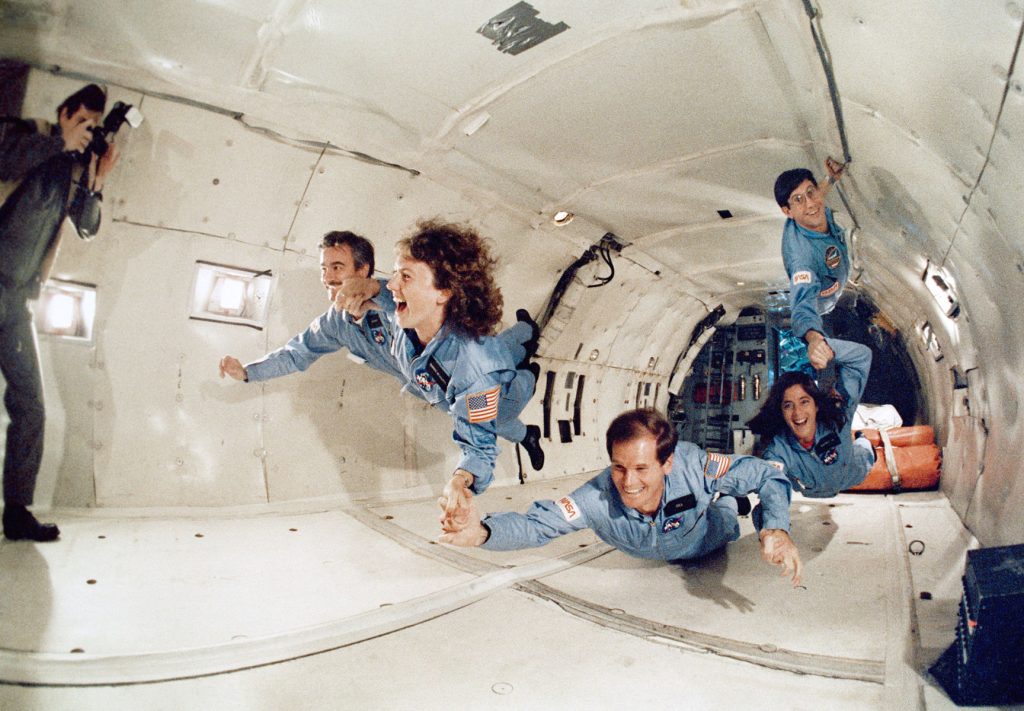
Photo courtesy NASA
Menallen Township native Bob Cenker is part of this flying human chain of prime and backup payload specialists shown in this photo taken during Zero-G training in November 1985 for two then-upcoming STS missions. The group shared some 40 parabolas in NASA鈥檚 KC-135, Zero-G aircraft. Pictured are (from left) Gerard Magilton, RCA backup payload specialist for STS-61C, Columbia; Sharon Christa McAuliffe, payload specialist/teacher citizen observer for STS-51L, Challenger; U.S. Rep, Bill Nelson, D-Florida, scheduled for 61C, Columbia; Barbara R. Morgan, backup to McAuliffe; and Robert J. Cenker, RCA payload specialist for 61C, Columbia. McAuliffe died aboard Challenger when it exploded 30 years ago today.
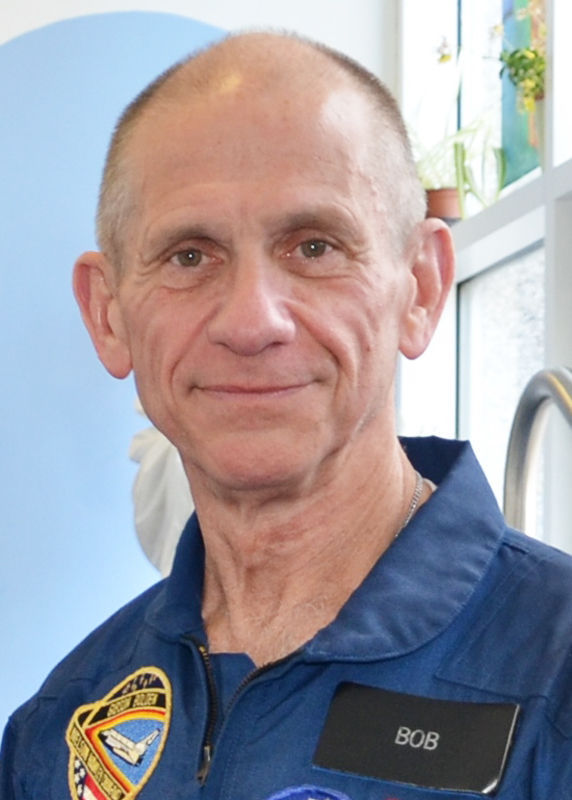
This photograph of Bob Cenker was taken in Scotland in 2013, supporting an education program.
This is a bittersweet month for Menallen Township native Bob Cenker.
Thirty years ago, the aerospace engineer flew into outer space on a six-day mission as an astronaut aboard Space Shuttle Columbia. The exhilaration of the mission is something Cenker has never forgotten.
鈥淕ravity is a drag. If I could take Barbara (his wife) and move into space, I鈥檇 be gone now,鈥� said Cenker, 67, of New Jersey. 鈥淚鈥檓 not sure what鈥檚 better: zero gravity or looking out the window.鈥�
But the success of this mission was soon overshadowed by tragedy, being remembered today on the 30th anniversary of the Challenger disaster.
Cenker returned to Earth with Columbia on Jan. 18, 1986. Ten days later, Space Shuttle Challenger launched from the Kennedy Space Center in Florida, exploding just 73 seconds after take off and killing the seven-member crew. The nation went into mourning.
鈥淚t really hit me hard,鈥� said Cenker, who was then working for RCA and learned of the news as he listened to a radio while on an airplane flight to Los Angeles. 鈥淭he guy next to me knew something was wrong. I told him the Challenger blew up and I had trained with them. I flew on the last shuttle. He got the stewardess. RCA had people on the ground waiting for me to help out.鈥�
Cenker trained with two of Challenger鈥檚 astronauts: Gregory Jarvis, 41, who grew up in New York, and Christa McAuliffe, 37, of New Hampshire, who was selected to be the first teacher in space.
鈥淒uring our several months of training together, they were as enthusiastic and excited about space flight and exploration as I am,鈥� Cenker noted. 鈥淭hey understood the risks associated with space flight 鈥� no one ever said it was 鈥榮afe鈥� 鈥� and felt, as did everyone else in the program that I met, that the benefits outweighed the risks.鈥�
He added, 鈥淚n all of the pressure of training, with the ever-present possibilities of mission cancellation, re-assignment or even a simple minor injury that might have kept someone from flying, there was always a sense of cooperation, of working together so that everyone might get their chance and contribute to a successful mission.鈥�
A 1966 graduate of Uniontown Area High School, Cenker spent his freshman year at Penn State Fayette before moving on to Penn State鈥檚 main campus where he earned bachelor鈥檚 and master鈥檚 degrees in aerospace engineering in 1970 and 1973. He later received a master鈥檚 degree in electrical engineering from Rutger鈥檚 University in New Jersey. Married 41 years, the Cenkers have two sons and a daughter and one grandson.
Self-employed since 1990, Cenker was employed by RCA when he was selected to be a payload specialist and approved by NASA for Space Shuttle Mission 61-C. He took a banner from Uniontown High School with him into space.
The NASA website explained Cenker 鈥減erformed a variety of physiological tests, observed the deployment of the RCA Satcom Ku-1 satellite, and operated a primary experiment, an infrared imaging camera. In completing this flight, Mr. Cenker traveled over 2.1 million miles in 96 Earth orbits and logged over 146 hours in space.鈥�
The pilot on Cenker鈥檚 mission, Charles F. Bolden Jr., is now administrator of NASA. Bolden will be among officials paying tribute today to the crews of Challenger, Apollo 1, whose crew perished in a flash fire during a test aboard their spacecraft on Jan. 27, 1967; and Columbia, the shuttle on which Cenker flew that was lost on Feb. 1, 2003. Foam insulation that ripped from the shuttle on launch led to Columbia disintegrating in the skies above Texas as it returned to Earth after a 16-day mission, killing the seven-member crew.
These tragedies reflect Cenker鈥檚 concerns during his mission: that disaster might occur on the launch pad or when re-entering the Earth鈥檚 atmosphere.
鈥淲hat happened to Challenger never crossed my mind,鈥� he said of the explosion that was later found to be caused by a failed O-ring in a solid rocket booster.
Following the Challenger disaster, Cenker was also surprised to find himself caught in a media frenzy. He called home to reach his wife, only to discover a neighbor answering the phone who told Cenker a TV van was parked in his driveway and he had more than 50 messages from media who wanted to talk to him.
鈥淩CA offered to have my phone number changed, but I didn鈥檛 think we needed to do that. I thought we鈥檇 ride it out,鈥� Cenker said. 鈥淚鈥檓 not a celebrity. I鈥檓 a working engineer fortunate enough to be in the right position at the right time. Within a week, the media were gone.鈥�
NASA ended the space shuttle program in 2011 and is now working with private industry to develop new spacecraft as America continues to send astronauts into space.
Cenker, who still has relatives in the area and was last home in the fall when Uniontown Area High School inducted him into its Hall of Fame, keeps up with news of the space program.
鈥淚 don鈥檛 do social media, but I just saw Scott Kelly playing ping pong with a water ball. It鈥檚 great video. There鈥檚 a lot of science in that,鈥� said Cenker, referring to Kelly, a NASA astronaut who is involved in an historic year-in-space program on the International Space Station.
Cenker believes the year-in-space program is 鈥渁n excellent idea. I鈥檓 a huge believer in manned space flight, but Mars is going to be there. I鈥檓 a believer in crawling before walking and walking before running. We need to establish ourselves as inhabitants of space before we go off to that major mission.鈥�
At the 30th anniversary of the Challenger tragedy, Cenker believes America should remember those heroes but continue to explore.
鈥淚 was looking today at a poster of the Wright Brothers, thinking of all the people who died trying to fly before they succeeded. I鈥檓 Catholic. I believe life is sacred,鈥� he said. 鈥淏ut I also believe exploration is in the human gene and is what brought us out of the stone ages. To walk away from exploration because of the tragedy would be denying the worth of what they died doing.鈥�