

Maine police were alerted weeks ago about shooter’s threats
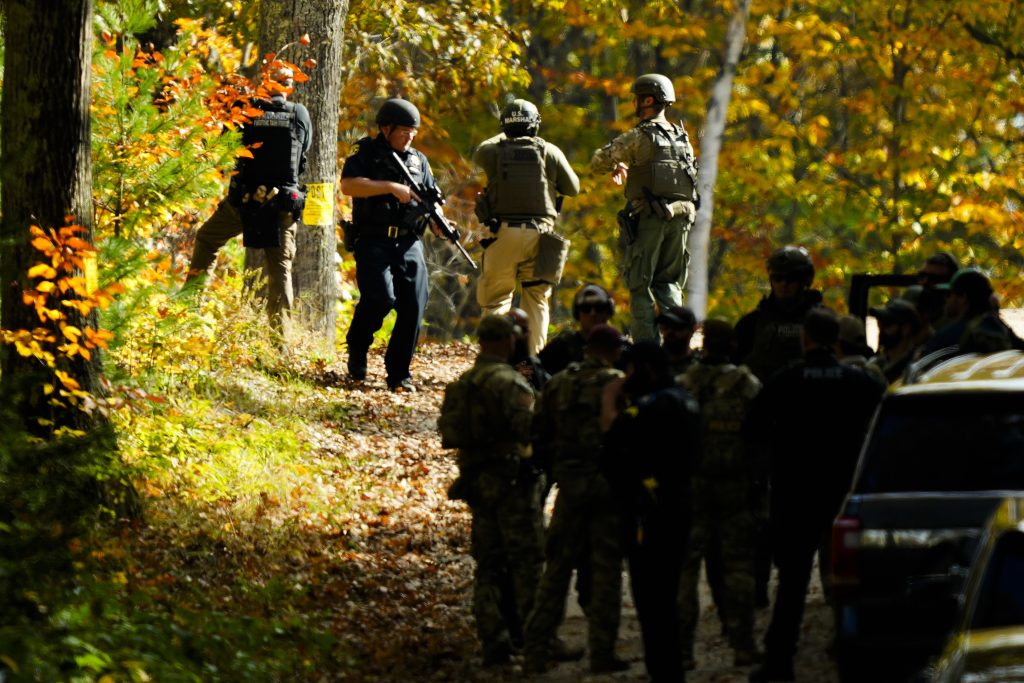
Law enforcement continue a manhunt in the aftermath of a mass shooting, in Durham, Maine, Friday, Oct. 27, 2023..Authorities are scouring hundreds of acres of family-owned property, sending dive teams to the bottom of a river and scrutinizing a possible suicide note in the second day of their intensive search for an Army reservist accused of fatally shooting several people in Maine.
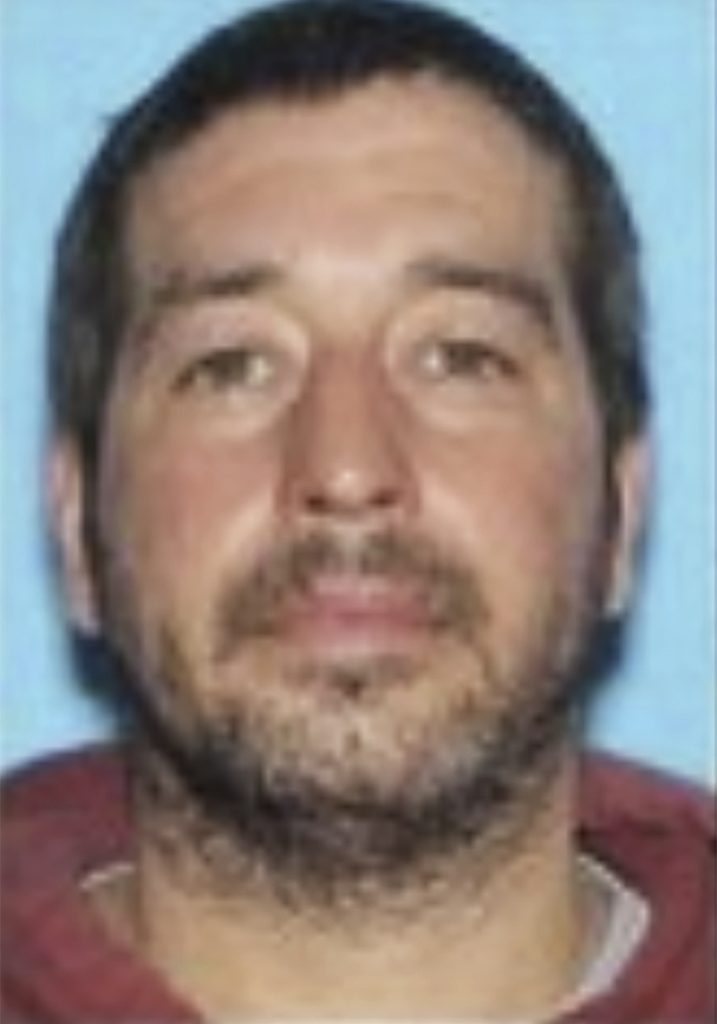
This photo released by the Lewiston Maine Police Department shows Robert Card, who police have identified as a person of interest in connection to mass shootings in Lewiston, Maine, on Wednesday, Oct. 25, 2023.

In this image taken from video provided by the Androscoggin County Sheriff's Office, Robert Card points a gun while entering a bowling alley in Lewiston, Maine, on Wednesday, Oct. 25, 2023. The body of Card, suspected of killing multiple people at the bowling alley and a bar, was found Friday, Oct. 27, with an apparent self-inflicted gunshot wound.
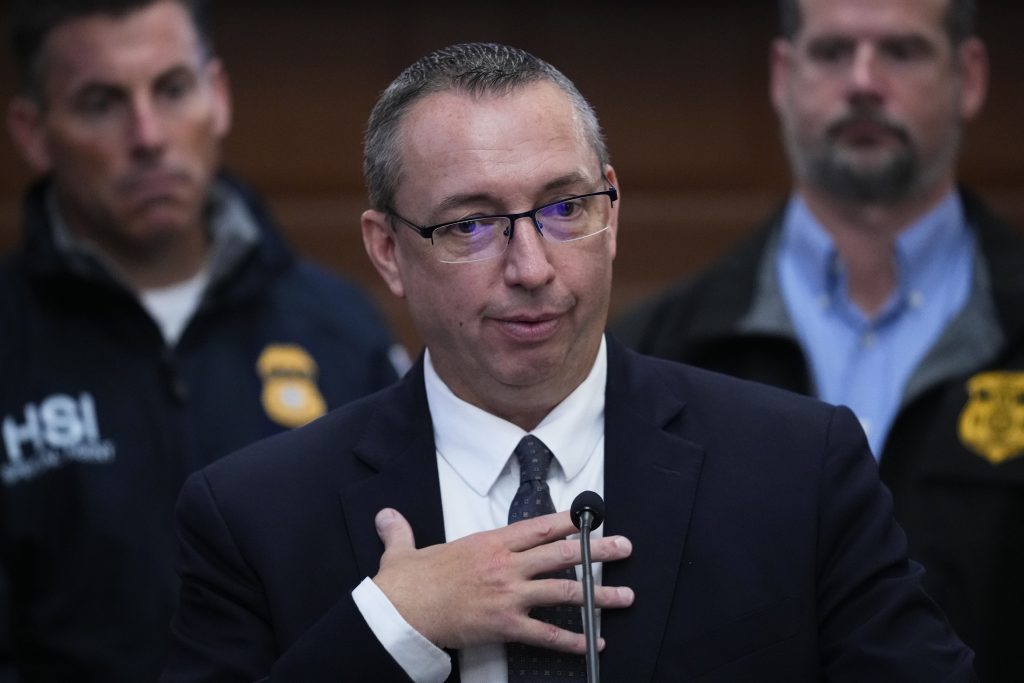
Maine Commissioner of Public Safety Mike Sauschuck speaks during a news conference in Lewiston, Maine, Saturday, Oct. 28, 2023. Shooting suspect Robert Card, a firearms instructor who grew up in the area, was found dead Friday, in nearby Lisbon Falls.
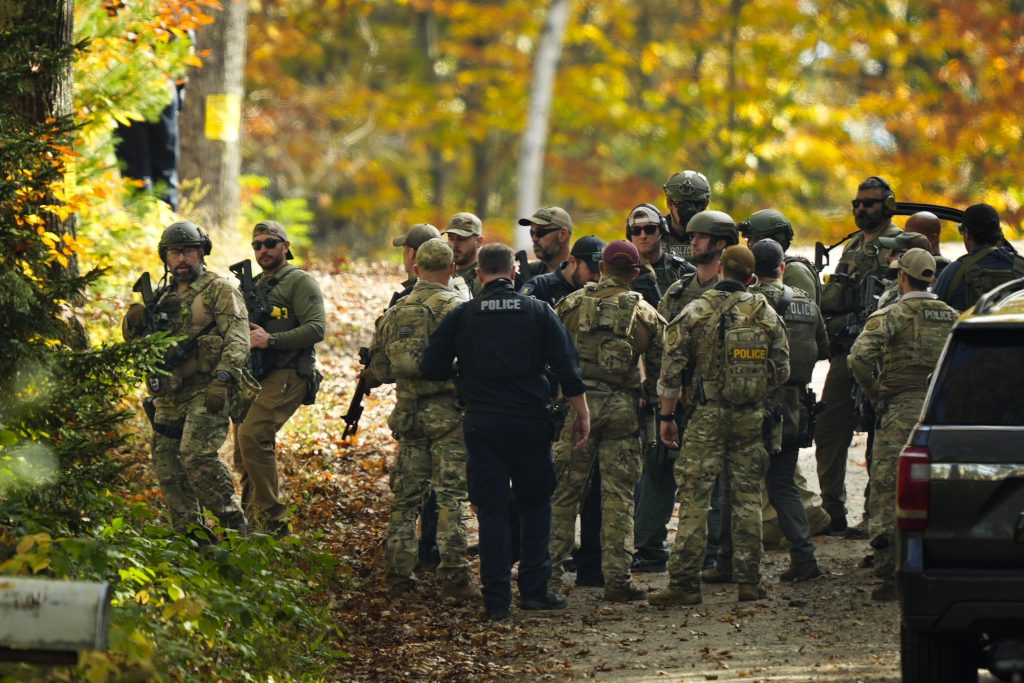
Law enforcement continue a manhunt in the aftermath of a mass shooting, in Durham, Maine, Friday, Oct. 27, 2023. Authorities are scouring hundreds of acres of family-owned property, sending dive teams to the bottom of a river and scrutinizing a possible suicide note in the second day of their intensive search for an Army reservist accused of fatally shooting several people in Maine.

In this image taken from video released by the Androscoggin County Sheriff's Office, Robert Card points a gun while entering a bowling alley in Lewiston, Maine, on Wednesday, Oct. 25, 2023. The body of Card, suspected of killing multiple people in shootings at the bowling alley and a bar, was found Friday, Oct. 27, with an apparent self-inflicted gun wound.

In this image taken from video released by the Androscoggin County Sheriff's Office, Robert Card points a gun while entering a bowling alley in Lewiston, Maine, on Wednesday, Oct. 25, 2023. The body of Card, suspected of killing multiple people in shootings at the bowling alley and a bar, was found Friday, Oct. 27, with an apparent self-inflicted gun wound.
Police across Maine were alerted just last month to ā€œveiled threatsā€ by the U.S. Army reservist who would go on to carry out the worst mass shooting in the stateā€™s history, one of a string of missed red flags that preceded the massacre.
Two local law enforcement chiefs told The Associated Press that a statewide awareness alert was sent in mid-September to be on the lookout for Robert Card after the firearms instructor made threats against his base and fellow soldiers. But after stepped-up patrols of the base and a visit to Cardā€™s home ā€“ neither of which turned up any sign of him ā€“ they moved on.
ā€œWe added extra patrols, we did that for about two weeks. ā€¦ The guy never showed up,ā€ said Jack Clements, the police chief in Saco, home to the U.S. Army Reserve base where Card trained.
Sagadahoc County Sheriff Joel Merry, whose jurisdiction includes Cardā€™s home in Bowdoin, said the Army Reserve tipped his department in September to the reservistā€™s threats, and the sheriff sent the awareness alert to every law enforcement agency in the state after his deputy came back empty-handed from a welfare check to Cardā€™s home.
ā€œWe couldnā€™t locate him,ā€ Merry said, adding that he couldnā€™t recall if there was any follow-up because ā€œI donā€™t have any reports in front of me.ā€
Military officials declined to comment further about Card, specifically whether the threats relayed to the sheriff in September were new or the same ones Card had made during an Army reserve training exercise near West Point, New York, in July. Thatā€™s when police say Card was committed to a mental health facility for two weeks after acting erratically and ā€œhearing voices and threats to shoot upā€ a military base.
Authorities say the 40-year-old Card opened fire with a high-powered rifle on a bowling alley and then a bar in Lewiston Wednesday night, killing 18 people and wounding 13 more. After an intensive two-day search that put the state on edge, Card was found dead Friday from a self-inflicted gunshot.
Despite the earlier threats, the FBI said Saturday Card had not been on its radar, telling AP it ā€œdid not have nor did it receive any tips or information concerning Robert Card.ā€ The bureau added that its instant background check system ā€œwas not provided with or in possession of any information that would have prohibited Card from a lawful firearm purchase.ā€
Cardā€™s case stands as a glaring example of missed red flags, with many unanswered questions about what the military, police, mental health professionals and relatives could have done to prevent the massacre.
While Maine does not have a red flag law, it does have a more limited ā€ yellow-flag ā€ law that would still allow police to petition a judge to take a personā€™s firearms away if a medical practitioner deems that person to be a threat.
For his part, Saco police Chief Clements defended his departmentā€™s response to the alert about Card, which he described as a ā€œgeneric thing that came out saying, hey, you know, weā€™ve had some report that this guyā€™s made some veiled threats.ā€
Clements noted that his department gets many such alerts and that his officers gave this one its due attention, keeping an eye on the base for any sign of Card.
ā€œNever came in contact with this guy, never received any phone calls from the reserve center saying, ā€˜Hey, we got somebody who was causing a problem,'ā€ he said. ā€œWe never got anything.ā€
Another law enforcement agency that came in contact with Card was the New York State Police, which on July 16 was called in West Point by commanders of the Army Reserveā€™s 3rd Battalion, 304th Infantry Regiment with concerns about Cardā€™s erratic behavior and ā€œthreats to other members of his military unitā€ during a training exercise, according to a State Police document obtained by AP. State Police troopers took Card, a sergeant 1st class, to the Keller Army Community Hospital at West Point for what would be two weeks of mental health evaluation.
What New York State Police did about Cardā€™s threats is unclear. The agency declined to comment to the AP on the case and did not respond to a request for reports or possible body-camera footage of their interactions with Card.
ā€œThis is an active investigation, and the New York State Police does not comment on active investigations, nor investigations in which we are not the lead agency,ā€ it said in a statement Friday before Card was found dead. A state police spokesman refused to comment Saturday.
Jonathan Crisp, an army lawyer for two decades before starting a criminal defense practice, said when soldiers are committed involuntarily to mental health facilities by others in the chain of command, it is a ā€œreportableā€ event under Army regulations that triggers a requirement to alert others. A provost marshal enters the incident into a military database that puts the FBI on notice so it can enter the name into a background list of people prevented from buying weapons.
ā€œIf they took him and he didnā€™t want to go and he refused to be admitted, itā€™s a slam dunk,ā€ Crisp said. ā€œThis should have been reported.ā€
But Maine Department of Public Safety Commissioner Michael Sauschuck said in news conference Saturday that while Card had a history of mental illness, there was no evidence that he had ever been involuntarily committed.
ā€œJust because there appears to be a mental health nexus to this scenario, the vast majority of people with mental health diagnosis will never hurt anybody,ā€ Sauschuck said.
Jody Madeira, an Indiana University law professor who has studied gun laws, said police in one state can alert counterparts in another state that someone is a danger, and the military can do the same with local police.
She said someone dropped the ball because Cardā€™s threats and medical evaluation should have triggered a yellow flag seizure of his guns when he returned home.
ā€œHe slipped through the cracks,ā€ Madeira said. ā€œThere were warning signs.ā€
Condon and Mustian reported from New York. AP reporter Patrick Whittle in Portland, Maine, and news researcher Rhonda Shafner in New York contributed.
___
Contact APā€™s global investigative team at Investigative@ap.org.