

PAWC touts progress at East Dunkard water treatment plant
Troubled water authority under receivership plan after system wide failure in October

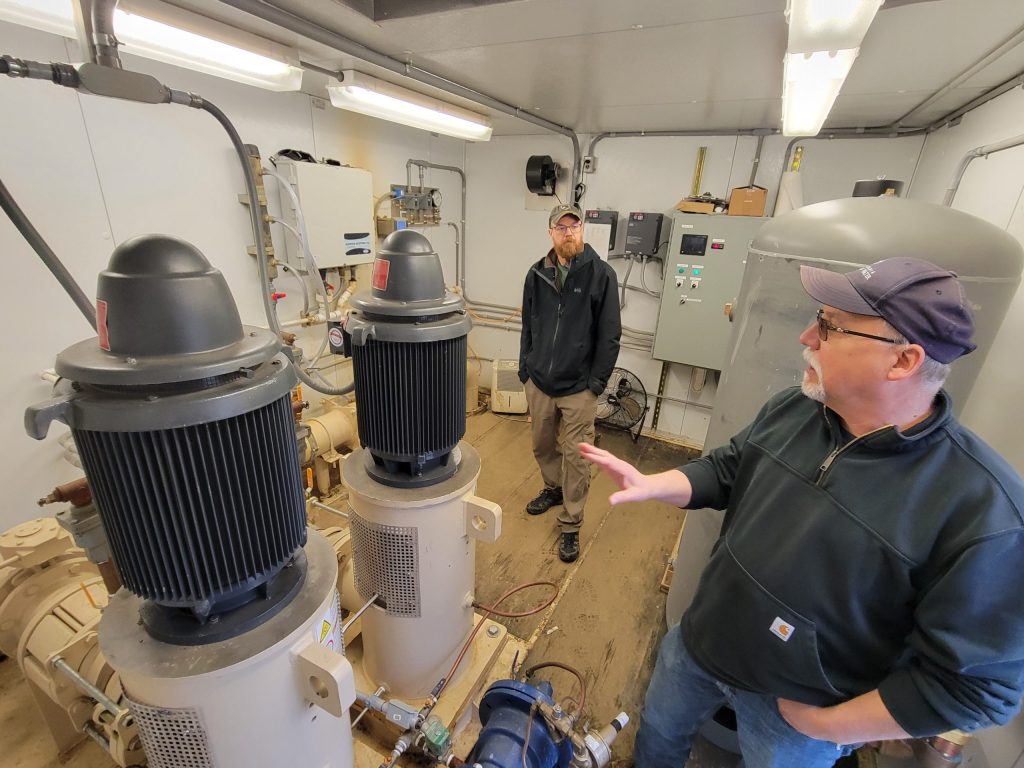
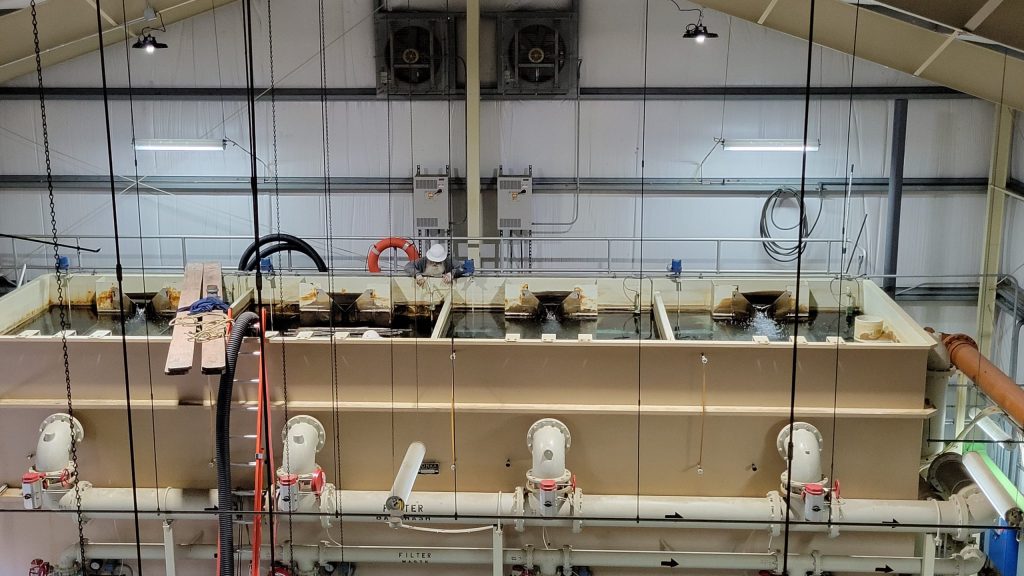
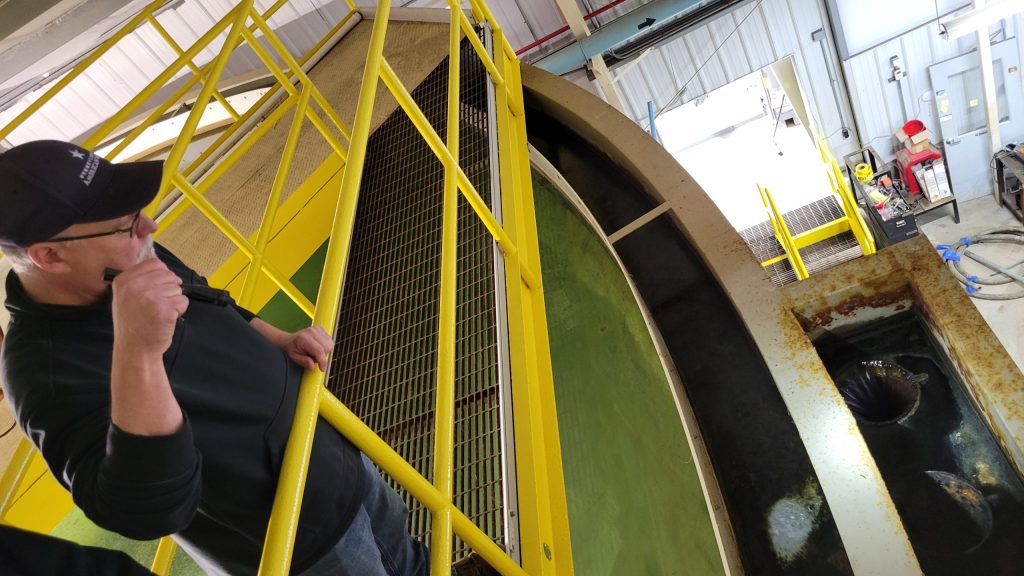
When Pennsylvania American Water Company workers first entered the East Dunkard water treatment plant to take over operations in early February, they weren’t quite sure what problems they would be facing.
A malfunction at the facility in late October forced the plant to be shut down for several days, leaving the more than 4,200 people in the system without water and prompting state regulators to ask PAWC to take receivership of the troubled authority.
PAWC had already agreed to purchase the East Dunkard Water Authority for $5 million last summer, but now the company and its workers were being thrust into an emergency situation when they took control of the system Feb. 9 after the receivership was approved through a court order.
“It’s a good little plant,” said Tim Patterson, who works for PAWC and now serves as the facility’s interim operations manager. “It just needed some upgrades.”
Nearly two months after coming in, PAWC officials said they’re encouraged by the progress to get the plant functioning properly after residents complained for years of poor water quality and unreliable service.
While some residents were leery of PAWC moving in, company spokesman Tom Meinert said they’ve tried to be transparent with customers about the changes while also giving them tools to learn more about the upgrades. He pointed to regular updates on EDWA’s Facebook page and website, along with direct mailers and phone alerts.
“I think communication is a big part of it, customer outreach,” Meinert said. “Everyone here is focused on improving the system. That will come in time (with) a lot of investments and hard work.”
Part of that process included a tour last week of the water plant on Route 88 near Dilliner in which PAWC officials explained to a reporter the entire treatment process, along with how they’ve gone about making upgrades to the facility over the past two months.
The improvements span from the intake pipe that brings in water from the nearby Monongahela River to pipeline repairs in the distribution system, and everything in between. As part of the sales agreement in July, which still must be approved by the state Public Utility Commission, PAWC also agreed to invest $17 million to make upgrades to the system once it takes ownership.
The treatment plant can take in up to 550 gallons of water per minute, but the PAWC team has ratcheted that number down to between 375 and 400 gallons per minute since they are running the operation continuously 24 hours a day. In March, the workers only shut down the plant on two separate occasions for a total of less than an hour. Before PAWC took over, the plant often would be shut down numerous times each day.
“It really stresses the plant when you shut it down,” said Ryan Hardgrove, who serves as water quality manager.
The simple explanation on how treatment works is that the plant takes in raw water from the Monongahela River, pumps it into a clarifying pool to remove the sediment and sludge before moving into one of four filters. The water is then disinfected and pumped out of the facility and up a hillside to the “Griffin” tank before it’s distributed to the rest of the system.
Hardgrove admitted they’re still dealing with turbidity issues, which measures the clarity of the water. But they’re continuing to make upgrades as they learn the nuances of the plant.
“Every day is a surprise,” Patterson said. “Once you think you know what’s going on, something else shows its face.”
“I think surprises are part of the process,” Hardgrove added.
Some upgrades have been relatively rudimentary, such as improved pipes to accept chemicals from delivery trucks and installing electronic gauges so workers know when they need to order more rather than just “eyeballing” the levels by shining a flashlight onto the translucent holding barrels.
Patterson said they’ve had a good experience training the plant’s eight workers, who have all been retained. He thinks the supervision and knowledge they’re getting from PAWC’s experts is helping them to learn how to operate the plant properly.
“It was trial by fire. Unfortunately, there were a lot of fires,” Patterson said of how the plant was operating before PAWC took control. “Luckily, we were able to help them out so we can make some upgrades.”
“The employees were so willing to learn and happy to have their questions answered,” said Tiffany Reed, who serves as senior manager of operations for this region.
During the tour of the plant last week, PAWC officials showed how they have been working to replace each of the four filters, which should be completed by the end of the month and will help with the turbidity issues. They also explained how regular maintenance is needed to allow water to flow through the various “media” filtration layers. The workers should be using a “backwash” process every three days to clean the media layers, although Patterson said the plant was doing it more often than that before, which actually caused more harm than good.
“That way, the filters aren’t stressed,” Patterson said of the 72-hour backwash runs they’re currently performing. “You get a better run time.”
In Hardgrove’s lab that tests the water quality before it leaves the plant, a “bench analyzer” has been installed as a backup to the online analyzer that sends regular reports to the state Department of Environmental Protection.
“We’re in constant contact with the regulators right now,” Hardgrove said.
After performing daily and even minute-by-minute reports that are sent to the DEP, the operation will soon be able to scale back to monthly reports that are more typical.
“It’s good news,” Patterson said of the DEP beginning to loosen its daily requests for data as the plant makes improvements. “(The workers) aren’t just running the plant and chasing it. They’re doing what needs to be done by DEP (standards).”
DEP spokeswoman Lauren Camarda said PAWC “has complied with orders issued to EDWA by or ahead of the deadlines prescribed in the orders” as detailed in the receivership plan.
“Already, PAWC has applied for and received emergency permits from DEP for necessary repairs,” Camarda said in a written statement. “DEP will continue to closely monitor the system and remain in contact with PAWC as it plans projects and applies for permits for additional treatment and distribution system improvements.”
One of the reasons the receivership was turned over to PAWC is because the plant didn’t have a certified operator, which is required by the DEP. Patterson serves in that capacity now, but with enough training, tenure and accreditation, some of the current workers could eventually fill that role. When PAWC first took over in February, a dozen of its workers regularly came to the plant to help, but they’ve been able to lower the amount of manpower as the East Dunkard employees learn the protocols and begin to stand on their own.
“The thing with PA American Water, we have such a large team with knowledge,” Patterson said. “The good thing is, the people who are here – the Dunkard team – want to make it right. Who do you call if you don’t have anyone to call? They are learning with us now.”
“It’s been a huge team effort,” Hardgrove added.
Of course, there have been some hiccups along the way.
Last month, numerous East Dunkard customers reported discolored water coming from their taps. PAWC flushed the lines and the problem was rectified after a few days. Officials are now planning to do another “heavy flush” of the entire system this spring that will hopefully remove any additional sediment and produce clear water moving forward.
Tim Berdar, who serves as distribution manager, lives across the Monongahela River in New Salem, so he considers himself somewhat of a local. He’s attended fish fries in East Dunkard over the past two months in order to meet with residents and hear their concerns.
“You really had to get your feet on the ground and see what was wrong,” Berdar said.
So far, Berdar said they’ve located and fixed 13 pipeline leaks that had lost about 13,000 gallons of water since early February. They also are managing seven holding tanks throughout the system.
“We’re still learning the distribution (system),” Berdar said, adding that they’re working off East Dunkard’s physical paper maps rather than electronic ones they typically would be able to pull on their cellphones. “Just finding your way around.”
Jake Gentile, who serves as PAWC’s director of operations for northwestern and southwestern Pennsylvania, said he’s pleased with the progress and knows more work will need to be done to ensure East Dunkard residents get the clean water they deserve.
“It’s not a bad system. It just needs support,” Gentile said. “The team we have at PAWC, we knew we’d be able to get it done.”
East Dunkard currently services customers in Dunkard and Greene townships, along with portions of Cumberland, Monongahela, Perry and Whiteley townships.