

Iron, culture and the Little Steel Strike
How immigration, industry, and labor forged Youngstown
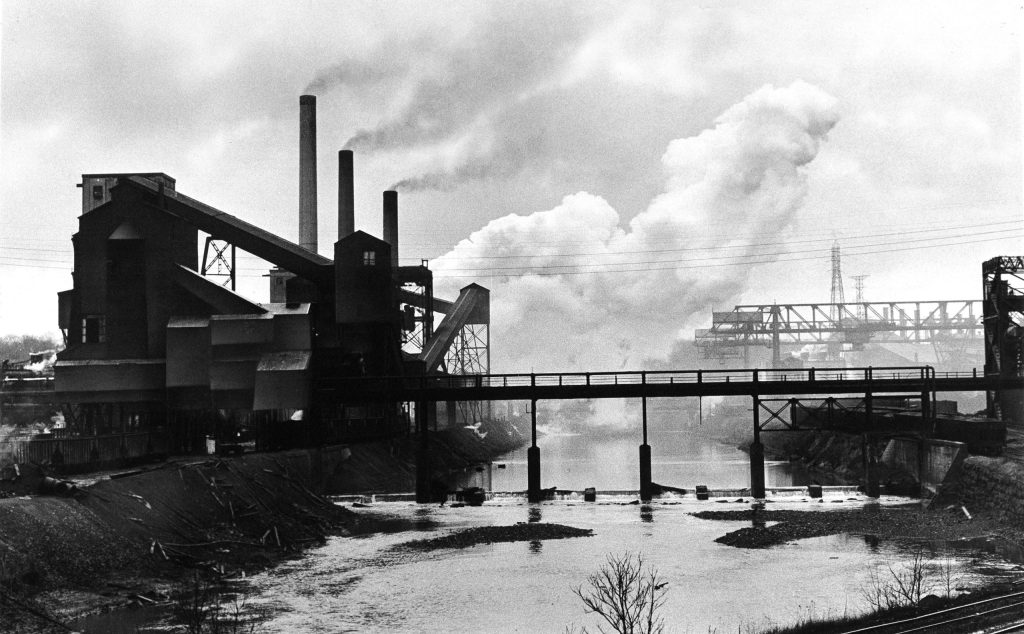
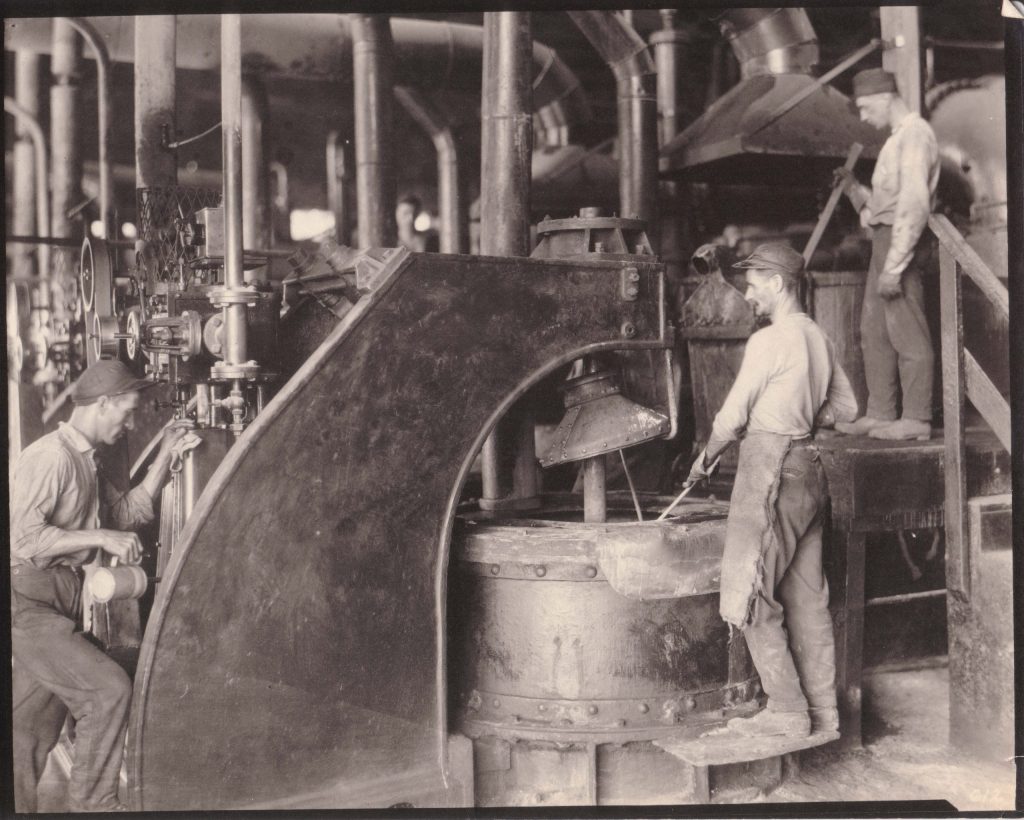
Editor’s note: At the beginning of the 20th century, America began a period of industrial growth. One of the cities at the epicenter of that growth was Youngstown, Ohio, a city that became synonymous with steel production and America’s fortunes.
YOUNGSTOWN, Ohio – It was June 19, 1937, when violence erupted outside Republic Steel’s Stop 5 plant on Poland Avenue. Workers had picketed for weeks as part of the nationwide Little Steel Strike, a bitter battle over union recognition.
Republic Steel and Youngstown Sheet & Tube refused to follow industry giant U.S. Steel in recognizing the Steel Workers Organizing Committee.
As tensions escalated, production stalled and movement in and out of the mill slowed to a crawl. When the riot broke out at Republic, then-Ohio Gov. Martin Davey declared martial law and dispatched the National Guard to restore order. The confrontation became one of the defining moments in Youngstown labor history.
The story of the strike began long before 1937, though, in iron mills, immigrant neighborhoods, church parishes and company offices, as Youngstown transformed itself from a small Connecticut Western Reserve community into one of the world’s leading steel-producing centers.
Steel created immense wealth and opportunity throughout the city and Mahoning County. It fueled population growth and helped build many of the institutions that still define the Mahoning Valley today. But it also created labor tensions, power struggles and social divisions.
Youngstown’s identity was shaped by the people who came to work in its mills, and by the communities they built around language, religion and shared origin.
“Cities like Youngstown or Warren and then the smaller cities in between are what you would call tribal,” said Mahoning Valley Historical Society Executive Director Bill Lawson. “You had groups immigrating from the eastern Mediterranean, from eastern Europe, from southern Europe, northern Europe, and by and large, for the most part, they were coming because they already had people from their village or their district that were here and wrote back and said, ‘There’s plenty of jobs. I can find you a place to live.'”
Those networks shaped where people lived, worshipped and worked — and eventually who held power inside the mills.
It wasn’t always steel
The natural resources in and around what would become Youngstown made it ideal for industrial production, but steel was not its first identity. Abundant stores of iron ore, coal, timber, and limestone made iron production a logical choice for settlers in the Mahoning Valley.
In the post-Civil-War era, iron furnaces and related manufacturing operations came to define the local economy. Industrial development accelerated after the Panic of 1873 and subsequent economic downturn, helping establish the Mahoning Valley as one of the nation’s important iron-producing regions.
Lawson describes the 1880s as “the prime of the Iron Age in the Mahoning Valley.” But even as local iron production expanded, industry leaders were beginning to recognize a fundamental shift underway in American manufacturing.
Across Pennsylvania, steel was rapidly replacing iron as the backbone of American industry, though Youngstown was slower than some competing cities to make the transition.
“We didn’t have Bessemer converters online here until 1895, but by then, in 1892, the local iron stakeholders realized their future wasn’t in iron, it was steel,” Lawson said.
That realization would reshape the city.
New industry, new people
In 1892, local industrialists, including Henry Wick, H.O. Bonnell and J.G. Butler Jr., organized the Ohio Steel Co., a venture designed to position Youngstown for the new industrial age. Within a few years, larger corporations like National Steel and eventually U.S. Steel would acquire local interests, transforming the Mahoning Valley into one of the nation’s premier steel-producing districts.
“This was the second leading steel-producing district in the country and for all intents and purposes, for the world, too,” Lawson said. “You had Pittsburgh and you had Youngstown.”
Long before Youngstown became a steel powerhouse, immigrants had arrived to work in the valley’s iron furnaces, coal mines and related industries. In the 1880s, foreign-born residents constituted a majority of Youngstown’s population, and Lawson noted that it was a young one – the city’s median age was only 21 or 22. As steel mills expanded across the region at the turn of the century, Youngstown’s population grew and its cultural and ethnic identity began to shift.
Earlier waves of immigration mostly brought people from northern and western Europe, including the British Isles and Germany. By the turn of the twentieth century, however, Italians, Slovaks, Croatians, Hungarians, Poles, Greeks and others had settled in Youngstown neighborhoods, often living alongside relatives and countrymen who had arrived before them.
Lawson said those communities maintained strong cultural identities through churches, social clubs, businesses and family networks. The result was a city rich in traditions, languages and customs, but also one whose neighborhoods often developed along ethnic lines.
The same forces that transformed Youngstown’s cultural makeup were also reshaping its physical landscape. As workers and their families arrived by the thousands, demand for housing, businesses and public institutions grew just as rapidly. What had once been a modest industrial community was becoming a city, and real estate emerged as one of the region’s fastest-growing economic drivers.
Division and strife
The ethnic networks that helped immigrant communities preserve their identities also reinforced social boundaries. European groups often organized themselves around nationality, language and religion.
While those divisions often reflected culture and tradition rather than outright hostility, some groups found themselves on the outside more than others.
“If you were the turn foreman or supervisor on a specific mill or like the open hearth furnaces, you had arrived and you were paid based on your production and you were responsible for hiring your crew. Who are you going to hire? You’re going to hire your sons, your brothers, your cousins, your neighbors, your friends from church,” Lawson said. “And that was your crew. Each mill had its own demographics in terms of who rose up to be the supervisor or turn foreman in a particular department, and that’s how it ran.”
Stories of exclusion were especially common for ethnic Europeans during the 1920s, when Youngstown saw a rise in Ku Klux Klan activity. Native-born Protestants reacted with hostility toward Catholic, southern- and eastern-European immigrants. Soon they would have a new target for their anger and antagonism – African-Americans escaping the Jim Crow South.
While Black migrants could generally find work at the mills, they couldn’t hope for comfortable or well-paid positions.
“The only jobs available to them were the general labor pool or the ones that nobody else wanted to do, like the coke plant or blast furnaces — the most dangerous, dirty jobs available in the mills,” Lawson said. “It was segregated at work. It was segregated in the neighborhoods.”
For decades, that system remained largely intact. By the 1930s, however, workers across the nation’s heavy industries were increasingly demanding a greater voice in the workplace.
“The union dynamics changed the industry quite a bit,” Lawson said.
The workers’ voice
During the Great Depression, the Congress of Industrial Organizations and the SWOC began aggressively organizing steel workers across the country. The movement sought better wages and working conditions, and a more formal system governing hiring, promotion and representation.
“The CIO definitely wanted to organize the steel industry,” Lawson said. “And of course the steel industry was resistant.”
That resistance weakened somewhat in early 1937 when U.S. Steel shocked both labor leaders and industry executives by recognizing the SWOC, Lawson said. The agreement emboldened union organizers, who quickly turned their attention to the industry’s remaining holdouts.
“It’s called the Little Steel Strike because in May of 1937 they targeted Youngstown Sheet and Tube Co., Republic Steel Corp. and Inland Steel Co.,” Lawson said.
In addition to strikes in Youngstown, Canton, and Massillon, union activists picketed against the three Ohio companies — as well as Bethlehem Steel — in Pennsylvania, Indiana, Illinois, Michigan and West Virginia.
As May turned to June, workers established picket lines around plant entrances while management attempted to maintain operations. The standoff grew increasingly tense.
“It was hard to get supplies and food in and even harder to get material out with trucks and trains,” Lawson said.
The pressure finally boiled over on June 19, but the strike itself ultimately failed. Republic remained a holdout for years after, and many union supporters lost their jobs.
“My grandfather was one of them,” Lawson said.
Yet the events of 1937 did not stop the labor movement. Through court battles, organizing efforts and federal labor protections, steelworkers gradually secured representation throughout the industry. Republic finally signed a contract in 1942, the same year the SWOC became the United Steelworkers of America.
When immigration, industrial growth, economic inequality, ethnic division and the struggle for power all converged in 1937, the Little Steel Strike became one of the defining chapters in Youngstown’s and America’s history, a conflict forged over decades in the furnaces, neighborhoods, churches and boardrooms that built modern Youngstown.
Next week, we’ll study how oil, coal, natural gas, and timber were transformative to a growing nation, and today, the shale boom has led natural gas and oil development to be America’s latest energy frontier.