

Washington Rotary assists with memorial apple orchard in Ukraine
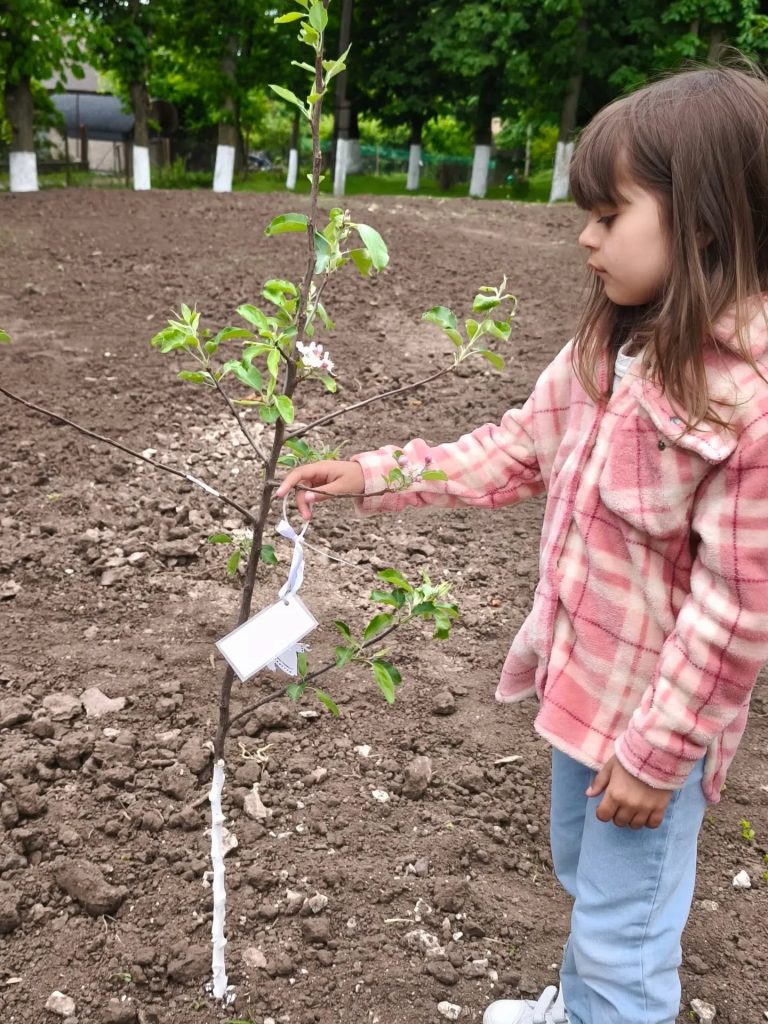
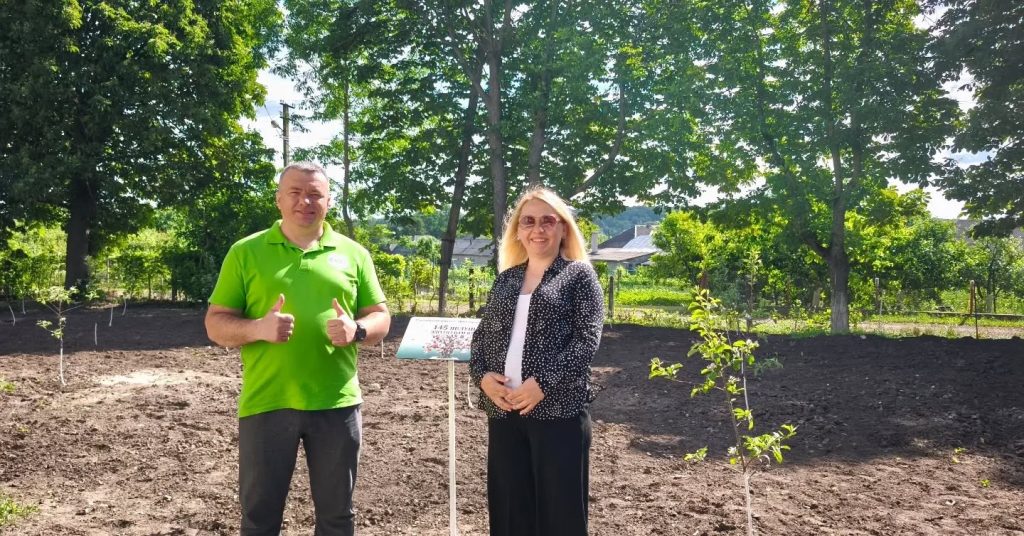
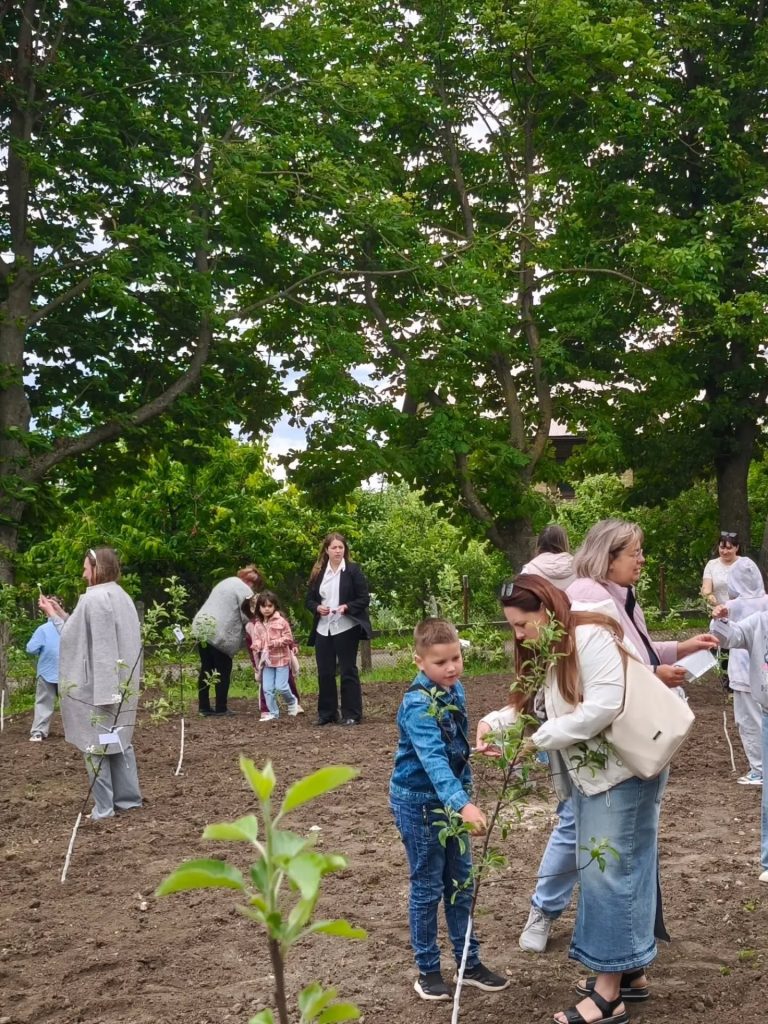
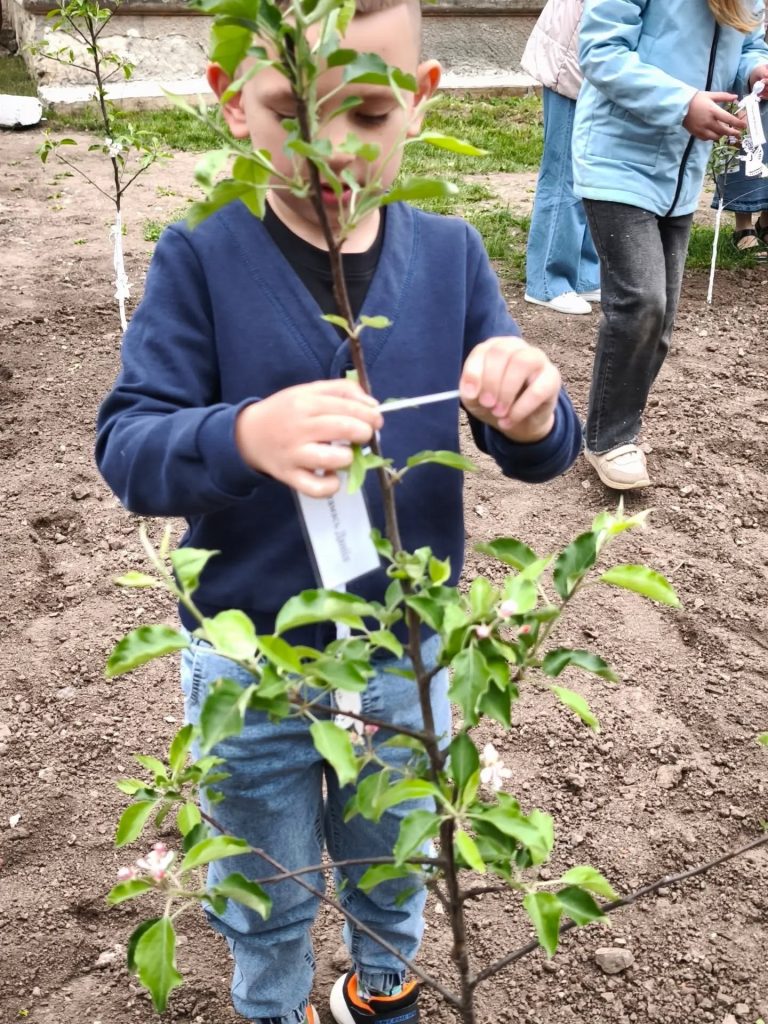
On June 16, 150 apple trees were dedicated in a field near a secondary school in Western Ukraine’s Ternopil region, in memory of Ukrainian children who have been killed since Russia launched its war against that country in February 2022.
Called “The Apple Orchard of Remembrance,” each sapling holds a nameplate bearing the name of a child who has died.
The orchard, said Alina Atamas, board chair of the nonprofit FAYNADIYA NGO, “is a way to transform immense grief into something bright.”
As of May, at least 796 Ukrainian children have been killed and another 2,752 injured as a result of the war, according to the United Nations.
Among the international groups that contributed to the completion of the memorial orchard is the Washington Rotary Club, which has donated $25,000 to help support the efforts of five Ukrainian nonprofit organizations working to provide aid to their communities.
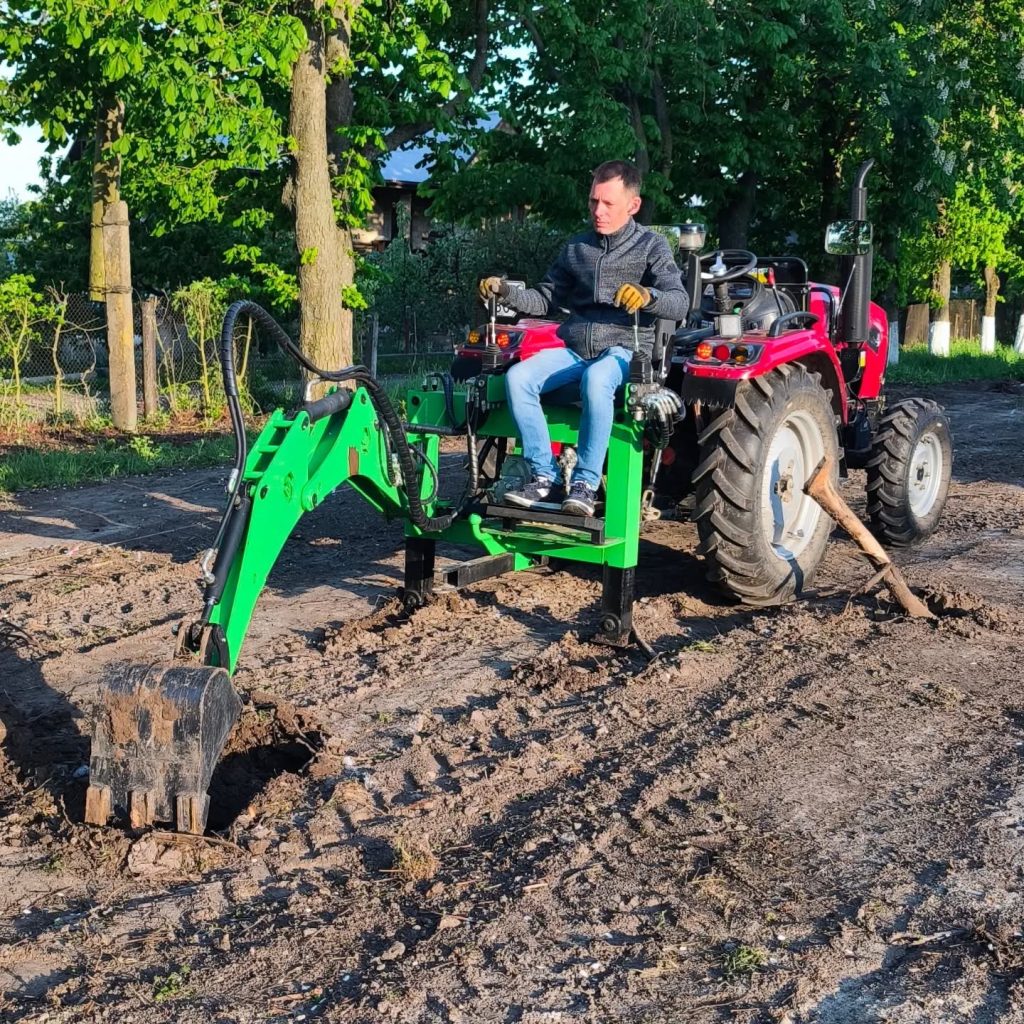
Atamas’ organization used the Rotary’s $5,000 donation to her nonprofit to purchase an excavator and other equipment to plant and later harvest potatoes.
Over 100 acres of potatoes have been planted so far, and Atamas said the potatoes will feed thousands of people, as Ukrainians face acute food insecurity due to the war, which is driving a massive surge in subsistence farming. Potatoes are one of the most important crops Ukrainians are planting because they are high-calorie, resilient, and can be easily stored for the winter.
The excavator has been put to use in other ways, including rebuilding homes.
“The excavator has been an absolute lifesaver when it comes to housing,” said Atamas. “When we find abandoned or vacant houses in the villages for (families displaced by the war), these properties usually lack even the most basic utilities. Trying to make them livable by hand is virtually impossible, and local families simply do not have the funds to rent heavy machinery.”
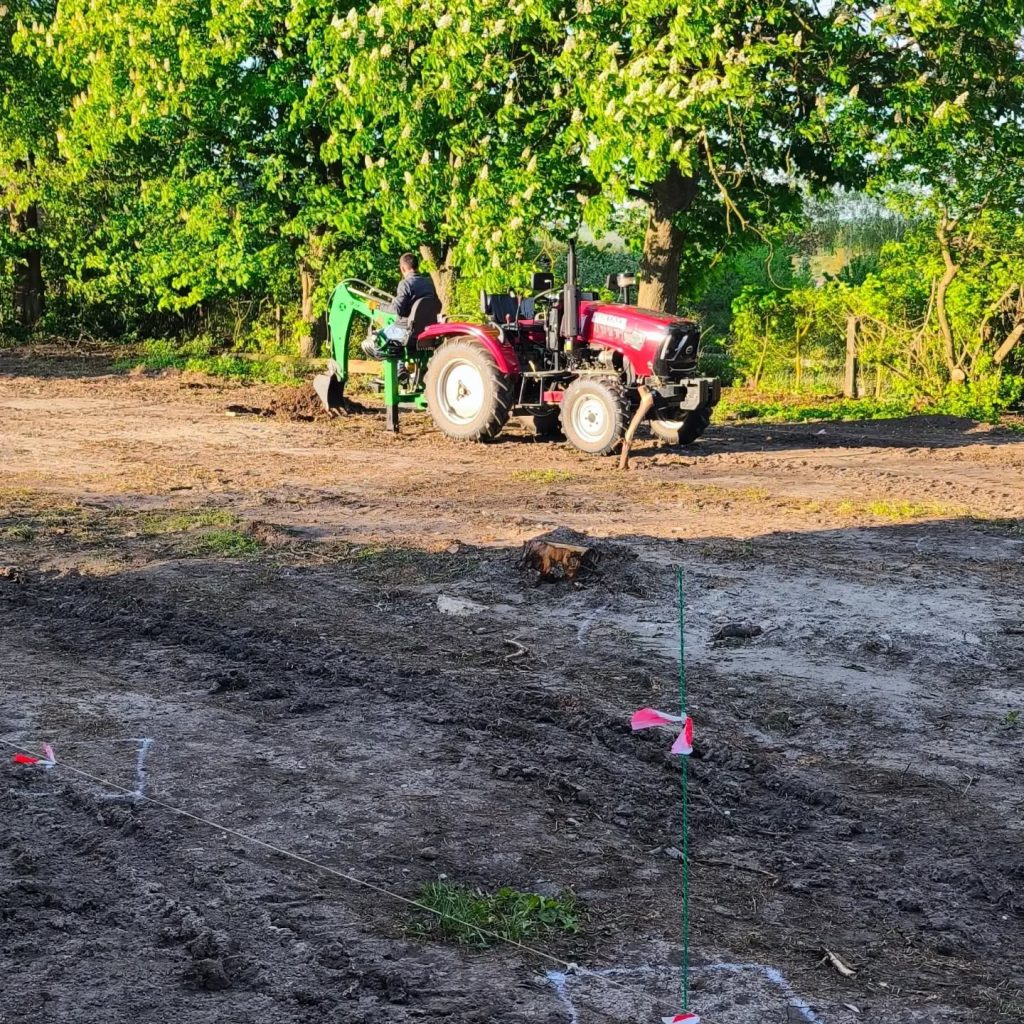
It also has been used to clear rubble and haul brush and debris from overgrown yards, dig septic tanks, and lay pipes to bring running water into houses. And, to dig the holes for the apple orchard.
Atamas said the ground where the memorial orchard stands was hard and compacted, and filled with old roots that “literally broke our shovels,” and the excavator “saved the project,” enabling the volunteers to dig deep holes for each tree.
“All this was made possible thanks to your support, because it was the excavator that worked tirelessly for 3 weeks so that we could dig 150 holes and plant 150 apple trees,” Atamas said in a Facebook post to the Rotary club.
She also thanked other donors, writing, “I’m proud of our team and thankful to everyone who helps us change the world for the better. Let’s continue working because there is still so much to come.”
The memorial tree planting was part of FAYNADIYA’s “Children for Children,” project, which Atamas called “the most sacred and tender project we have ever done” and was inspired, in part, by her young son, “who only knows this world through the lens of war.”
“Nearly every day, the news brings devastating updates about children whose lives were cut tragically short,” Atamas said. “We wanted an orchard, a living orchard that will bear fruit for decades to come.”
Every child who planted a tree and then attached a nameplate will care for their tree.
“The little ones get to watch life blossom from their own small acts of care,” Atamas said. “Our children will taste the apples and remember their peers not through grief or tears, but through the beauty of spring blossoms and sweet fruits shared with others. That’s how kindness simply ripples forward.”
Atamas was one of six Ukrainian women – all of whom represented nonprofit organizations – who visited the Washington area in March 2025 as part of a 10-day, Open World Project program in cooperation with Rotary International and the Washington County Bar Association. They were hosted by the Washington Rotary Club.
Those nonprofits have used the Rotary club’s donations to cover costs to repair and furnish a community center that had been destroyed by bombing; to provide medical equipment, musical instruments, art supplies, and diapers, formula, baby food and other items for children with disabilities; to provide legal advice for displaced persons who flee their homes to seek safety elsewhere within the country; and create events and clubs where where displaced people can integrate into their host communities, including purchasing materials for women to embroider infants’ clothing, a Ukrainian tradition.
Atamas said the Ukrainian group’s visit to the U.S. “completely transformed our vision of our work.”
“The experience we gained is something we apply every single day here in Ukraine,” she said. “Even more beautifully, this trip blossomed into genuine, lifelong friendships.”
Rotarian Dorothy Tecklenberg recalled that during the week, the Ukrainians’ phones repeatedly went off with air raid alerts.
“These are some of the strongest, bravest, most intelligent women I’ve ever met,” Tecklenberg said. “The first day, all of their phones went off with air raid sirens. And they said the reality of their life is that they have an app on their phones that tells where a missile is going to strike near them, and it happens multiple times a day. When you know that someone in an incredibly difficult situation that you can’t even conceive of, how can you not help them?”
Due to continuous Russian attacks, more than half the country’s power capacity has been knocked out, causing power outages and rolling blackouts.
But, Tecklenberg said, she and the group of fellow Rotarians continue to keep in touch with the women, who share personal and professional updates.
Atamas has twice been displaced, most recently in 2022, when she and her husband, trying to save their son from the full-scale war, fled from Kharkiv and found refuge in a rural village in the Ternopil region.
She and the volunteers in her organization are tired, but remain resolute despite the physical and emotional hardships.
“Continuous air raid sirens, the stress of the news, and constant instability exhaust the body. But when you see running water finally reach a house where a displaced family will live, or when a child waters their very first tree in the orchard, the physical fatigue instantly fades. You find a second wind,” she said.
Her next concern: winter.
“The next critical challenge for survival is winter heating,” she said, noting most houses in rural areas are old and rely on wood-burning stoves. “The severe winter of 2025, with its prolonged and total blackouts, proved that firewood is often the sole source of survival for our people.”
The nonprofit is now seeking to purchase a wood chipper and shredder that converts small branches and brushwood and turn it into high-quality solid fuel for wood stoves.
Atamas said the “absolute sense of unity” in her new town has helped her family to rebuild their lives alongside other villagers.
“We are change makers rebuilding life together. Working the land and creating the Orchard of Remembrance has become our therapy. We have transformed our collective pain into action,” she said. “Emotionally, we know that light will triumph over darkness, and we put our hands to that truth every single day.”