

Haitians, Syrians face deportation after SCOTUS ruling
Decision to end TPS status deals blow to Charleroi community
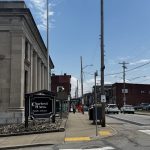
They have started small businesses and work in factories, the healthcare industry, and other occupations: Thousands of Haitians and Syrians in Southwestern Pennsylvania are living under protected legal status.
Now, They now may have to return to their home countries.
A U.S. Supreme Court ruling last week has cleared the way for the Trump administration to end Temporary Protected Status (TPS) for hundreds of thousands of Haitians and Syrians, which will affect the ability of immigrants from those countries – including a large Haitian population in Charleroi – to live and work legally in the United States.
In a 6-3 vote, the Supreme Court ruled the Department of Homeland Security can terminate TPS for 350,000 Haitians and 6,100 Syrians in the United States.
The humanitarian program allows people from countries facing war, natural disasters or other extraordinary conditions to temporarily live and work legally in the United States.
The court’s ruling also has broad implications beyond those two countries, as TPS projects more than 1.3 million people from 17 countries who could eventually find themselves without the ability to work and vulnerable to deportation.
“The decision was devastating; it was very disappointing. Everybody is stressed right now. It will have a big impact on the Haitian community not only in Charleroi, but everywhere,” said Getro Bernabe, Charleroi’s immigrant liaison, who was born in Haiti but has lived in Charleroi since 2020 and has helped the borough’s immigrant population navigate documentation and everyday life. “Many of them have built their lives here, and there is little to return to in Haiti.”
Haitian immigrants were first granted protections in 2010 after the country was devastated by an earthquake. The U.S. government has extended TPS several times amid the Caribbean country’s ongoing violence, including gangs who control swaths of Haiti.
The Rev. Sharon Woomer, pastor of Hope Community Church in Charleroi, said the loss of TPS status “is a tragedy” for the TPS holders who now face deportation.
“On behalf of our church community, I want to say we are outraged and and devastated, and people are heartbroken,” said Woomer, whose church hosts English as Secondary Language (ESL) classes and holds food and clothing programs and other events for immigrants. “It’s unconscionable. There’s no way to justify sending people back to a nightmare. We know our immigrant neighbors to be courageous, and they have given everything to build a life here. This ruling is completely contrary to who we are as Americans and our principles to welcome everyone. We’re never going to stop advocating for them, and we will stand for people in every way possible and make sure they do not face this crisis alone.”
Woomer said Charleroi’s TPS recipients have lived, worked, and contributed to the community for years, and in some cases, decades.
A 2023 survey showed that Charleroi – which gained national attention during the 2024 presidential campaign when President Donald Trump made a derogatory comment about the town’s Haitian population during a speech in Arizona – had more than 2,000 immigrants from 44 countries, a majority of them from Haiti.
Immigration attorney Joseph Patrick Murphy of Pittsburgh said the ruling was a devastating blow that leaves hundreds of thousands of long-term residents facing deportation and the loss of work authorization.
“It’s a tragedy here. It’s going to cause untold suffering in any number of ways, for the families and the communities they live in. It’s going to be a hardship for families who moved here and spent time building lives here. It’s a form of cruelty,” said Murphy. “And tenants are going to leave, factories and businesses are going to be left without workers.”
Charleroi borough manager Joe Manning said he was not surprised by the Supreme Court ruling, but is uncertain about what lies ahead.
“It was disappointing, but I wasn’t surprised that it went that way. It’s hard to say what the impact will be because it’s early on,” said Manning. “We’re waiting to see how everything plays out.”
Manning said federal Immigration and Customs Enforcement agents haven’t carried out raids in Charleroi, but doesn’t know if that will remain the case once TPS ends.
The Charleroi Regional Police Department does not have an agreement to cooperate with ICE. As of April, ICE had 287(g) contracts with an estimate 1,986 state and local law enforcement agencies across 39 states and territories, including the Washington County Sheriff’s Office, which enables local law enforcement officers to carry out certain immigration enforcement duties.
Linda Hamilton, a local immigration attorney and adjunct professor at the University of Pittsburgh School of Law, said the court’s decision leaves few options for immigrants seeking to remain in the United States.
It has become significantly harder for immigrants applying for asylum, with asylum approval rates plummeting to historic lows.
“This is a blow. I speak with Haitians weekly, if not daily, and it’s a terrible situation. They’ve built their lives here, they’ve bought houses, they have long-term employment, they’ve followed the legal channels the government created,” said Hamilton. “It’s horrible. The Supreme Court decision has removed an important layer of protection that has allowed so many immigrants to live in the United States. The families are faced with returning to Haiti, an incredibly dangerous country, and it is a bad situation all the way around.”