

Measles cases on the rise in Pa.
Vaccination recommended for some adults
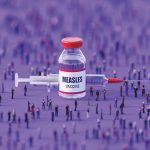
Amid the continuing measles outbreak across the country and in Pennsylvania, the Centers for Disease Control and Prevention is recommending some adults who have already been vaccinated to get a booster shot.
The first measles vaccines were introduced in 1963, and a small number of people born between 1963 and 1967 received an inactivated (killed) vaccine instead of the live-attenuated (weakened) vaccine.
The inactivated vaccine is less effective and does not provide the same level of protection.
For those who received the inactivated vaccine, or are unsure of the type they received, the CDC recommends talking with their doctor to receive one or two doses of the current MMR vaccine.
Said Dr. Tom Walsh, infectious disease specialist at Allegheny Health Network, “Most people who were vaccinated (between 1963 and 1967) do not know if they received this inactivated vaccine or the live, attenuated version. Therefore, if you were vaccinated between 1963 and 1967 and unsure which vaccine you received, it is very important to discuss this with your clinician and review your vaccination with them. If it is unclear whether you received the inactivated vaccine or not (or if you received the inactivated vaccine), it is important to receive the current live measles vaccine for the best protection against this very contagious virus.”
Walsh said one dose of the live measles vaccine is 93% effective and two doses are 97% effective at preventing measles, which, he said, “can cause very serious and life-threatening disease and complications.”
The CDC also recommends adults at greater risk of exposure to the virus – healthcare workers, teachers, international travelers, and close contacts of immunocompromised individuals – consider getting the measles vaccine.
Because of the high rates of measles in the U.S. prior to 1957, anyone born before 1957 is presumed to have had measles or been exposed to the virus and, as a result, does not need a measles vaccine or booster shot, the CDC said.
Measles cases continue to spread across Pennsylvania, with the state Department of Health reporting a total of 540 cases as of Wednesday.
Pennsylvania trails only South Carolina in the number of measles cases reported in 2026, and 92 people have been hospitalized in the commonwealth as of Sept. 2, the CDC data shows. Of those hospitalized, 25% are children.
The DOH reports that Lancaster County has 242 confirmed cases — the highest in the state – and that cases of the disease have been recorded in 36 counties.
No cases have been reported in Washington, Greene or Fayette counties, but the DOH is urging people who visited the New Stanton Service Plaza on the westbound Pennsylvania Turnpike in Westmoreland County on Aug. 17 to check their immunization status after an out-of-state traveler tested positive for measles.
Pennsylvania’s MMR vaccination rate has fallen below the 95% threshold considered necessary for herd immunity, and the DOH has urged residents to get the MMR vaccine – which provide 97% lifetime protection after two doses – to help combat the outbreak.
About 20% of measles cases in Pennsylvania this year have required hospitalization, according to the DOH.
Measles can cause serious short- and long-term health problems, including pneumonia and brain swelling. Deaths related to measles are rare but happen in 1 to 3 patients per 1,000 cases, the DOH said.
“People have forgotten how serious it can be, especially for the very young, the pregnant and the very old,” said Pennsylvania Health Secretary Dr. Debra Bogen in a press release.
Measles was declared eliminated in the U.S. in 2000, but more cases have been recorded in the past 1 1/2 years than there have been in the previous 25 years combined.
The CDC has reported 2,903 total cases across the U.S. as of Aug. 30, which has already surpassed the 2,144 measles cases reported in 2025, which had been the most cases since 1991.