

Bert Humphries added to area’s rich baseball history
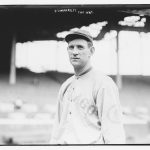
Memory Lane has chronicled the rich baseball history in western Pennsylvania. Uncovered from days gone by is another hidden baseball gem shrouded by the mists of time.
His name is Bert Humphries, who was born in California, Pennsylvania, on Sept. 26, 1880.
The Humphries brothers played sandlot baseball and were well known in the area. 鈥淐ricket鈥� Humphries was a catcher and brother Bert was a pitcher. Bert Humphries dug coal, played ball and briefly ran a restaurant with his wife Ada and sister in California.
Bert Humphries bounced around minor league baseball until he made his major league debut for the Philadelphia Phillies at the age of 29 on April 16, 1910. Humphries had been signed by Philadelphia from Grand Rapids in 1909.
Humphries had played Class D baseball for the Charleroi Cherios, also referred to as the Charleroi Cherubs in 1907 and 1908. Charleroi played in the Pennsylvania-West Virginia League. In 1908 Humphries pitched a perfect game for Charleroi 鈥� he faced the minimum 27 batters and none reached first base.
After going 18-11 for Grand Rapids, Humphries went 13-5 with the Scranton Miners in 1910. He then joined the Phillies and appeared in five games with a 0-0 record and a 4.86 ERA. In 1911 Humphries was 3-1 with the Phillies with a 4.17 ERA. On July 9, 1911, he was traded by the Philadelphia Phillies with one other player to the Cincinnati Reds for Fred Beck. Humphries was 4-3 with the Reds with a 2.35 ERA.
Humphries went 9-11 with a 3.22 ERA with the Reds in 1912.
Humphries was traded to the Chicago Cubs before the start of the 1913 season in a deal including Joe Tinker, which broke up the Cubs鈥� famed Tinker-to-Evers-to-Chance double-play combination. Tinker went from the Cubs to the Reds and Humphries was one of several players sent from the Reds to the Cubs.
Humphries fashioned his best season in the major leagues in 1913 with the Cubs. He was 16-4 with the Chicago and had the best winning percentage of any pitcher in the National League that year, according to The Baseball Encyclopedia. He also had a splendid ERA of 2.59.
He was 10-11 with the Cubs in 1914 and in his last big league season in 1915 he was 8-13. Humphries compiled a won-loss record of 53-43 in six big league seasons and an earned run average of 2.79. The most that Humphries ever made in the majors was $5,000 a year.
On June 17, 1915, Humphries was part of one of the strangest games in baseball history when a pitcher named George Washington Zabel made baseball history.
The Cubs starter that day, Bert Humphries, pitching in the last of his six seasons in the majors, got into trouble immediately. He allowed hits to two of the first four Brooklyn batters he faced.
Future Hall of Famer Zack Wheat came to the plate. Wheat smacked a line drive that hit Humphries in the hand, splitting a finger and knocking Humphries out of the game.
Zabel entered the game from the bullpen. He got the third out of the inning, and the Cubs score twice in the bottom of the first for a 2-1 lead.
Zabel kept the Robins, as the Dodgers were called in those days, at bay until the eighth inning, when they scratched out a run. But, Zabel remained in the game.
Zabel was still pitching in the 15th inning, when the Robins scored another run. But in the bottom of the 15th, Cubs first baseman Vic Saier homered into the right field bleachers to tie the score again.
Zabel continued on the mound. In the bottom of the 19th inning, the Cubs shortstop, Bob Fisher, singled. Cy Williams sacrificed him to second. From there, he scored on a throwing error by Robins second baseman George Cutshaw.
Zabel got the win, allowing two runs on nine hits, with six strikeouts and one walk. He had pitched 18 1/3 innings. It remains the major league record for the most innings pitched by one reliever in a single game. This record will never be broken.
Here another fact that is hard to believe: the entire 19 innings took three hours and 15 minutes.
Jeff Pfeiffer pitched a complete game for the Robins, taking loss after 18.2 innings pitched. I guess there was no such thing as a 100-pitch limit back in those days.
Humphries, in his first season with the Cubs in 1913, was on his way to Tampa for spring training when Orange County area caught his eye. He bought 30 acres east of Lake Pineloch in Orlando in 1913, although he didn鈥檛 spend much time there at first.
The couple鈥檚 land stretched from the southeast side of Lake Pineloch east to Fern Creek Avenue. Ada Humphries spent most of the year clearing the land of scrub oaks, palmettos and pine trees so the family could plant orange and grapefruit seedlings the next year, according to an account written by the Humphries鈥� son, Bert Willis Humphries, a retired Air Force colonel who lived in California.
After leaving the majors in 1915, Humphries played for the Kansas City Blues of the Federal League and elsewhere while his family tended the farm and grove in Orlando.
Humphries played minor league and semi-pro ball and pitched for and coached teams in Orlando, Tampa, Daytona Beach, Lakeland and several Lake County towns until 1924. While he played ball, his wife ran a lunch counter, then a grocery store and finally a boardinghouse in Orlando.
There is street is named for Humphries in an east Orlando neighborhood the couple developed during Florida鈥檚 real estate boom of the 1920s. It is next to another subdivision called Jamajo that Joe Tinker, built on Lake Susannah around that same time.
Florida鈥檚 real estate boom heated up in the 1920s, Ada Humphries sold real estate for Tinker and others, and the couple bought and sold property of their own.
She made enough money selling real estate that the couple was able to buy land and develop a subdivision of their own with 43 lots.
The boom went belly up while the Humphries were selling lots, and they ended up taking back some they had sold. Others they gave to a college to pay their daughter鈥檚 tuition.
Humphries later worked as a fruit tester for the Florida Citrus Growers Association and built houses on the side.
Bert Humphries died of a brain tumor in September 1945 at the age of 64.