

State game lands reach 1.5 million-acre milestone
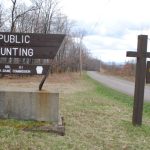
If ever a public official spoke straight to the point, it was in this quote from David Putnam, current president of the Pennsylvania Game Commission board of commissioners.
“This commonwealth would not be the same without state game lands,” Putnam said, noting a significant milestone reached last month. President Putnam was citing the Game Commission’s purchase of a tract in Jefferson County that brought the state game lands system across the commonwealth to 1.5 million acres. Few states offer its hunters and general public such a vast and diverse resource for outdoor opportunity.
The Game Commission began to assemble the state game lands system nearly a century ago, in 1920, with a purchase of 6,300 acres in Elk County. The agency acquires game lands primarily through outright purchase with revenue from hunting license sales, but also through land exchanges with coal companies, gas developers and other willing parties. Conservation organizations, notably the National Wild Turkey Federation and Western Pennsylvania Conservancy have also helped fund the purchase of tracts with particular natural values.
Managed as wildlife habitat and for public hunting and trapping, game lands are sprinkled fairly evenly across the state. Among the state’s 67 counties, only Philadelphia and Delaware counties in the hyper-urbanized Southeast lack game lands tracts. For obvious reasons the larger tracts–some approaching 50,000 acres–grace rural and mountainous regions but few Pennsylvanians live far from a game lands property. While hunting and trapping are the intended recreational use, game lands are open to all, free of charge, for low-impact outdoor recreation like hiking, birding, nature study and photography.
“Early in its existence, the Game Commission recognized the importance of preserving wildlife habitat and, at the same time, creating opportunity for hunters and trappers by opening those lands to the public,” said Game Commission executive director R. Matthew Hough.
To convey some sense of the game lands system’s expanse, the statewide 1.5 million-acre total, if all clumped together, would cover a landmass roughly three times the area of Fayette County.
Fayette County, in fact, is home to one of the larger and more heavily-used game lands in western Pennsylvania.
State Game Lands No. 51 takes in 17,000 acres of rugged mountain vastness on the ridges between Dunbar and Chalk Hill. Besides providing hunting for deer, bear, turkeys, squirrels, grouse and pheasants, State Game Lands No. 51 holds unique habitat needed by some of Pennsylvania’s rare and declining wildlife species.
An encounter I enjoyed there some years ago testifies to the diverse values game lands provide to people of broad outdoor interests. Dunbar Creek flows through the heart of State Game Lands 51. While fishing that stream for trout I met a troop of 20 or 30 people who, clearly, were not fishing or hunting.
The group carried guidebooks of some kind, magnifying glasses hung on lanyards around their necks and they all peered studiously at the ground as they walked a trail. Curious, I inquired about their purpose.
They told me they represented an international botanical organization and that State Game Lands No. 51, near Dunbar, Fayette County was perhaps the best place in the United States to see a diversity of wild violet species all growing in one place. They had all traveled from various states and countries to marvel at something most of us natives didn’t even know was here. Who’d have thought?
Other, smaller game lands are available to Fayette County hunters, hikers and nature enthusiasts near Layton, Adah, Farmington and atop Chestnut Ridge near Laurel Caverns. Still more game lands frame Fayette County to its east and west. State Game Lands No. 111 holds 12,000 mountainous acres above Confluence in Somerset County and Game Lands 223 covers 8,000 acres of wooded hills around Carmichaels and Garards Fort in Greene County.
In addition to the free outdoor recreation that state game lands provide everyone, the Game Commission also pays $1.8 million annually to schools, municipalities and counties in lieu of property taxes for the game lands it holds.
There exists some confusion about state game lands, their whereabouts and identity. Locally speaking, some refer to the public lands around Wharton Furnace and Quebec Run as “state game lands.” Those tracts, however, are part of the Forbes State Forest. While also open to the public for hunting, fishing and low-impact activities, “state forests” are owned by the Pennsylvania Dept. of Conservation and Natural Resources and are maintained with general tax revenue paid by everyone, rather than hunting license dollars. The regulations for use of state forests, state parks and state game lands are significantly different. Look for the signs near parking areas and read the rules to help protect all these valuable resources for their intended purposes.
Admittedly, state game lands are somewhat “low-profile” on the landscape. Perhaps because they serve such a key role as wildlife habitat, the Game Commission does not enthusiastically promote their existence or location.
But the lands are there, for everyone to enjoy within the regulations (no motorized access) and Pennsylvania would be a less attractive place without them.