

Thoughts on a changing tradition
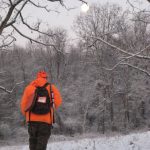
I am aware, at my age, that my commenting on outdoor trends looking back across decades can come across to readers as a yearning for some simpler past. That is not my intent. But I do pay attention to things outdoors because they have always had the feeling to me of something important and meaningful. And when you pay attention over a span of time, you gain observations. This column will share some of those reflections on the recently passed firearms deer season.
Deer hunting, more correctly the deer season, feels as if it鈥檚 changed a lot since I began hunting deer in the late 1960s.
To get to the point, it doesn鈥檛 seem like the big social event that it was years ago. That鈥檚 not necessarily a bad thing; it鈥檚 just changed, as will nearly everything through time. Part of that difference, I acknowledge, may be my own 鈥渕aturation.鈥� In my youth, an approaching deer season kept me awake at night. While that鈥檚 no longer true, I do still look forward to and plan for the annual hunt.
Still, I do believe that several other factors have suppressed the sense of deer season as the significant community spectacle I remember.
For one thing, it鈥檚 a documentable fact that fewer people hunt today. Hunting participation peaked in 1981 when about 1.1 million individuals bought a hunting license in Pennsylvania.
That total is now down around 700,000. The drop is largely explained by an unalterable demographic force鈥搊ur aging population. Since the 1981 peak in hunter numbers, the average age of those hunters has continued to advance.
It鈥檚 like any other sub-set of the population that swelled during the Baby Boom of the 1950s.
As that population 鈥渂ubble鈥� moves farther along the age graph, more hunters find they are no longer physically able to hunt, or pass away.
If I count the people I personally was fortunate enough to hunt with, including my own father, very few are left.
Simultaneously, there are fewer young people now introduced to the outdoors, and those young people at the impressionable ages face more competing distractions for their time and attention.
So, as older hunters drop out, fewer new hunters take their place.
The same phenomenon is happening with fishing and, I鈥檓 told, golf, for the same reason.
Additionally, from my observations, we hunters who remain tend to hunt differently from a generation ago.
Again, that鈥檚 not necessarily bad; it鈥檚 simply another change that makes the deer season seem like less of an event, less conspicuous.
Years ago, the 鈥渄efault鈥� way to hunt deer was to hike across the hills and ridges.
With more hunters out there, and most of them mobile at any given moment, they flushed deer and tended to move them around the landscape, so that fleeing deer continually and randomly encountered other hunters.
The result was a perception of more activity and, certainly, more deer sightings, in general terms over a season.
Hunters today, in general, tend to hunt differently, for a range of good reasons. Modern hunters tend to remain in one place鈥損erhaps a tree-stand or blind鈥揻or much of the day.
That鈥檚 partially explained by the more rigid attitudes about property ownership and trespassing than were in force, formally or informally, decades ago.
鈥淏ack in the day,鈥� as they say, hunters wandered widely, often with little concern about property lines.
That鈥檚 not true today, at all.
Many hunters are confined to a small area within boundaries where they own land or have permission to hunt. So, they don鈥檛 have the choice to be as mobile as their grandfathers.
Reinforcing that trend toward immobility is the widespread and pervasive use of 鈥渟couting鈥� or trail cameras.
A hunter today who doesn鈥檛 use these devices is almost an exception. And if a hunter monitoring deer photographically learns a big buck uses the trails around his stand, his incentive to move from there is certainly reduced.
To sum up this trend, we have fewer hunters moving around less in the woods.
So, unavoidably, deer season has the feel of a less apparent event.
Another powerful factor that may not immediately jump to mind is the continual rise in both the participation and effectiveness of archery hunting.
Especially since crossbows were deemed legal for deer hunting, the percentage of the total deer kill that鈥檚 already fallen and been tagged before the Monday after Thanksgiving has continued to climb.
Forty percent of the total statewide buck kill is now taken during the archery season in October and early November.
I鈥檓 guessing here but archers probably accounted for about five percent of bucks when I began hunting. That means that if today鈥檚 successful archers are following the rules, they鈥檙e not even eligible to hunt in the after-Thanksgiving gun season, contributing yet more to that 鈥渆mpty鈥� feeling the December deer woods lately seem to convey.
But don鈥檛 misunderstand. I鈥檓 not making a value judgement there.
In no way do I mean to suggest that things should not be so regarding bowhunting (although I鈥檓 not convinced that the crossbow authorization was entirely positive, for several reasons beyond this column).
It鈥檚 just all contributed to the 鈥渞egular鈥� firearms season being less of an occasion.
But all these ponderings were interrupted by the photographs last week in the Herald Standard鈥檚 Outdoor section showing several local youth hunting deer with parents or mentors.
Although deer season may seem different to me from my perspective, it鈥檚 all new, exciting and, yes, magical, to these youngsters fortunate enough to have someone, as did I, to take them outdoors.
To you youngsters especially, keep hunting, fishing, and enjoying the outdoors.
It鈥檚 real, it鈥檚 authentic, it鈥檚 your own unique experience and it鈥檚 unforgettable.