

Dutch oven saves dud of a deer hunt
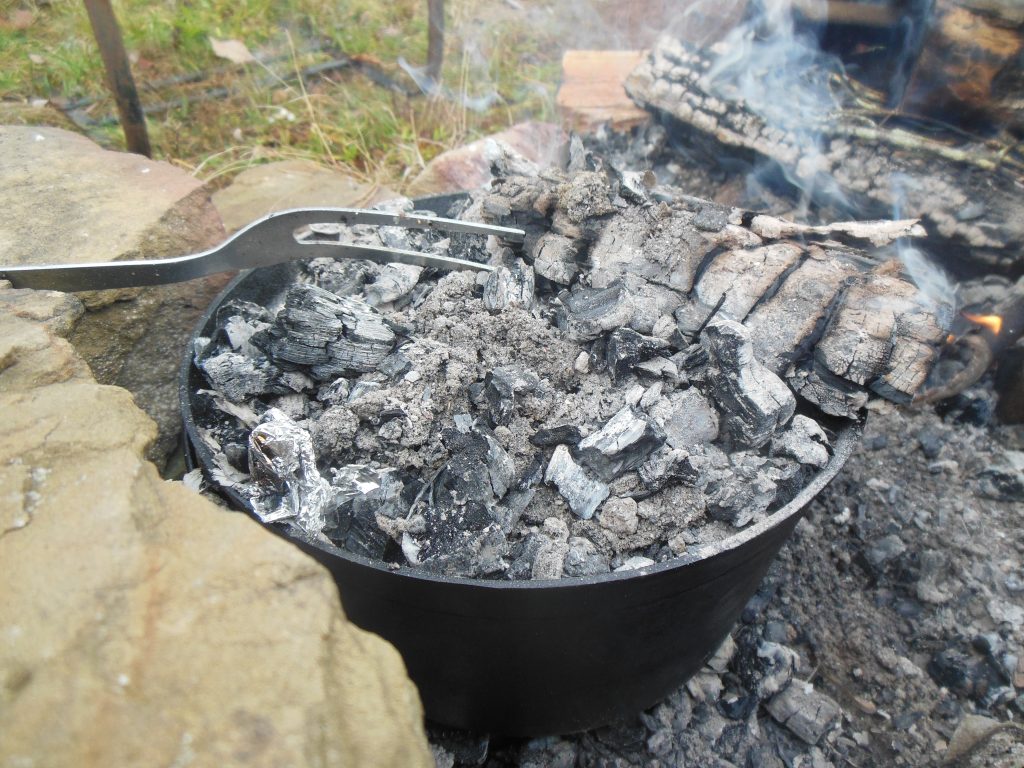
Dutch ovens cook slow and steady when surrounded by glowing coals. This one yielded roast pork and vegetables on the last day of deer season. None of the diners had killed any venison.
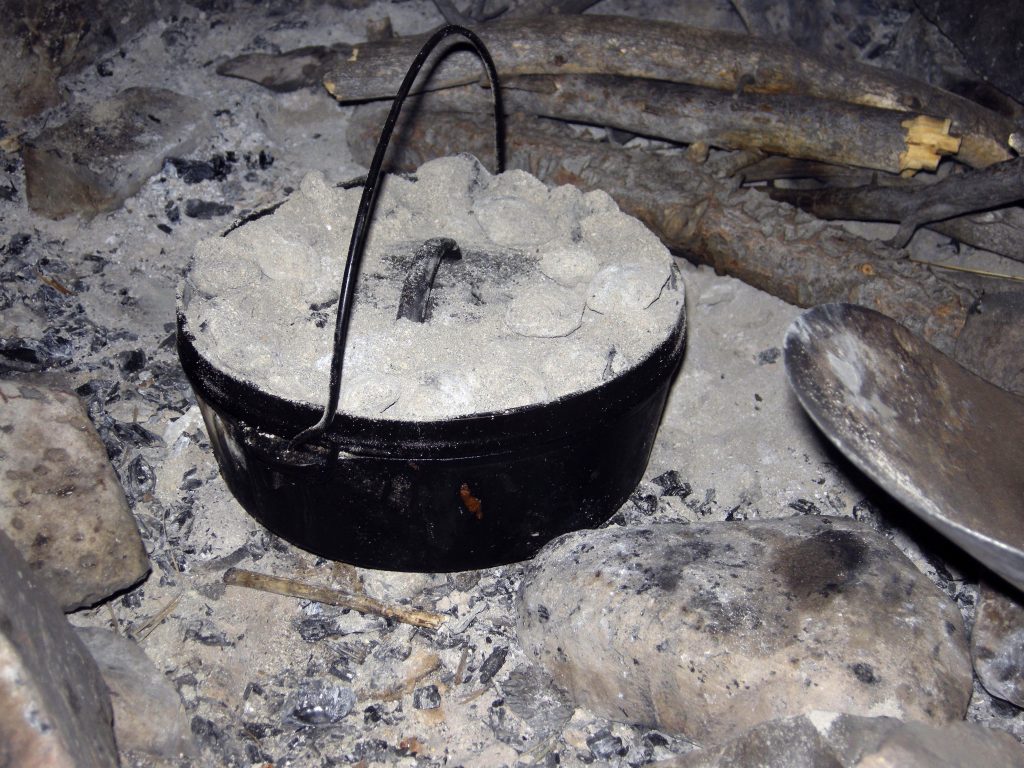
In this photo a Dutch oven is shown baking bread. Aside from a coffee pot, cooking in hunting camp demands only one thing: a good Dutch oven.
I’ve never read the novel, but last month’s weather brought to mind John Steinbeck’s “The Winter of Our Discontent.” If you had looked forward to skiing, ice-fishing, snowshoeing or hunting deer and grouse on fresh snow this early winter, you were discontented.
But outdoors you can always cook. That’s what we did on the last day of deer season when the temperature nudged 70 and chasing whitetails felt like mere going through the motions. Who wants to hang a deer on the pole when you’re uncomfortably warm in shorts and fluorescent orange T-shirt, wondering why you didn’t pack sunglasses?
I knew the weather would be “nice” so I did pack a thick pork shoulder and my Dutch oven. A Dutch oven is that ponderous cast iron vessel you see swinging from the back of covered wagons in western movies. Mine hangs from a nail in the basement, unused sometimes for years. That’s a mistake because the Dutch oven is a versatile appliance that can roast or bake anything you can make in a modern electric range — only better, with the added satisfaction of outdoor accomplishment.
I’d already rubbed the roast with black pepper and smoked paprika, then stowed it in the cooler. After half-hearted hikes through the warming woods at dawn we all returned to our informal base camp and started a fire. For Dutch oven cooking you need fire, of course, but not the eager flames of early ignition. A cooking fire needs time to burn down to glowing coals.
While we waited for coals I got the oven just hot enough in the early flames to brown the meat. I then rested the roast on a slab of clean firewood and sliced onions, apples, parsnips and garlic, a natural combination to complement pork. These got browned too, before I deglazed the oven with warm beer (we’d long since unloaded and cased the rifles). Beer is said to be an effective meat tenderizer. That must be true because, with regular consumption, it tenderizes the human midsection. By the way; never pour cold liquid into a hot Dutch oven, as the sudden temperature shock can crack the iron.
By the time I’d nestled the roast back among the vegetables we had our coals. We dug them out of the flames with a spade and built a glowing radiant mound off to the side of the pit. The Dutch oven squatted on its legs over the mound and we used the spade to ladle more coals onto its lid. After that we re-built the fire — more for affect and bug repellant than for warmth — and relaxed.
After a couple of hours the oven could no longer contain the aroma. The titillating blend of roasting meat, savory garlic, sweet apple and wood smoke piqued everyone’s appetite so that we forgot about the deer we “should have” been hunting. “Only about another hour,” I announced and the impromptu party continued. When we finally savored the meal, everyone declared it a memorable triumph. The meat was tender, moist and permeated with complex tastes. We enjoyed it with the shared reassurance that, likely, we’d have better weather in flintlock season.
But that campfire success can’t be attributed to inspiration or even luck. On a writing assignment a few years back I had attended a seminar on Dutch oven cooking at Raccoon Creek State Park in Beaver County and learned some tips from an expert. Bill Boyce of Pittsburgh did the cooking that day for 15 participants. Boyce has been cooking outdoors for 40 years–with scouts, in the Marine Corps, for work and recreation. When Boyce gets a taste for something good in the woods, or at home, he reaches for his Dutch oven. Naturally, I kept notes.
To get the best performance from Dutch ovens, Boyce cautioned, they need the right care. “The key is to season the oven before you cook,” Boyce said. “If cast iron is properly seasoned, nothing will stick to it.”
Lodge Manufacturing of South Pittsburg, Tennessee, makers of Dutch ovens and other cast iron cookware recommends seasoning by hand-rubbing the oven’s interior and exterior with a good grade vegetable oil or shortening, then baking the oven, empty, at 350 degrees in a kitchen range for at least one hour.
Boyce’s other iron-clad rule is: Never, ever, clean it with soap. Soap destroys an oven’s seasoned surface and soap molecules embed themselves in the iron, imparting an off-taste to food. If you season the oven correctly you can clean it after cooking with a wipe from a damp paper towel.
A Dutch oven’s only drawback is its weight but that robust construction also allows for the steady heat that Boyce says bakes or roasts food so well.
“A Dutch oven is versatile but it’s heavy. If you have one at a permanent campsite or where you can camp from a car, it’s great,” Boyce advised. “But for backpacking–No way.”
He has, though, taken his oven along on canoe trips.
“A friend and I take a Dutch oven canoe camping,” Boyce said. “We catch fish, frogs, whatever. As long as we have a bag of potatoes and onions along and can start a fire, we can cook up something good.”