

The best that never was: 1991 was Pirates’ greatest chance to win World Series
Pirates fans still recoil at the image of Atlanta Braves first baseman Sid Bream鈥檚 slide past Pirates catcher Mike Lavalliere in the 1992 National League Championship Series. The sadness and profoundness of the defeat lived in infamy with the team鈥檚 faithful, especially as the team rattled off 20 straight losing seasons in the aftermath.
The 1992 NLCS had perhaps the most drama and imagery of of any Pittsburgh team鈥檚 playoff exit before or since. Light-hitting and even lesser- known Francisco Cabrera was an unlikely hero for the Braves.
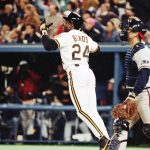
Slumping Pirates superstar Barry Bonds, likely on his way out of town, was unable to come up with the play to save the team.
Andy Van Slyke sat down at his place in center field with a dejected look on his face.
And there was Lavalliere, laying face-first on home plate, looking up for the call from umpire John McSherry.
Those memories and images have stuck with Pirates fans for the interceding generation. But the loss to the Braves in the 1991 NLCS was just as heartbreaking for those who lived it. It鈥檚 been 25 years since that 98-win team let a 3-2 series lead slip away with back-to-back shutouts at the hands of the Braves.
To hear from those who played on it, the 1991 Pirates team was the most talented of the three early-90s division winners and the one that had the best shot to win the World Series.
鈥淟et鈥檚 just say it wasn鈥檛 as dramatic but equally as disappointing,鈥� Lavalliere said via telephone from his home in Florida. 鈥淲e had a 3-2 lead with two games coming back to Three Rivers. That was as disappointing, if not more so than 1992, it just didn鈥檛 have as dramatic of an ending.鈥�
Instead of going out on a dramatic play at home plate, the 1991 Pirates went out with a whimper, failing to score a run in either Game 6 or 7, despite having perhaps the best lineup those Pirates fielded.
鈥淲e didn鈥檛 have a lot of issues as far as holes or anything like that,鈥� said pitcher Bob Walk, now a member of the Pirates鈥� broadcast team. 鈥淲e still had Smiley. We still had the main part of the middle of our lineup with (Bobby) Bonilla still intact. That was a real good team. It had a little bit of everything. That was a shame. We had it all right in front of us. All we had to do was win one game.
鈥淚f you look at the different years and you鈥檙e being realistic, that was the one that should have been the winner and more than anything else, the most disappointing. 鈥� Our great chance at not only getting to the World Series, but winning the World Series, was the 1991 team.鈥�
PHENOM AND FAME
The Braves of the 1990s are synonymous with outstanding starting pitching, and for good reason. Tom Glavine, Greg Maddux and John Smoltz are all in the Hall of Fame, and while Maddux鈥檚 Braves tenure didn鈥檛 start until later, Glavine and Smoltz started four of the seven games in 1991.
Two of the other three games, including the penultimate game, fell to second-year starter Steve Avery. Avery didn鈥檛 have the longevity of the other members of that starting rotation, but in stretches 鈥� especially early in his career 鈥� he was just as unhittable as the rest. In his postseason debut in 1991, he held the Pirates to nine hits and no runs in 16 1/3 innings, winning both games.
鈥淲e got beat by Avery, who was an absolute phenom in Game 6, and then Hall of Famer John Smoltz in Game 7,鈥� Lavalliere said. 鈥淣ot to mention having to deal with Glavine, a Hall of Famer. For us to have had a chance to have won both of those series, I think it speaks volumes, considering the competition we were playing.鈥�
Much like the fate of the 1991 Pirates, Avery鈥檚 has been somewhat forgotten by history. Avery suffered an injury in 1993 at age 24 and was never the same pitcher afterwards. It was a matter of the right place and the right time for Avery and the Braves 鈥� and maybe, the right opponent.
鈥淎very really was an awesome pitcher in his early years,鈥� Walk said. 鈥淗e was one of those guys that kind of flamed out after a little while. Those times when we were playing against them in the early 90s, he was a guy that gave us a tough time most often. I didn鈥檛 like when we were going up against him because of the fact that two of our best middle-of-the-lineup hitters were left-handed 鈥� Barry Bonds and Andy Van Slyke. Anytime we faced an upper-echelon left-handed pitcher in a big game, that was going to give the other team a little bit of an advantage.鈥�
BOND FORGED
Though there were some comings and goings, notably Bonilla and John Smiley exiting and Bream going from Pittsburgh to Atlanta in 1991, the core group of Pirates players stayed together through the three division-winning teams and that has kept them close.
鈥淚 think all of us, when we look back, there were very competitive playoffs,鈥� Lavalliere said. 鈥淲e went seven games in 1991 and 1992. In 1990, we went six games against the Reds, who just steamrolled through the World Series. We honestly thought we were the best team. It obviously didn鈥檛 work out that way.鈥�
Walk said, 鈥淚 think what sometimes brings guys together is going through failure together, almost more than a winning situation. Something like that, a disaster befalls, really three straight years, where you鈥檝e lived through this failure at the end of the year three years in a row. Then every time you see one of those guys, even if you haven鈥檛 seen them in years 鈥� as soon as you see one of the guys from one of those teams, a lot of the memories come flooding back.鈥�
Many of the Pirates from those teams have remained involved with the team. Walk and John Wehner are featured on Pirates radio and television broadcasts, while Lavalliere is an instructor at spring training.
鈥淚t鈥檚 pretty special,鈥� Lavalliere said. 鈥淲hen we get together, it鈥檚 like we haven鈥檛 missed a day. We go right back to being close pals like we were.鈥�
WHERE ARE THEY NOW?
Several of the 1991 Pirates remained involved in baseball after their careers ended:
C Mike Lavalliere
Pirates Spring Training instructor.
SS Jay Bell
Most recently a hitting coach for the Cincinnati Reds in 2015. His son, Brantley, plays in the Reds鈥� organization.
INF/OF Bobby Bonilla
Special assistant for player services with the MLB Players Association.
INF/OF John Wehner
Color broadcaster for Pirates radio and TV broadcasts.
INF/OF Lloyd McClendon
Hitting coach for the Detroit Tigers; spent six years as an MLB manager with Pittsburgh and Seattle.
OF Barry Bonds
Was the hitting coach for the Miami Marlins in 2016 and has served as a spring instructor for the San Francisco Giants.
OF Andy Van Slyke
Was the first base coach for the Seattle Mariners until 2015; authored a fictional book on the Chicago Cubs in 2010. Son Scott plays for the Los Angeles Dodgers.
C Tom Prince
Recently hired as the Pirates鈥� bench coach. Has also been a minor-league manager, including for the Pirates organization.
P Bob Walk
Color broadcaster for Pirates radio and TV broadcasts.
P Doug Drabek
Was a pitching coach in the Arizona Diamondbacks organization. His son, Kyle, plays in the Giants organization.
P Randy Tomlin
Head baseball coach of Liberty Christian Academy, a private high school in Virginia.
P Bob Kipper
Pitching coach for the Triple-A Pawtucket Red Sox in the Boston Red Sox organization.