

Laurel Highlands a likely place to encounter state symbols
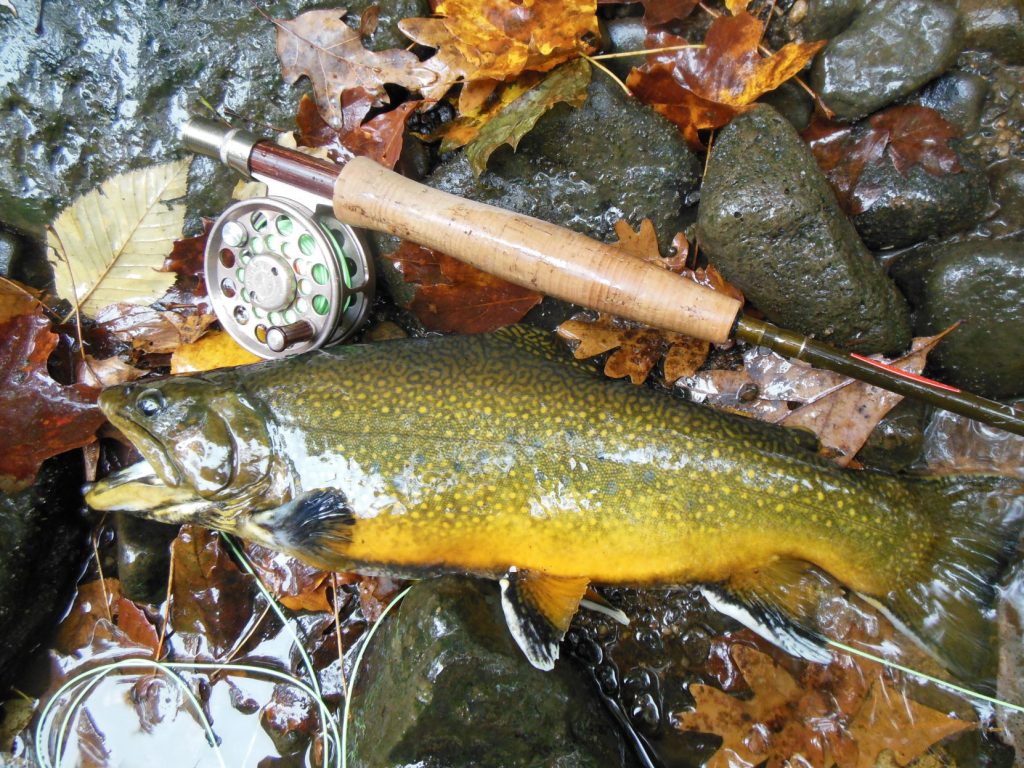
Among our state symbols, the mountain laurel (photo directly above), when it blooms early- to mid-June, hemlock and white-tailed deer, are readily seen. The ruffed grouse and brook trout (top photo) can require more dedicated effort to encounter up close.
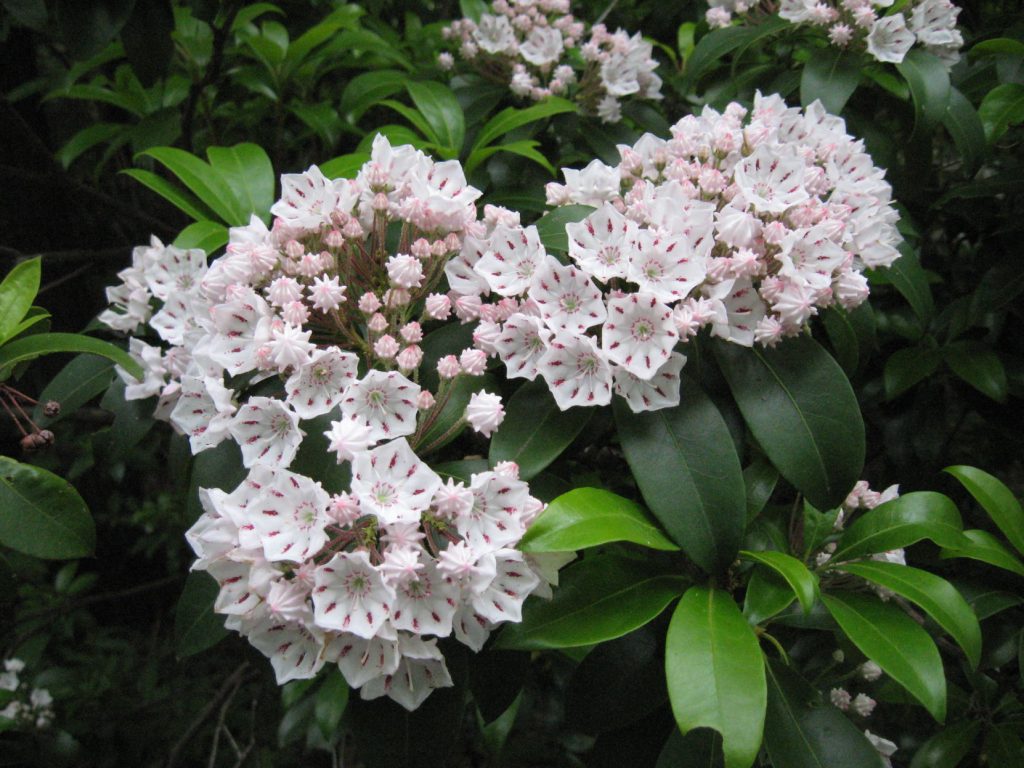
Pennsylvania’s official state symbols, like this mountain laurel, our state flower, can be encountered in this region’s forests.
As far back as third grade at Mount Braddock School, when we learned about our state tree, flower, and bird, these symbols carried meaning.
They stand for larger intangibles, and the peoples’ common recognition of the value of wild native things. More recently, because I’d just learned of the Chesapeake Bay Foundation, Student Leadership Council’s push to designate the hellbender (North America’s largest salamander, which lives in streams of this region) as Pennsylvania’s official state amphibian, I was already thinking about state symbols when I decided to fish an evening last week, drawn by the improving green drake hatch on Dunbar Creek.
Dunbar Creek is the first stream I fished for trout in my life, and there is a stretch of it, beyond the highest parking spots, that remains the most beautiful and satisfying trout water I have known, anywhere. In a way, it’s a severe setting, confined by steep slopes and ledges. But the cool lushness there is also inviting. Deep moss cushions the boulders, and hemlock and rhododendron shade chills an always fragrant breeze. If I am tired, anxious or irritated when I park the truck and begin to hike upstream, I’m grinning to myself by the time I reach the hole where a pyramidal rock looms over a pool too deep and green for so small a creek.
On this hike, mountain laurel glowed high up on the ledges, where it’s drier and sunnier. The globes of laurel flowers, clumped and scattered across the slope, shone hot-pink through the evening woods. I’m sure it was illusion, but their contrast seemed to brighten the stony path ahead, as if they cast true light downward into the shadows. “How fortunate I am to see my state flower in bloom in such a place,” I thought. Then I considered the hemlocks, visible with the laurel in the same scan of mountainside, tall, dark and graceful (For the time being, sadly, as they are under lethal attack in our region from an invasive insect, the hemlock woolly adelgid). “The hemlock and the mountain laurel together, as they should be,” I mused. “A sight to be grateful for.”
A silvery cascade heads the pool, then spreads out as a smooth bulge beneath the sandstone face. Green drake coffin flies were already cruising about in their lumbering death-flight, some crashing and dapping the surface. There isn’t much room for back-casting, but familiarity helped me drop the fly at the head of the bulge, where it did a quick pirouette as the leader straightened, then rode low on the water, wings upright, like the naturals.
The take was savage, in no way contemplative like that of a cagey lowland brown trout. These mountain trout welcome protein when they can get it, and are not fussy.
Like the depth of its pool in so small a creek, the pull of that brook trout seemed too dogged, too surging, for a fish of its size. In my moistened left hand, it was muscularly lean, blue and orange speckled, and it held still long enough so that, if I held the fish a certain way, I could see Pennsylvania’s state fish, state tree and state flower at the same moment.
Fishing upstream around a bend, I caught two more trout, equally stunning. But the evening was waning, too dark to see the fly riding the surface. I took a different trail that winds through an apple orchard in its last throes of existence, to the ford that would lead to my truck. I felt rewarded. I’d taken the initiative to come here, invested a little time and a moderate hike, and beheld three of my state’s symbols at their best.
That comfortable mental state shattered in explosive yet familiar sound. A ruffed grouse flushed at my feet, then powered straight back the open trail as grouse do only when you are not hunting them. I wheeled and sighted down the rod and that bird never banked. It flew so straight that only the gathering darkness obscured its final direction.
“How’s that for good fortune at the end of an outing?” I asked myself. Within an hour’s time I’d enjoyed encounters with four state symbols — flower, tree, fish and bird. It occurred to me that, among declared state icons, only the white-tailed deer had been absent.
My route home traversed sparsely traveled dirt, stone and blacktop. More mountain laurel shone in the headlights at roadside as I topped the mountain, then crossed the flats. Then a sight familiar to anyone who has driven these roads appeared in the beam. The summer-red coat of a whitetail doe caught the light as she stepped from the thickets and into the road. I braked and waited, while two more followed her across. Again, I congratulated myself. All five of our wild state symbols, encountered in one evening.
Why does this feel so significant? Is it sentiment? Nostalgia? Is it a flashback to prideful grade school civics? Or, is it my own internal hinting that my past holds more encounters with these wild emblems than my days to come? I don’t know, except that it seems right to take note of it, and hope it happens again.