

Hunting options widen; not so for grouse
Soon, the hunting seasons will open in quick succession. Archery deer season is already in progress so, for hunters, Saturday Oct. 14 will be a day of wide choices.
Hunting for rabbits, squirrels and ruffed grouse opens Oct. 14, as does the South Zone duck-hunting season. Regarding duck hunting, waterfowlers should note that although the board of game commissioners voted in late September to legalize battery-powered mechanical decoys, such as the 鈥渟pinning-wing鈥� design, for duck hunting, that change does not take effect until fall of 2018.
Deer choices widen, too. Hunters with antlerless licenses can hunt antlerless deer with muzzleloaders in their license-specified wildlife management unit Oct. 14-21. Senior hunters, 65 and older, can hunt antlerless deer with modern firearms Oct. 19-21. The pheasant season opens Oct. 21.
Special youth seasons are open now for squirrels and rabbits and will continue until the general seasons open Oct. 14. Check the Pennsylvania Game Commission website, www.pgc.pa.gov for youth eligibility, licensing and mentor accompaniment requirements. The special youth pheasant-hunting season opens Oct. 7. Junior hunters (age 16 and younger) may hunt pheasants without the new pheasant permit which is required of adults and seniors wishing to hunt pheasants.
Pennsylvania鈥檚 expanding bear hunting opportunities have become so specialized to various units and hunting methods that it would take this entire column to discuss the options. To be sure of where, when and how it is legal to hunt black bears, check in at www.pgc.pa.gov for the lengthy details.
Wild turkey season opens in our area (WMUs 2A and 2C) on Oct. 28.
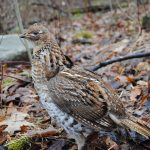
Considering that diverse menu, hunters who occasionally pursue ruffed grouse may want to bump that fine game bird higher among their priorities. The time available for hunting grouse is roughly half what it鈥檚 been for the last four decades. This year, don鈥檛 wait for the winter season that many grouse hunters prefer. That familiar 鈥渁fter-Christmas鈥� winter season for our state bird is no more. The board of game commissioners voted recently to close the winter grouse season, which traditionally ran from the day after Christmas until late January.
Commissioners made that decision in response to continued low grouse numbers, coupled with the discovery that West Nile Virus is widespread among ruffed grouse in this state. Research suggests that few infected birds recover.
The winter season, though popular, always carried a hint of controversy. Some biologists have argued that by the time winter arrives, surviving grouse are needed to adequately reproduce the population the next spring. With the arrival of West Nile Virus that viewpoint gained strength and commissioners chose a cautious path and closed the winter season. This year鈥檚 grouse season spans Oct. 14-Nov. 25, then opens again briefly Dec. 11-23.
The logic in ending the winter season is understandable, but I鈥檒l miss it. When I was just beginning to hunt (mid 鈥�60s) with my dad, uncles and their friends, the winter grouse season was new and novel. Before that the season ended in late November. So, we saw those bonus hunting days between Christmas and New Year, when school was closed and work was slow, as a windfall.
To an impressionable beginner, hunting grouse in the local mountains then was an unforgettable experience. We still had some English setter bird dogs, and hunted the steep river hills between Ohiopyle and Dunbar. Grouse flushed often from the tangled thickets, sometimes 70 flushes in a long day鈥檚 hunt. To a kid, those incredible days seemed 鈥渘ormal鈥� at the time, but I have never known their equal since.
If you have never hunted ruffed grouse, especially if you have never been introduced to it by someone who already loved it, I鈥檓 afraid you鈥檙e not likely to take it up. Hunting grouse the way it鈥檚 done here only happens in a small part of the world鈥搕he Great Lakes forests, New England and southward along the Alleghenies. It鈥檚 mostly walking and climbing, around boulders, through brier-studded vines and snarled thickets. Your hands get scratched, sometimes your ears, and mostly you just hear the thunderous flush of the chicken-size bird you never see. Sometimes you do see the grouse as it zooms skyward, but can鈥檛 get a shot through the woody maze. And when the flushing bird does offer a shot, you most often miss. Every so often, though, it all comes together and you get to place one of those lovely, honorable wild birds in your coat to carry home. I consider it a gift well earned.
Later, I made a good friend who shared that taste for grouse hunting. He, too, had an English setter and we hunted grouse a lot for several years, mostly in the winter season because Jim didn鈥檛 like to run his setter when the weather was warm 鈥� and the autumns do seem warmer now.
In recent years, I鈥檝e always hunted grouse alone and without a dog, which is less effective but possible. I鈥檝e gotten out and tramped the thickets two or three times, always in the winter because the grouse season ran longer than for any other game. Even though I enjoy hunting grouse, I could hunt ducks, turkeys or deer through the fall, then save grouse until the end.
So, if that鈥檚 been your approach you鈥檒l need to rearrange your plan. It鈥檚 not likely the winter grouse season will return soon.
Ben Moyer is a member of the Pennsylvania Outdoor Writers Association and the Outdoor Writers Association of America.