

Penn State studies ramp nutrition and trade
These days, it’s not often that I’m ahead of the “learning curve.” My little granddaughter, a two-year-old toddler, is more adept at phone applications, television channel selection, and operating the car windows than her oft-befuddled “Pappy.” But I was out front with ramps.
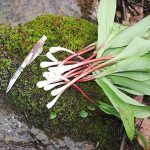
Ramps are those much-awaited wild relatives of leeks and onions that sprout in secluded woodlands early each April. This frigid spring, like everything else wild and native, their appearance is late. But ramps will be ready for collection soon, likely with the next warm-up.
The uniquely interesting culture of Appalachia would not be what it is without ramps. The plant finds its best growing conditions on steep hillsides and in hidden ravines in forests from western Pennsylvania to northern Georgia. Back before refrigeration and rapid transport made fresh vegetables available year-round, self-reliant mountain people craved ramps after their forced winter diet of dried beans and salted meat. Ramps became such a fixture in mountain culture that ramp festivals still liven spring in communities across the region, especially in West Virginia. The nearest festival to Herald Standard readers is the Mason-Dixon Ramp Festival slated for April 28-29 at the Mason-Dixon Historical Park near Mt. Morris, Greene County. If the imaginative use of ramps in home-cooking excites your imagination, you belong at the festival.
Ramps were pretty much a “fun food” by the time I came along. We especially enjoyed them on trout-fishing camping trips in the West Virginia mountains. We’d catch our limits of trout, then head into the woods to dig ramps, which is not easy to do without the right equipment because ramp roots cling hard to the stony upland soil. A mattock works well to pry out the roots but, we never packed a mattock on our travel-light fishing adventures. Pocketknives had to suffice but we didn’t need many ramps to spice up the fried potatoes that accompanied mounded skillets of golden-brown trout. We didn’t need many because ramps are…well…pungent. I think some people’s disgust with ramp-aroma is needlessly excessive, but my wife doesn’t share that view. She instructs me to keep my distance after I’ve indulged. I haven’t fed ramps to the granddaughter yet, but something tells me she’ll relish them.
Quite recently, and much to the surprise of their long-time fans, ramps have become trendy and chic on the cutting-edge food scene. Upscale restaurants from New York to California are said to offer ramps to urbanites as the new “must try” culinary adventure.
All that attention has prompted Penn State University’s College of Agricultural Sciences to study the potential of ramps as a forest product, their mysterious but acclaimed nutritional punch, and a newly discovered alien insect pest that may threaten ramps’ future.
Researchers hope to learn how ramps find their way from remote forests to big-city restaurants, and the extent of ramp trade at farmer’s markets and grocery stores. Understanding the ramp market may be important in future efforts to manage the wild ramp harvest. Some locations have already seen a decline in ramps due to over-exploitation. A friend and owner of a large tract of mountain property notes that ramp patches on his land have been suddenly and mysteriously ravaged by unscrupulous diggers.
It is deplorable, but not unexpected considering mankind’s typical approach to natural resources, to view the aftermath of some ramp-diggers’ plunder. Some diggers leave a pristine hillside looking like feral hogs uprooted the soil, ripping out huge clods, overturning rocks and trampling the fragile spring wildflowers often associated with ramp habitat. It is possible, though, to harvest ramps responsibly, careful to take only what you need, replace “divots” as responsible golfers do on the course, and taking care to avoid trampling non-target plants. The work of careful ramp collectors can scarcely be detected after they’ve claimed their bounty.
Over-harvesting of ramps is, more than ever, a realistic prospect. Besides growing demand, technology makes ramps more vulnerable. Once, fertile ramp patches were closely held secrets, and finding new ones required hours of searching in rugged country. Today, one posting of coordinates on social media reveals the precise spot to the world. It’s not this column’s intent to continually bash technology, but the liabilities must be pointed out if we are to keep unique natural features a part of our lives.
Both the ramp’s underground bulb and its emergent leaves are edible. Native Americans and Appalachian pioneers considered ramps to be healthful and therapeutic but modern science will now try to confirm that belief. The plant is known to be high in vitamins A and C, iron and antioxidants.
“Because the knowledge of ramps’ nutritional and medicinal composition is limited, our research will quantify phytochemicals of importance to both flavor profile and human health as they vary in relation to plant stage and seasonality,” said Joshua Lambert, a Penn State associate professor of food science.
The Penn State research also aims to gauge the vulnerability of ramps to the allium leaf miner, a pest accidentally imported from Europe. Destructive leaf miner infestations of domestic onion and leek crops are already documented, but their potential impact on wild ramps is unknown.
It’s smugly gratifying to be familiar with something that so many people suddenly want to know about and use. I may have missed some opportunity here, which is OK. Ramps have been “fun food” for me, my family and friends for a long time. That’s good enough.
Ben Moyer is a member of the Pennsylvania Outdoor Writers Association and the Outdoor Writers Association of America.