

Packhorse and saddle reach remote fishing; Recall travels of Lewis and Clark
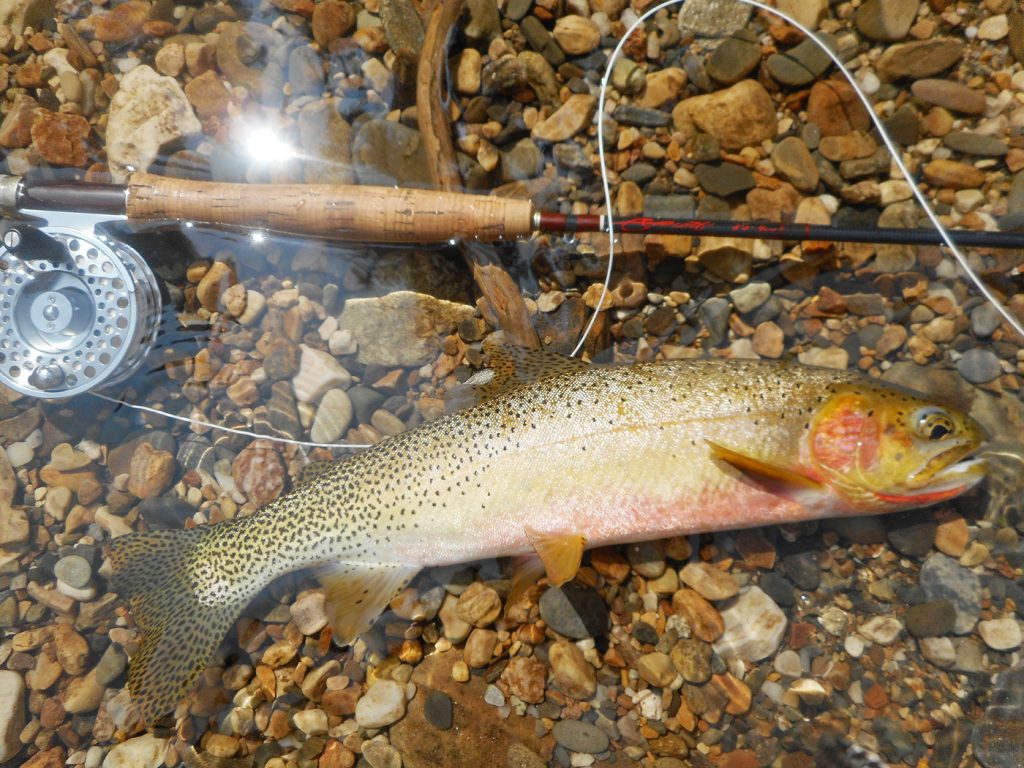
Westslope cutthroats are the native trout west of the Continental Divide in the Bitterroot Mountains. Many variations of cutthroats inhabit streams across the West. All are named for the twin slashes of crimson red beneath the jaw.
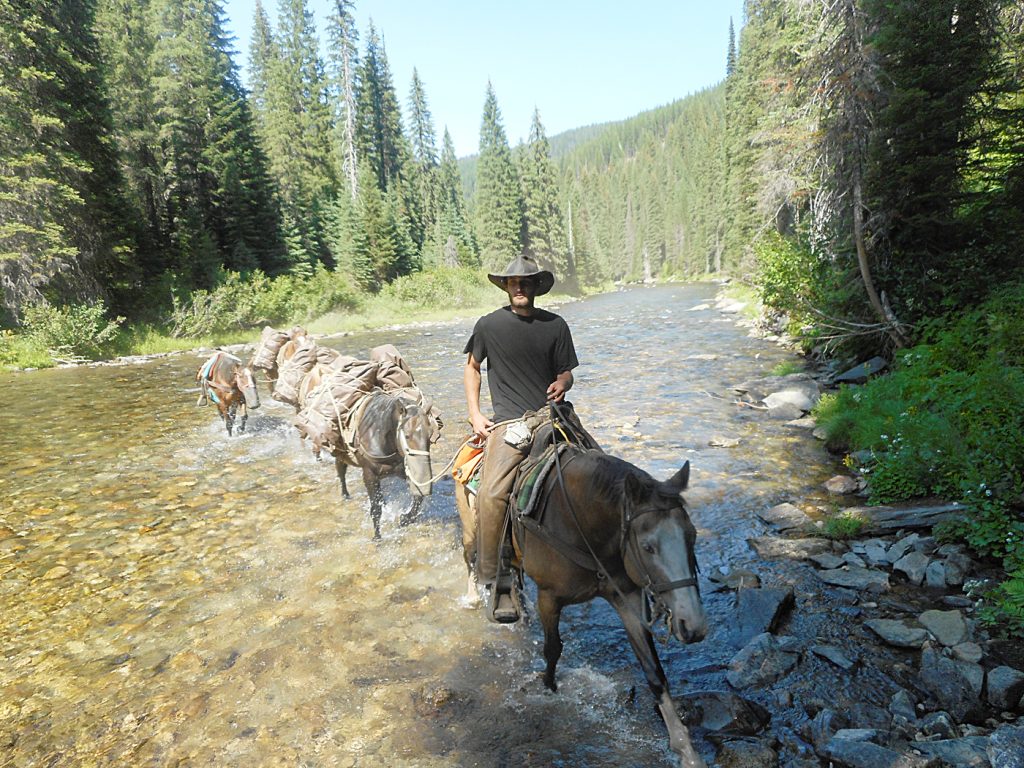
Rial Bolles, horse wrangler for St. Joe Outfitters, leads packhorses across the St. Joe River in the Bitterroot Mountains of Idaho鈥檚 northern panhandle.
If a fishing trip鈥檚 satisfaction can be measured by how fully it transports you back in time, into American history, then a horseback trip for the cutthroat trout of the Bitterroot Mountains is a highly satisfying adventure.
The Bitterroots are a remote range of mountains within the northern Rockies, straddling the border of western Montana and Idaho鈥檚 northern panhandle. The first non-Native people to see the Bitterroots were Meriwether Lewis, William Clark and 40 members of their Corps of Discovery, crossing the range on horseback on their return trek east from the Pacific Ocean in 1806. In his journal of the expedition, Patrick Gass called the Bitterroots 鈥渢he most terrible mountains I ever beheld.鈥�
Of course, Lewis, Clark and company experienced the mountains under extreme privation. Their naming a Bitterroot stream 鈥淗ungry Creek鈥� attests to their dire condition, forced to consume some of their own horses.
Today, the Bitterroots are as steep and densely forested as when Lewis and Clark explored them. An eastern angler with an impulse can鈥檛 expect to jump on a plane and find his way to the trout of these mountains, at least not their more remote haunts that promise the best fishing. The smartest way to reach them is to engage an outfitter who knows the country and how to traverse it. An internet search led me to the somewhat folksy webpage of St. Joe Outfitters. Their posted materials were unpretentious and appealing. We wrote, the chemistry felt right, and I committed to the trip. With St. Joe Outfitters you can appreciate Lewis鈥� and Clark鈥檚 travels while under less duress鈥揺ven in rustic comfort鈥揳nd you surely won鈥檛 need to eat your horse.
Will and Barbara Judge, St. Joe Outfitters owners, their son Wyatt and wrangler Rial Bolles use horses to access their remote camp far upstream on the St. Joe River, a crystal-clear, cobble-bottomed stream flowing west from the Bitterroots鈥� heart to join the Columbia River and the Pacific. My first look at the St. Joe, from the back of a big bay gelding affirmed why the St. Joe is a congressionally designated Wild and Scenic River. It鈥檚 the kind of setting you see on 鈥渟cenic America鈥� calendars. St. Joe Outfitters once led elk hunters into the mountains but their guests these days are after trout鈥搕he westslope cutthroat trout, native to the Bitterroot region and first described for science by Lewis and Clark. 鈥淭rout fishing offers us a longer season, and it鈥檚 not as hard work as hunting elk,鈥� joked Will judge.
Clients meet Judge at a base camp on the Idaho side of the Continental Divide, accessible by car, then mount what Will calls 鈥済ood mountain horses鈥� for the six-mile ride to camp, including six fords of the St. Joe River. Every ounce of gear, every fly rod and fresh egg are expertly packed in panniers and 鈥渕annies鈥� (derived from manta, the Spanish word for tarp), weighed to correctly distribute the load, then secured to packhorses. Loaded, grained and watered, the pack-string follows Will on his saddle horse into the high country.
Even in the remote Bitterroots, you can鈥檛 escape the constraints of modern life, which in this case are understandable and highly revered among St. Joe River regulars. The Idaho Department of Fish and Game designates the upper St. Joe watershed as a catch-and-release fishery for cutthroat trout. Only barbless single hooks may be used, and no bait is allowed. So, although the rules don鈥檛 technically require it, fly-fishing is the only practical approach to fishing the river.
鈥淵ou could see the incredible improvement in the fishing within two years after Idaho Fish and Game made this river catch-and-release,鈥� said Steve Moran, of Spokane, Washington, who guides trout fishermen on the St. Joe.
All the trout in the river are native and wild. The state has never stocked the St. Joe and doesn鈥檛 plan to. Challenging access to the upstream basin and strict no-kill rules ensure that natural reproduction keeps the river full of fish. 鈥淭here are way more trout in the river now, and they grow big because people aren鈥檛 throwing them in a skillet when they reach 13 inches,鈥� Moran said.
Though St. Joe River westslope cutthroats are wild and beautiful fish, they don鈥檛 grow large relative to some other trout fisheries. Moran has caught them over 20 inches, but an 18-inch westslope from the St. Joe is considered a fish worthy of note.
Casting for them is both as frustrating and as fun as trout angling can be. At times these trout are highly selective, sipping gnat-size insects off the surface and ignoring any artificial floated over their heads. But wait 10 minutes, or just wade upstream and they will violently gulp a big, mangy fake grasshopper. They鈥檒l even attack an unlikely creation topped with two square inches of glaring white floss that Moran calls a 鈥淐hubby.鈥� Five minutes later they鈥檒l 鈥渢urn off鈥� and reject any offer.
The 鈥渢ake-away,鈥� though, is that with the spruce-clad mountains jutting up from the river, an eagle soaring across the cliffs and a moose crashing through the timber within casting distance, it鈥檚 a place where fishing is just a good excuse to be there, whether trout strike or not.
In the evening, Barbara Judge wields a mastery of the Dutch oven and the propane stove equal to husband Will鈥檚 horsemanship. Lasagna, scalloped potatoes, pot roast, pizza, ham and pineapple upside-down-cake bake inside an immense cast iron vessel that less resilient cooks would shy away from lifting. At dawn, that bitter but oh-so-alluring aroma of strong black coffee, boiled on the antique propane stove to Barbara鈥檚 鈥渃owboy recipe,鈥� enlivens camp mornings. During this trip, due to dry conditions in the woods, the U. S. Forest Service had declared a 鈥淣o Open Fires鈥� policy on the cluster of national forests it administers in panhandle Idaho. The Judge family takes the rule serious, even though it would be hard for officials to detect a campfire at St. Joe鈥檚 compound. 鈥淪elf-regulation is essential when it comes to fish, game and forests,鈥� Will Judge commented.
So, Barbara cooked over propane or fueled her Dutch oven with charcoal briquets, which are permitted under the fire ban. Every week Will, Wyatt or Rial load oversize propane bottles on packhorses, lead the string down to base camp, transfer the bottles to a pickup truck and drive to town (about 40 miles one-way) for refilling. They pick up more charcoal for Barbara while they鈥檙e at it. All of it gets packed back upriver on horseback.
When you鈥檙e not fishing, eating or riding a horse, there鈥檚 the ancient pleasure of simple conversation on the porch of St. Joe鈥檚 modest, log-walled lodge. It was nice to recall how natural that comes without modern-day distractions.
To learn more about trout fishing the St. Joe River with St. Joe Outfitters, call Will or Barbara Judge at 208-274-2222. Or email them at st.joeoutfitters@gmail.com.
Ben Moyer is a member of the Pennsylvania Outdoor Writers Association and the Outdoor Writers Association of America.