

Always catch-and-release…..NOT!
Ben Moyer
The spreading catch-and-release ethic is appropriate in many types of fishing. But even in today’s modern and complicated angling world, abundant bluegills, crappies and perch salvage the pleasure of eating a mess of fish you’ve caught yourself.
Ben Moyer
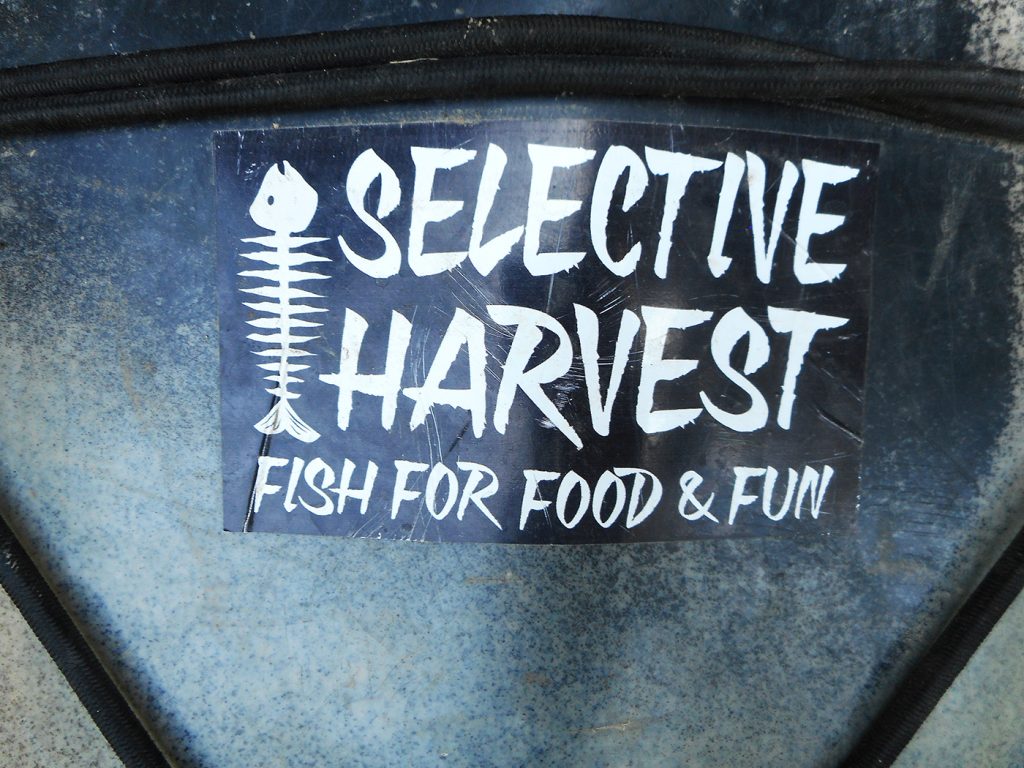
After friends’ chiding about his catch-and-release canoe sticker, the columnist displays this new placard, advocating a more flexible approach to fishing.
Some friends like to rib me about a sticker I displayed on one of my canoes before it was stolen. The sticker rode provocatively on the bow and proclaimed “Catch and Release� in bold design and bright colors.
My mates found that odd during a float-fishing trip we made on a stream in northwestern Pennsylvania, known for its bass, walleye, northern pike and several species of sunfish. Paddling solo, I was the lead boat in our flotilla and a long stringer of big sunfish hung from the gunwale and trailed in my wake.
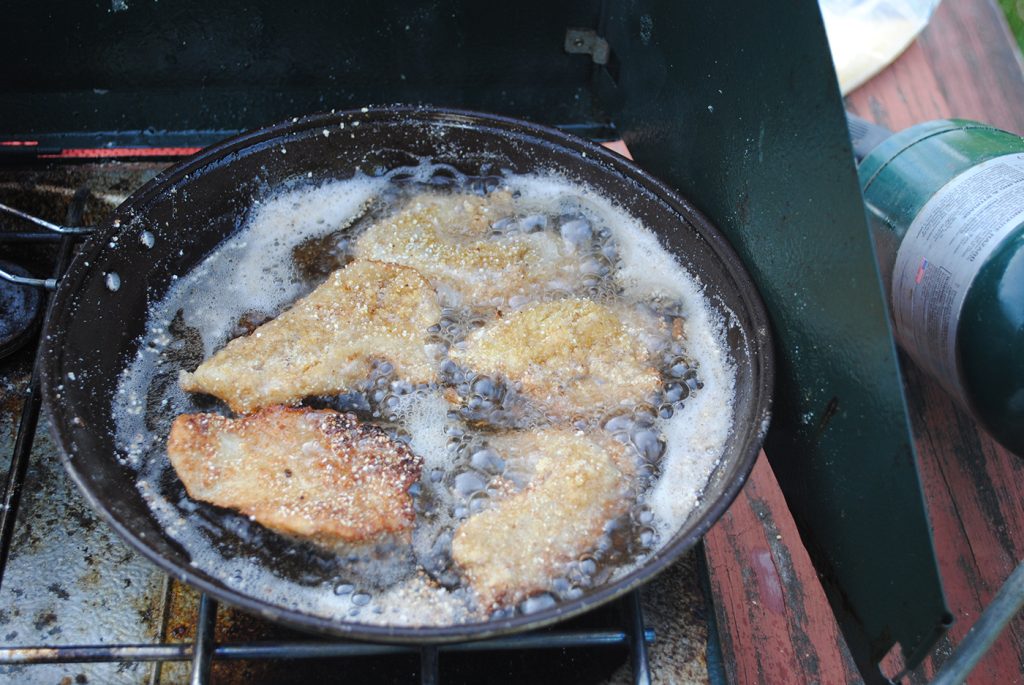
Certain that the other boats were well behind, I spotted a small but inviting sandy beach and pulled ashore. I gathered enough rocks to build a tidy cairn to support my traveling skillet, built a fire inside and filleted the fish. Inside a dry-bag, I’d tucked a bottle of peanut oil, a bag of cornmeal, salt, pepper and a lemon. By the time my friends caught up I had laid out a fish-fry lunch with the golden-brown fillets arrayed on fresh-cut ferns.
Their first reaction was to blurt: “Where does a guy with a catch-and-release sticker get the skills and gear to do that?�
Their next act was to devour those fillets, making no attempt to conceal their gusto.
My friends bring up that contradiction every time the subject of catch-and-release arises. But catch-and-release doesn’t need to be a philosophical conflict.
The catch-and-release concept has grown in popularity over the past 20 years of so, and it certainly has its appropriate place. I’m not shy about attributing the much-improved trout fishing in our area, in part, to catch-and-release, whether legally mandated by the Fish and Boat Commission or self-imposed by anglers themselves. Years ago, it was a rare angler who ever considered releasing any legal-size trout. Today, Fish and Boat Commission surveys show that a majority of trout anglers practice catch-and-release — at least sometimes.
The other factor that’s contributed to better trout fishing in the region is improving water quality, which anyone who began fishing around here in the 1960s will affirm.
Catch-and-release fits particularly well into modern trout fishing. Most trout fishing depends on hatchery-raised fish that are stocked for anglers’ enjoyment. But those fish cost the Fish and Boat Commission somewhere around three dollars apiece to plant in your favorite stream, and the agency is facing financial ruin with no hint of a fishing license fee hike on the legislative horizon. So, a catch-and-release ethic in trout fishing helps stretch the Fish and Boat Commission’s dwindling stocking dollars, because more than one fisherman can catch the same trout.
All that said, no angler should feel ashamed of taking home an occasional limit of hatchery trout for a meal. Eating fish you’ve caught rounds out and completes the fishing experience. The problem is that not all kinds of fishing can accommodate that indulgence all the time. Discretion is called for.
Wild trout, which never saw a hatchery, do live in some area streams. But there is no way that precarious resource could ever support the recreational demand for the trout fishing experience, which is why we anglers have become so hooked on hatchery trout. To be frank, it’s hard to justify killing an uncommon wild trout that barely meets the 7-inch minimum. Such a fish is far more valuable alive in the stream, reproducing its unique kind, than providing a snack from a skillet.
Catch-and-release has caught on in bass fishing, too. Although I’ve eaten them, and they can be quite good, bass aren’t always highly esteemed as a food fish anyway. But the main reason for the spreading catch-and-release mindset in bass fishing is peer pressure. Most bass anglers just don’t like to be seen by other bass fishermen, killing a bass. It’s become sort of bad taste, although it’s perfectly legal when in-season and when the bass meets minimum size. Bass-fishing television shows that preach catch-and-release have undoubtedly had an impact on these attitudes.
Thankfully, there are angling opportunities where the catch-and-release concept is not even an issue, resulting in some of the purest fishing fun you can have. Sunfish, especially bluegills and crappies, yellow perch and several catfish species are abundant and often under-utilized. As a happy coincidence, they also happen to provide excellent eating, such as the sunfish fillets my friends enjoyed on that long-ago float trip.
Few outdoor activities are less complicated, but more satisfying, than to catch a stringer of bluegills, perch or crappies and partake of them for a meal, celebrating the shared experience. The limits are liberal, there is no closed season, and on most waters there is no minimum size. You do, however, need a fishing license, as for any fish.
I like to prepare my sunfish at the lake or stream, but it’s simpler to start out at home.
Here are the main points: Keep the fish alive or iced until you get home. Learn to fillet; it’s easier than it sounds. Use about a half-inch of good oil (not olive oil for this; peanut oil is excellent) in a cast-iron or other heavy skillet and get it hot before adding the fish. Dip the fillets in beaten egg, then coat with cornmeal. Fry about two minutes per side, or until golden-brown. Serve with lemon, salt, tartar sauce or a tomato-based cocktail sauce. You can get fancier than that after you gain experience. But make plenty, you’ll need it.
It’s delicious, inexpensive, satisfying and your fishing friends will invite you along on all their trips.