

Fayette Conservation District serves county鈥檚 surge in small-scale farming
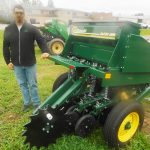
According to Pierce Willson, agricultural coordinator with the Fayette County Conservation District, it鈥檚 not too late to plant some varieties of late-season, cold-tolerant food-plot crops for wildlife. And, Willson says, the district now has the equipment small-scale planters need to make that happen.
Willson recently returned from a trip to Lancaster County, where the Fayette Conservation District purchased a new Esch 5503 no-till planter. The conservation district is making the implement available on rental to gardeners, nature enthusiasts, hunters and farmers for planting smaller acreages within Fayette County in vegetable crops, grains, wildlife food plots or pollinator gardens to attract and sustain butterflies and bees.
鈥淭here鈥檚 a renaissance of small-scale agriculture in Fayette County today,鈥� Willson said. 鈥淚t鈥檚 uplifting to be involved with something that had appeared for a time to be dying out. The interest is widespread and growing, but on a smaller scale than in the past.鈥�
Conservation districts work to conserve soil and other natural resources across the nation. They had their beginnings after the Dust Bowl disaster of the 1930s, when poor farming practices combined with drought and wind to blow away millions of acres of Great Plains topsoil, the most productive soil on earth, and displace thousands of farm families who could no longer live on the impoverished land.
Here in the East, soil erosion from rainfall is a greater threat than wind, and conservation districts assist farmers in planning and using agricultural practices that keep soil in place and out of streams where it can be a serious pollutant. No-till planting is a relatively recent development in soil conservation that Fayette and other districts across Pennsylvania promote. 鈥淣o-till,鈥� as it鈥檚 generally referred to, allows planting crops without conventional plowing of the ground, which leaves the soil exposed to erosion. A special planting implement is used to open a narrow furrow, insert the seed, then close and compress the row as the machine passes. No-till allows planting directly into grass-cover, weedy fields or last season鈥檚 crop residue without plowing.
The Fayette District has owned a large no-till planter for several years and rents it out to farmers at low cost. Willson explained that county farmers generally use the district鈥檚 big planter to plant fields averaging about 25 acres in size. He said the machine is in demand and busy from early spring until fall when it goes into winter storage at the Fayette County Fairground.
鈥淥ur big no-till planter has been a popular resource for farmers,鈥� Willson said. 鈥淏ut the spiking interest in specialty crops and food plots got us wondering if there might be a way we could accommodate smaller-scale agriculture. You can鈥檛 even pull the big planter without a minimum 50-horsepower tractor, and not many gardeners or hunters planting food plots have access to that kind of machinery.鈥�
The district鈥檚 new smaller no-till planter can be pulled with most home-and-garden utility tractors or, Willson hopes, maybe even with larger-model UTVs that many hunters now own. No one has yet used the new planter and Willson and the conservation district are eager to help county residents adapt it to their needs.
鈥淲e can offer basic advice on crop selection and seasonal plantings,鈥� Willson said. 鈥淏ut more technical assistance, like soil testing, needs to be arranged through the Penn State Agricultural Extension office.鈥�
Willson sees a niche for the smaller planter with hunters who plant food plots to attract deer, or even bee-keepers who want to provide their bees a concentration of a particular flower. 鈥淎 growing proportion of our big planter rentals has been by hunters,鈥� Willson said. 鈥淢ost hunters, though, can鈥檛 or don鈥檛 need to plant more than an acre of two. This smaller planter is ideal for that use, and in a responsible way, without contributing to soil erosion.
鈥淭his is how you get conservation implemented on the ground,鈥� Willson continued. 鈥淭he district is making the needed equipment accessible and affordable to farmers and smaller-scale growers with diverse goals and limited acreage.鈥�
Any Fayette County resident interested in using the new no-till planter should contact Pierce Willson at the Fayette County Conservation District, located at 10 Nickman Plaza in Lemont Furnace. Call Willson at 724-438-4497.
To learn more about the Fayette County Conservation District鈥檚 diverse programs serving the people and natural resources of Fayette County, go online to www.fayettecd.org