

Resilient Spring: Nature amazes despite snow and record cold
A pleasure of reaching retirement is morning coffee on the porch. Until recently, I sipped my morning brew in the pre-dawn dark in the truck on my way to the shop. That interlude was its own kind of private pleasure. But sunup coffee sessions now come with nature to observe, and I鈥檓 fortunate to live where a 12-foot hike from the house offers a front-row seat.
This spring has felt more like winter than did January or February. Still, there has been a lot to see and hear. I haven鈥檛 heard a turkey gobble since May 2, the first day of the hunting season, which has cooled my ardor for going after one with shotgun and call. A tom gobbled a half-dozen times that morning as the sun crested Laurel Ridge, but then our local coyote pack set to howling and that turkey clammed up, reluctant to betray his position. He hasn鈥檛 gobbled since, but the snow, sleet, and wind-chill may have suppressed his reproductive ardor more than fear of roving predators.
Deer antlers are growing fast, their progress unimpaired by the freezes. A buck with main beams already branching beyond his ears sauntered by while I watched him through my coffee鈥檚 vapor. Those tender antlers are fuzzy and bulbous now, nothing like the polished tines he鈥檒l wield in November.
Songbirds offer the most continual amusement, but they鈥檝e also complicated access to my observation post. There鈥檚 a robin nest in the mountain laurel next to my chair, and a pair of phoebes built their delicate nursery on the horizontal span of downspout above the door. So, instead of the direct route, which I fear might scare them off their clutches in the cold, I go out through the garage and approach my seat from the yard. With coffee cup in hand, that鈥檚 not much of a detour. But last week鈥檚 20-odd-degree nights prompted a late-season fire in the woodstove, and lugging armloads of firewood around the long way from my woodshed felt like an extreme accommodation of bird-life. I decided to view the exertion as the price I pay for pleasure.
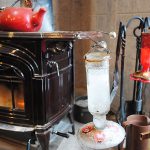
Last week鈥檚 weather had to be a challenge for hummingbirds. The deep cold must have drained their metabolic reserves, and snow crusted all the flowers where they could replenish themselves with nectar. I felt for the first time that our sugar-water feeders served the hummers as survival advantage rather than just entertainment for us. But I鈥檇 overlooked the temperature, and when I went out鈥搕he long way鈥揳t daybreak with coffee and a blanket, I saw that the syrup was frozen solid. I took them all down and carried them鈥搕he long way鈥搃nside and hung them next to the woodstove.
No hummingbirds appeared while the feeders thawed, and I feared they鈥檇 frozen too. But when I brought the feeders back out鈥搕he long way鈥揳 hummer zoomed past my ear. And when I hung them in their places both the red-throated males and plainer females perched and took long deep drafts of syrup. It was nice to know they鈥檇 endured the storm and could re-fuel.
Maybe it鈥檚 being at home so much, instead of driving, that explains the exceptional diversity of birds I鈥檝e seen this spring. This list could get tedious for those who are not enthusiastic birders, but I would invite all readers with a casual interest in nature to look up these named birds on-line, just to be astounded by the array of beautiful birds that inhabit our local woodlands. From my coffee perch I鈥檝e identified the following list of warblers in the past two weeks鈥揷hestnut-sided warbler, black-throated green warbler, black-and-white warbler, American redstart, hooded warbler, magnolia warbler, and ovenbird (technically a warbler, though its behavior and appearance are unusual). I also noted a common yellowthroat while kayaking a mountain stream with a friend. Two other sightings suggest that I鈥檇 be a better trout fishermen if I weren鈥檛 distracted by the birds along the shoreline. While fishing a stream in Ohiopyle State Park I was entertained by a Louisiana waterthrush, and what I consider the most beautiful of our songbirds鈥搕he black-throated blue warbler.
Also evident along that stream were an osprey and a great-blue heron, both of which prove with their presence, despite my pathetic catch, that trout are available there to the skillful.
It鈥檚 been an atypical spring in many ways, but nature鈥檚 wonders persist
Ben Moyer is a member of the Pennsylvania Outdoor Writers Association and the Outdoor Writers Association of America.