

The Munsey Clan: Uniontown family one of greatest from Fayette County in athletics
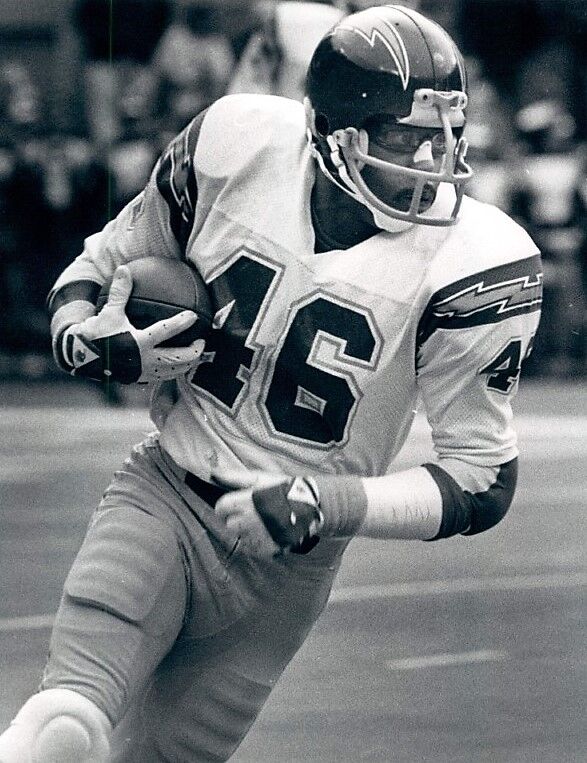
Submitted photo
Uniontown graduate Chuck Muncie is shown during his playing days with the San Diego Chargers.
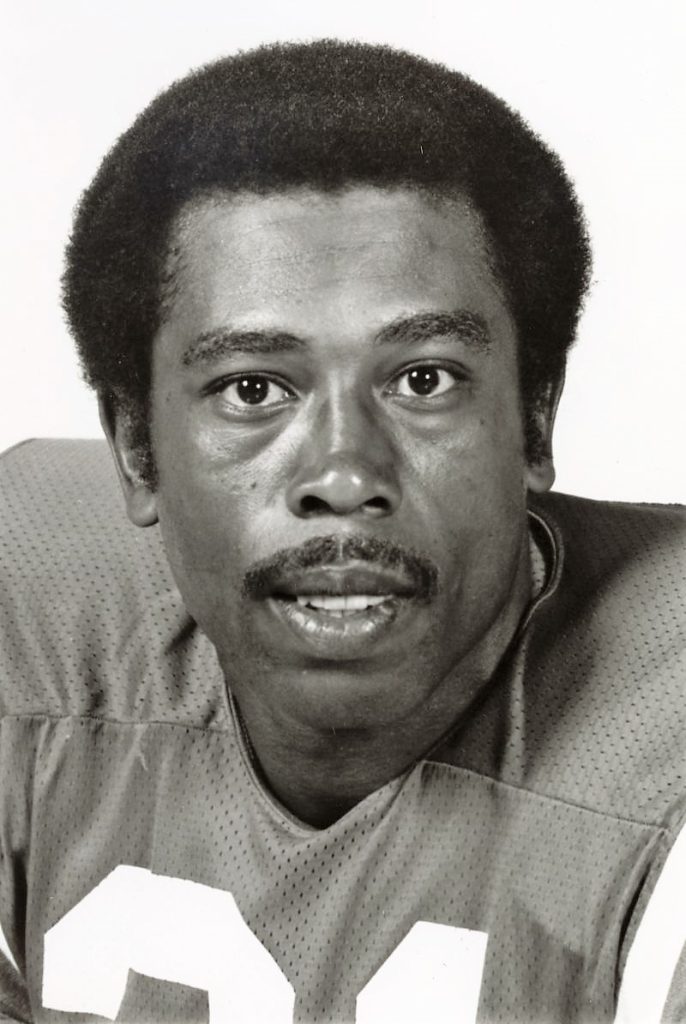
Associated Press
In this November 1975 file photo, Baltimore Colts cornerback Nelson Munsey, a Uniontown graduate, poses for a photograph.
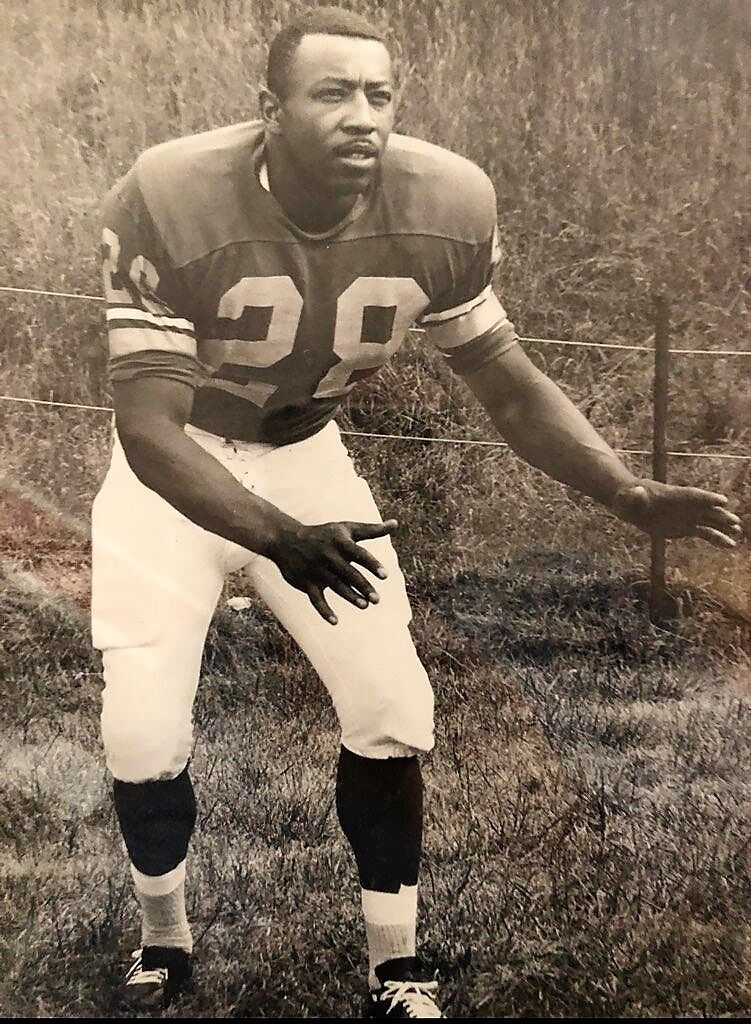
Uniontown graduate George Munsey is shown during his playing days with the Pennsylvania Mustangs semi-pro football team.
Submitted photo
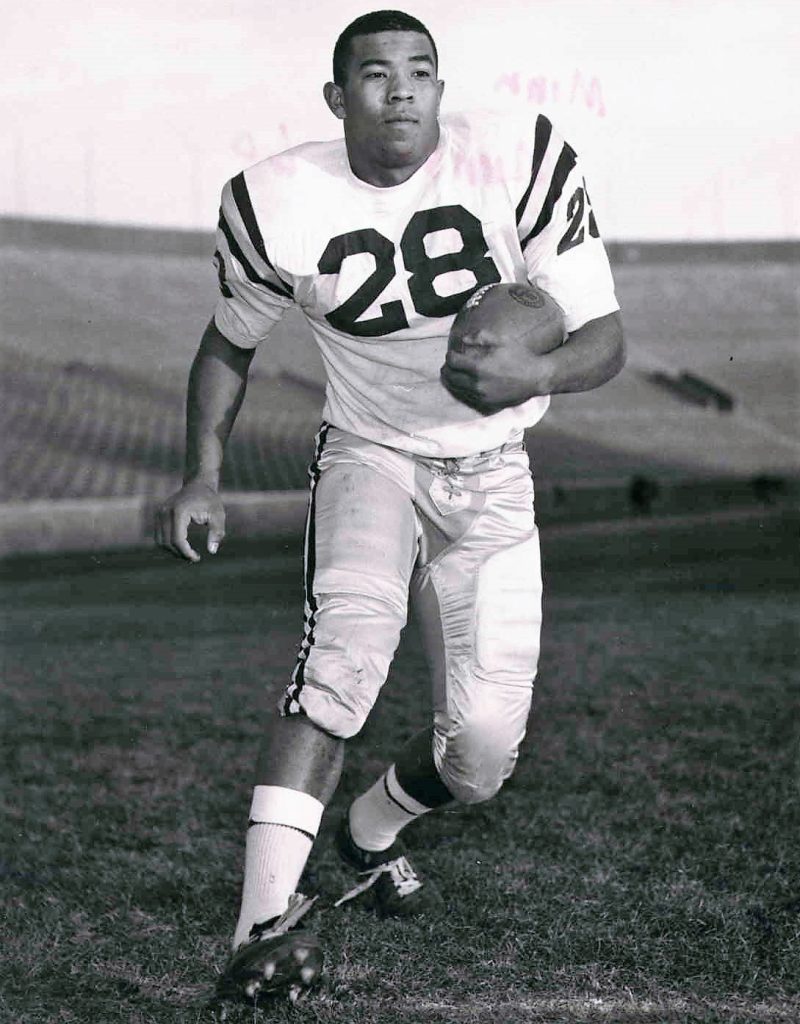
Uniontown graduate Bill Munsey is shown during his football playing days at the University of Minnesota.
Submitted photo
Fayette County has been blessed with some great families of athletes through the years. At the top of the list has to be the Munsey family who were part of the rich history of Uniontown High School athletics.
George Munsey was the first of six children of George Sr. and Evelyn Little Munsey. He was born in 1935. He played briefly for Uniontown High School, but he didn鈥檛 have the opportunities that his younger siblings would have.
After high school George served in the Army. Munsey was signed by the Minnesota Vikings in 1961, even though he did not play college football. He was playing semi-pro football in the Pittsburgh area. George was released by Vikings head coach Norm Van Brocklin in training camp on July 16, 1962.
He went back to semi-pro football and played one season for the Pennsylvania Mustangs in 1965. The 6-foot-1, 210-pound Munsey played corner back on a team that finished second in the Northern Division of the NAFL with a record of 4-4.
Bob Lippencott, who has been profiled in Memory Lane, was a teammate of Munsey鈥檚 with the Pennsylvania Mustangs.
鈥淗e was a very good athlete,鈥� Lippencott recalled. 鈥淚 do remember that our defensive backfield had two guys from Fayette County, Don Soberdash and Munsey. I was a linebacker on the left side and Munsey was behind me and I didn鈥檛 have to worry about somebody taking the outside or the inside because George was a real good defensive back.鈥�
George relocated to Minneapolis, where his widowed mother, brother Bill and sisters Patty and Marsha had established families and made their homes. He attended night school at Antioch College. George was a social worker at Hennepin Technical College in Minneapolis until his untimely death in 1983 at the age of 49.
Bill Munsey was born May 5, 1941. He was an outstanding athlete in track and basketball for Uniontown, but it was on the football field that he became a legend. He was the star running back on the maroon-and-white鈥檚 1957 team, which went undefeated at 9-0.
缅北禁地 were a stepping stone for Black athletes in the 1950s and 1960s and Uniontown was a hot bed for sports. The playground system flourished and great athletes seemed to be on every corner.
鈥淲e didn鈥檛 have a steel mill, but the attitude was the same as in a mill town,鈥� Munsey explained. 鈥淵ou had to watch yourself in Uniontown. Any kid you鈥檇 meet might be able to outplay you, outrun you or clean your clock.鈥�
The East End Playground was also across the street from the Munsey home, and that鈥檚 where Sandy Stephens and Bill Munsey honed their athletic skills. It truly was a playground of champions.
Several colleges pursued Munsey when he graduated from Uniontown in 1959.
Ohio State put the rush on Munsey, but Stephens convinced his childhood buddy that Minnesota was the place for him.
At the time, opportunities for black athletes remained limited. At the University of Minnesota, however, coach Murray Warmath recruited three black players, including Red Raiders quarterback Stephens, for his 1959 team. The squad finished last at 1-6 in the Big Ten conference, with a 2-7 overall record.
Munsey joined the Golden Gophers the following year, which proved to be one of the more remarkable turnarounds in college football history. The Gophers improved to 8-2 to earn the school鈥檚 first invitation to the Rose Bowl in Pasadena, Calif.
The favored Gophers lost 17-7 to the University of Washington at the Rose Bowl on Jan. 1, 1961. Munsey, playing right halfback, ran 18 yards on an option play to score his team鈥檚 only touchdown.
Minnesota was back at the Rose Bowl a year later, this time beating UCLA 21-3. Munsey scored the game鈥檚 final touchdown on a two-yard run.
After he graduated from Minnesota in 1962, Munsey was in great demand from professional teams on both sides of the border. The B.C. Lions of the Canadian Football League courted the 6-foot, 217-pound player, who was also selected by the Cleveland Browns in the fourth round of the NFL draft.
After five All-CFL seasons for the British Columbia Lions, he played his final pro season at Cleveland in 1968.
Munsey put on a show on the biggest stage as his two touchdowns helped the B.C. Lions beat the Hamilton Tiger-Cats in the 1964 Grey Cup game in Toronto.
He scored two touchdowns in the third quarter, one on offense and another on defense. Having replaced injured running back Bob Swift, he took a handoff from quarterback Joe Kapp, and broke over right guard for an 18-yard touchdown. Later in the quarter, at the B.C. 35-yard line, Hamilton quarterback Bernie Faloney tried to lateral to halfback Johnny Counts, who dropped the ball. In the ensuing scramble for the fumble, Munsey picked up the ball and ran 71 yards for another touchdown.
鈥淚 was always first-team defense,鈥� Munsey recalled. 鈥淥ur offensive running back Bob Swift got hurt in the first or second quarter and I was called on to go both ways. Fortunately, I had a good game and I scored a few touchdowns and still took my turn at defense and did a good job there. We won the game and I was lucky enough to be named MVP.鈥�
Munsey鈥檚 performance won him the spot he had long coveted, as he was eventually moved to the Lions offensive backfield. He led the team in rushing yards in 1966 and 1967.
He retired having played 76 games. He took a job as a commodities broker with Pillsbury Corp. in Minnesota. He later moved to California as the company鈥檚 regional manager. His family believes he was the first black commodities broker in the U.S.
Munsey spent 20 years in Fresno in the high-pressure field of brokering commodities 鈥� 16 successful years for Pillsbury, two years with his own company, which went bankrupt, and two more with a Fresno firm. Munsey lost his house in the bankruptcy and was separating from his wife of 21 years when he became ill with a heart condition. He passed away on March 17, 2002 at the age of 60. He was inducted into the Fayette County 缅北禁地 Hall of Fame in 2013.
Nelson Munsey was born July 2, 1948 and was an outstanding player for Uniontown as a running back and defensive back on teams that went 7-1-1 in 1963 and 8-0-1 in 1964 (with the tie coming against Johnstown in the opening game 6-6). In 1965 the Red Raiders won the WPIAL Championship beating Butler, 14-7, and posting a 10-0 record. Uniontown鈥檚 mighty 1965 WPIAL AA champions earned the highest numerical index ever in Dr. Roger B. Saylor鈥檚 Pennsylvania scholastic football ratings.
Nelson was also an outstanding track performer for the Red Raiders. After graduating from Uniontown in 1966 he played college football at Hiram Scott Jr. College, and then at the University of Wyoming where he played defensive back for the Cowboys.
Uniontown and Wyoming teammate Gene Huey remembers Nelson.
鈥淗e was tremendous,鈥� Huey offered. 鈥淗e was a running back and defensive back in high school. That whole family were great athletes. He could play running back or defensive back because of his speed.鈥�
Munsey鈥檚 football career got a jump start when began to play for the Norfolk Neptunes in 1969. He signed with the Baltimore Colts as a free agent. Munsey had two touchdowns, seven interceptions and five fumble recoveries in 72 games with the Colts, all at right corner back. Munsey spent the 1978 season with the Minnesota Vikings but never saw any action.
He passed away on July 8, 2009 from heart disease.
Chuck Muncie was born March 17, 1953 and was also an outstanding athlete at Uniontown High School. Muncie came from a sports family. His three older brothers all played pro football. So the seeds were planted at an early age.
鈥淭hat was just something we did,鈥� Muncie explained. 鈥淭hat鈥檚 how East End was back in Uniontown. I lived right across the street from East End playground and playing sports was a part of our everyday life and fortunately it was something that propelled me to the heights that I achieved, but my brothers, there was a big age gap between me and my brothers, although I definitely, when people ask me who were the most outstanding athletes that you look up to, I say my brothers because they were all very successful.
鈥淚t was something that was never forced on us, there was never any pressure on us to play sports. My mom and dad were into academics and believed that no matter what you did you would be able to achieve if you put your nose to the grindstone.鈥�
Muncie didn鈥檛 play football at Uniontown after a tackle left him with a concussion 鈥� his mother forbade him to play football and Muncie concentrated on basketball and got a scholarship to Arizona Western and then fate stepped in.
鈥淥ne of the coaches, Charlie Dine, had actually played in Canada against my brother Bill,鈥� Muncie recalled. 鈥淗e recognized the name Muncie although it was spelled different. He saw on the transcript that I was from Uniontown, Pa., so he called my brother Bill and asked if he had a younger brother named Chuck and my brother said yes. Charlie asked if he could play football and my brother said yeah, he鈥檚 very good, but my mom wouldn鈥檛 let him finish out his senior year because of an injury and if you can ever get him out on the field you might have yourself a pretty good ballplayer.鈥�
Muncie was persuaded to play football because of the extra stipend he would earn.
Following one year at Arizona Western, Muncie was recruited heavily by Stanford, but John Ralston left Stanford for the Denver Broncos and his assistant Mike White became the head coach at the University of California and convinced Muncie to come to Berkeley.
Muncie led a resurgence at Cal and almost won the Heisman trophy in 1975. Drafted by New Orleans in 1976 and then traded to San Diego in 1980, Muncie rushed for 6,702 yards and 71 touchdowns in his NFL career and caught 263 passes for 2,323 yards and three touchdowns.
Muncie was considered one of the best running backs of his era until cocaine problems forced him into retirement. His drug problems eventually landed him in prison. Afterwards, he turned his life around by helping others through mentoring programs. He founded the Chuck Muncie Youth Foundation. He was inducted into the Fayette County 缅北禁地 Hall of Fame in 2012.
Chuck Muncie died of a heart attack on May 13, 2013, in Perris, California, near Los Angeles.
An interesting footnote, Muncie鈥檚 other siblings spell their surname as 鈥淢unsey,鈥� because, according to Bill Munsey, Muncie鈥檚 father used various names to avoid paying bills, and used 鈥淢uncie鈥� on hospital forms when Muncie was born.
The two Munsey girls, Patty and Marsha, were outstanding runners, but there wasn鈥檛 a girls track team at Uniontown at that time.
The Munseys were a great athletic family and part of Fayette County鈥檚 great sports history.
George Von Benko鈥檚 鈥淢emory Lane鈥� column appears in the Sunday editions of the 缅北禁地. He also hosts a sports talk show on WMBS-AM radio from 10 a.m. to noon on Saturdays.