

Night sounds
Keystone Elk Country Alliance offers wild experience after dark
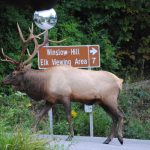 Ben Moyer
Fall brings a whole new menu of outdoor options to western Pennsylvania. One of those options is truly different, even a little unusual. Outdoors, the unusual is often where unforgettable experiences come your way.
“Elk Country After Dark” is a new offering of the Keystone Elk Country Alliance (KECA), the organization that supports Pennsylvania’s wild elk herd and its habitat. KECA also operates the Elk Country Visitor Center, the modern, state-of-the-art educational facility that tells the story of elk in the Allegheny Mountains.
But you need to hurry. KECA staff and volunteers will run “Elk Country After Dark” on the evenings of Wednesday, Sept. 23 and Thursday, Sept. 24 as a fund-raiser to support the group’s education and conservation work. Tickets for the Sept. 23 event have already sold out but openings for the Thursday night experience are still available on KECA’s website at https://experienceelkcountry.com. Guests must be a minimum 21 years of age.
“Elk Country After Dark” will happen on the attractive woods-and-fields landscape surrounding the Elk Country Visitor Center, located just north of Rte. 555 in Benezette, Elk County. There is no direct, easy way to get there from our corner of the state but that’s part of the experience. Benezette is rural and remote, which is why elk live there. You can take Rte. 219 north from Somerset, or Rte. 119 north from Greensburg. Either way, it’s a curvy, indirect but scenic journey. You’ll know you’re getting close just past Weedville, when the big yellow signs warning of elk on the road slow your progress even more. If you’ve ever hit a deer with your car, you will not want to hit an elk.
The featured events will begin at 7 p.m. on the prescribed dates in the Jack and Jean Parker Outdoor Classroom adjacent to the Visitor Center. Participants will enjoy a “grazing table” of various meats, cheese, fruit, vegetables, and dips, as well as liquid refreshments. In addition to soft drinks, the refreshments include wine and beer, which explains the minimum age threshold.
After the “grazing” KECA staff will make a presentation on elk, their history in Pennsylvania, and the challenges of managing a herd of 800-pound wild animals with antlers that could cradle a lawn tractor. Guests will then disperse onto the grounds-with guides-to settle in for a wild nocturnal experience.
“Elk Country After Dark is an experience like no other and will leave you fully immersed in the magic that happens after the crowds disappear and the sun sets in Pennsylvania’s Elk Country,” KECA stated in an online promotion.
Participants might hear the eerie wails of bugling bull elk from the darkness, the clash of battling antlers, howling coyotes, hooting owls, and other creatures of the night. Late September is the peak of the elk mating season, or elk rut. Elk in rut are active, vocal, mobile, and captivating to see, and hear.
“You will be in sensory overload as you experience something like never before…something that not many ever get to say they’ve done,” continued the KECA statement.
These night-time sessions, KECA says, will happen “rain or shine,” although if truly severe weather is predicted, the events will be postponed and those with reservations notified at the earliest possible time.
Participants should probably plan to stay overnight somewhere in region. This writer has made the night drive home many times after a one-day roundtrip to Benezette for elk viewing. On a recent such visit my wife Kathy went along. Winding south on Rte. 219, she remarked just before we reached Carrolltown, Cambria County that we must be in the Twilight Zone after so many curves in the darkness. Rte. 219 becomes a limited-access 4-lane freeway just south of there.
The allure of elk has brought an economic boost to an otherwise forgotten region of northern Pennsylvania. Many new inns and bed-and-breakfasts offer lodging, several campgrounds are handy, and conventional motels operate relatively nearby in St. Marys, Ridgway, DuBois, and Clearfield. But elk-viewing in September is amazingly popular and the crowds along the region’s narrow roads or at the formal elk-viewing sites can be daunting. Arrange for lodging as soon as possible.
Elk in Pennsylvania are a surprise conservation success story. A native species of elk roamed the entire state before European settlement. Clearing of forest and unregulated hunting forced those elk to extinction soon after the Civil War. Between 1913 and the early 1920s, the Game Commission introduced elk from the Rocky Mountains to several locations in Pennsylvania. The Benezette area of Elk County was the only place those transplanted elk survived.
Today, after more informed management, habitat improvement, and public education, descendants of those elk are thriving on the Allegheny Plateau. Game Commission biologists estimate that 1,400 of the huge animals now inhabit parts of Elk, Cameron, Clearfield, Centre, and Potter counties. The Commission runs a strictly regulated elk hunting season every fall, with about 100 elk tags for antlered bulls and antlerless females allotted to hunters by lottery.
Visiting Pennsylvania’s Elk Country is a unique and uplifting experience. Being there in the dark, amid the frenzy of the elk rut, would make an enviable story to share with family and friends.