

Bishop鈥檚 rise: WVU cornerback goes from virtual unknown to consensus All-American
 BlueGoldNews.com
EDITOR’S NOTE: This is the first of a two-part look at WVU All-American cornerback Beanie Bishop on how he came out of nowhere to become one of the elite players in college football. Tomorrow we will look behind the scenes at how he drove himself to become a consensus All-American)
—
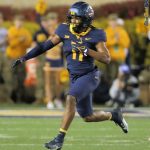
MORGANTOWN — Beanie Bishop, the All-American cornerback for West Virginia, was in Target the other day doing a little shopping for “white T-shirts, black T-shirts and a few groceries” when he was interrupted.
A young West Virginia fan approached.
“You’re my favorite player,” the young fan said to Bishop.
“That was kind of new to me,” Bishop admitted on Monday as the Mountaineers held their pre-Duke’s Mayo Bowl media session.
He’d better get used to it, for people tend to recognize players who are good enough to become just the 13th player in the storied football history of WVU to become a consensus All-American.
And, while all 13 of them, obviously, were star players, Bishop’s route there was unique, coming through the transfer portal without much of a reputation and with more dreams than accomplishments on his resume.
His college experience didn’t offer hints that in this, his sixth season at his third school, he would burst upon the national scene as he led the nation in passes defended with 24 and pass breakups with 20, forcing 17 incompletions to leave him two short of the school single-season record held by Brian King.
His season mirrors his team’s, for while WVU was selected to finish 14th in the Big 12, Bishop was an unknown player from first Western Kentucky and then Minnesota, where he wasn’t a full-time starter.
That’s a big jump in one year to consensus All-American.
“It’s a big accomplishment. I mean, there’s 130-some teams, each one has like 100 players. I don’t know how big the All-American rosters are, but to be on those teams it’s like the elite of the elite guys,” he admitted.
This is especially true for a recruit who had fewer stars than a bad movie review and who was anything but a self promoter.
“You don’t have to do it by being on social media and all those things. You can just put your head down and work,” he said, which is his credo.
“I started at a small school, underrecruited, small kid … a lot of coaches didn’t really believe in me coming out of high school, so I just played with a chip on my shoulder. I have been blessed by God, kept my head down and worked.”
The path was long, possibly the first guy who ever was named All-American for the first time in his sixth season.
He had goals upon his arrival at WVU, maybe even some big goals, but he dared not state them at the time.
“I kind of kept things like the individual accomplishments to myself. I want to win first. If we win, all the other accolades will come in,” he said.
But the reverse is also true. If WVU weren’t 8-4, he probably would not have gotten the accolades, but WVU certainly would not have been 8-4 if Bishop hadn’t played like an All-American.
But he isn’t satisfied, even though he was a finalist for the Jim Thorpe Award, presented each year to the nation’s top defensive back.
“I left a lot of plays out there. If I had caught half the interceptions I dropped, it would probably be sitting here with the trophy,” he said modestly.
He credits those around him with making it possible.
“It just speaks volumes of how everyone in here believed in me. If they didn’t, I wouldn’t be here. They coached me real hard, didn’t let me become complacent, even when I got the Big 12 Newcomer of the Week award and the Big 12 Defensive Player of the Week.
“It’s always like fourth and 1. I’m nowhere near where I want to be. I have dreams and aspirations of playing in the NFL. This is only some of it. I’m just going to keep getting better from here; keep my head down and working.”
But this year was different. He chose WVU with a purpose.
“I came on a mission. I told the guys that some people change schools to get money, to do all those different things,” he said, referring to NIL rewards. “I just set a goal, I want to go to the NFL. I wanted to go somewhere where I had the opportunity to play and make plays. This is the best spot for me. I’m glad I chose West Virginia. The fans, the coaches … it helped me a lot.”