

Waynesburg U. launching nursing immersion lab
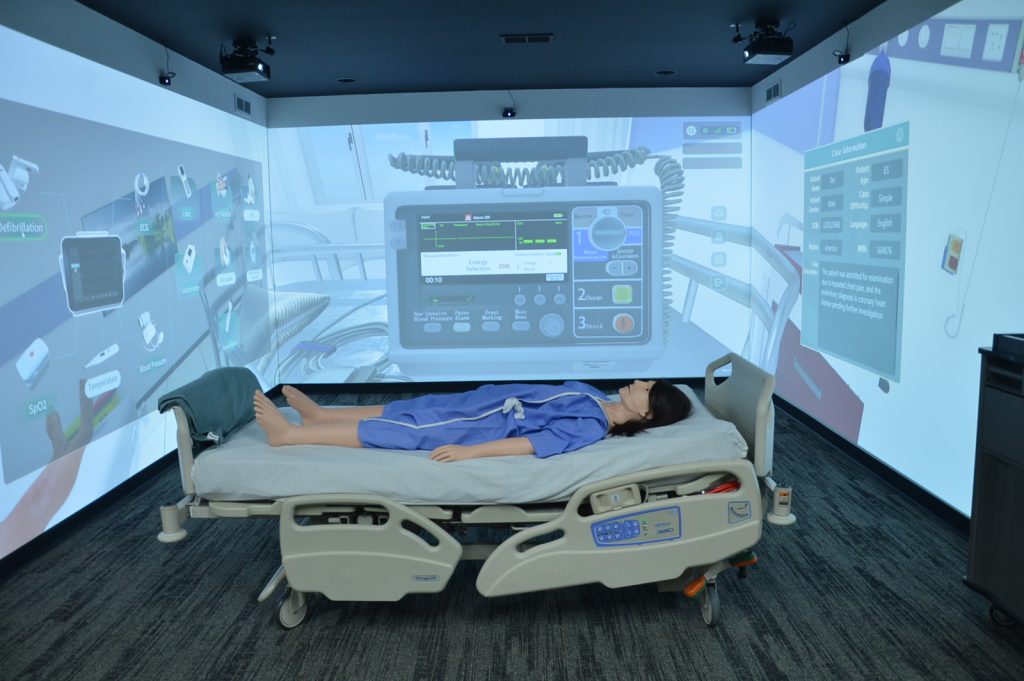
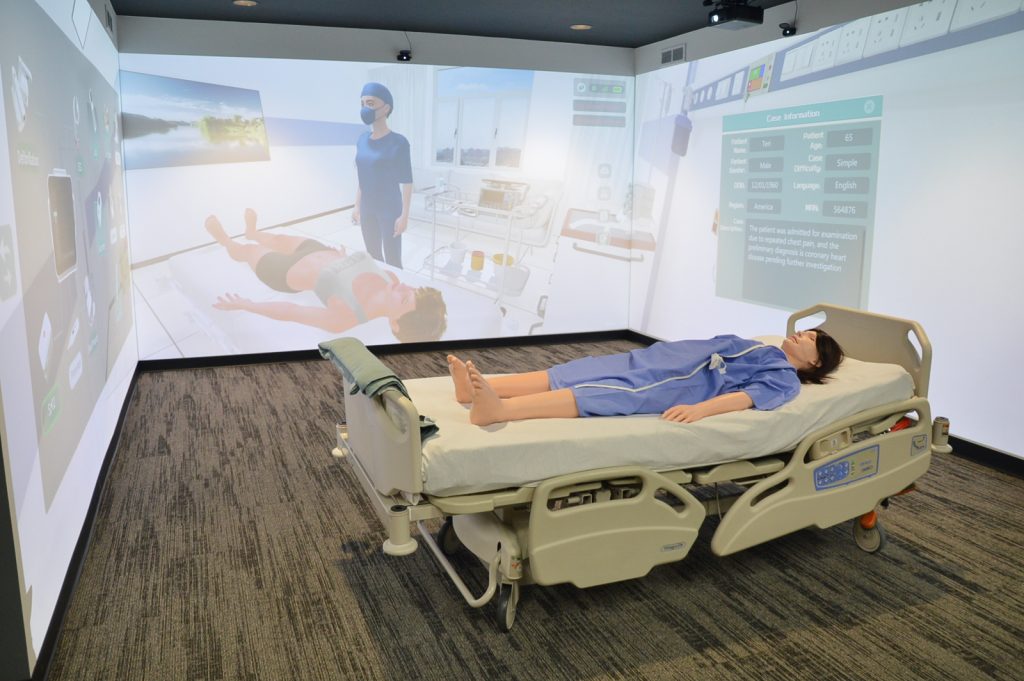
Teri was in trouble.
The 65-year-old patient was admitted with repeated chest pain, with a preliminary diagnosis of coronary heart disease — at least, until more investigation could be done.
But the investigating into what ails the manikin begins next semester, when the first crop of Waynesburg University nursing students will get to use the university’s newly designed immersion lab.
The donor-funded lab places the patient on a bed in front of three interior walls that can be used to project data from the patient’s charts, real-time readings from instruments, and data from the nurses themselves — like the pressure on a CPR compression.
It’s the first immersion lab of its kind in the country to be designed by Nasco Healthcare, which also designed the artificial intelligence-powered manikin the university received in October.
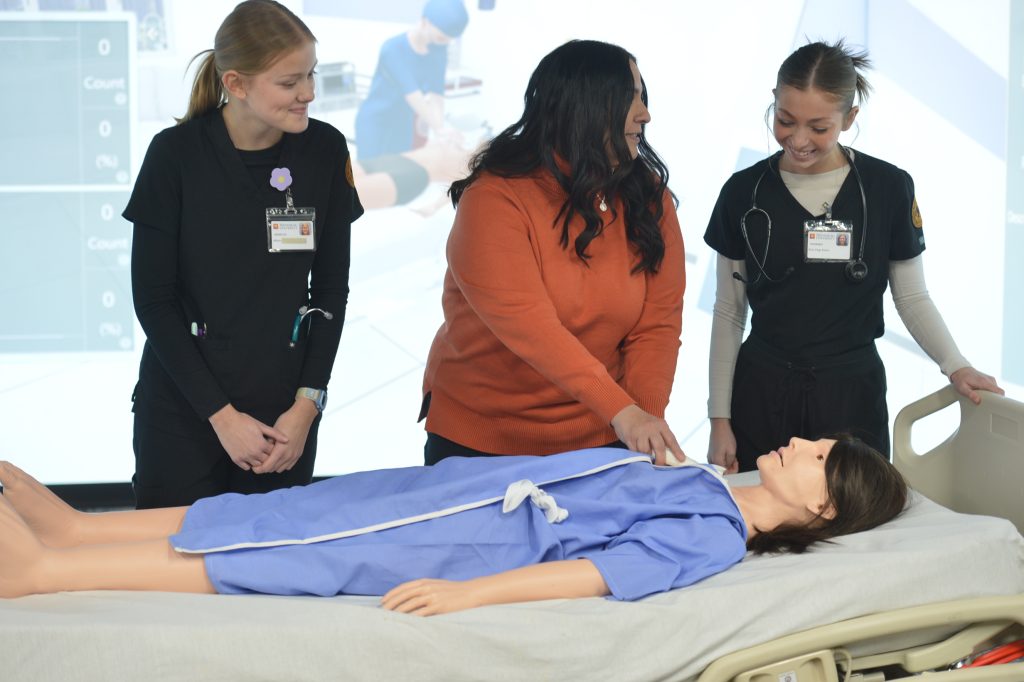
The university learned of the lab when Nasco came to demonstrate the manikin. Eve Weaver, who coordinates the university’s nursing simulation lab, then went to New York to see the new room in action.
“You’re choosing what actions you want to do, and you are seeing what your interventions are in real time,” she said. “So as you’re doing something, you can determine whether or not you are effective or whether or not you are in the right place.”
Information will pop up on-screen to let nurses know.
When taking stethoscope readings, a display of the manikin’s figure will highlight the various points on their body where the nurse should take readings. And when the nurse — or an audience volunteer with a liberal arts degree and no medical training beyond watching “The Pitt” — hits one of those spots, a stethoscope will show up on-screen, accompanied by audio from the patient.
The room works through a combination of three projectors, infrared cameras and infrared lasers that don’t just project images, but allow users to change the settings like a touchscreen.
Paired with an assortment of medical instruments in a nearby cabinet, students can switch between a number of settings, including injections, blood pressure monitoring, labs, ultrasound, glucometer use, pulse oximetry, CPR and defibrillation.
The system comes with predesigned scenarios, though instructors can also create their own.
“It really brings things full circle for the students, and it appeals to this tech-savvy crowd that we have in this age range,” said Sherry Zak, the university’s director of nursing. “They are used to doing things on their phones and interacting with chatbots and things of that nature. So having a room like this really appeals to them, and gets them excited about learning.”
The new room is in Stewart Science Hall, just down from the existing nursing simulation lab. That lab also offers high-fidelity simulations. What makes the new room different is the ability to see real-time feedback on-screen showing how the patient is responding to the nurse’s actions.
Though the other simulation room resembles the hospital rooms where the students will work some day, “they have to imagine these things happening,” Zak said.
“Here, they are happening, so it puts them in a real setting where things are happening in real time,” she said. “It takes the guesswork out of it.”
With the simulation providing real-time data, students will have more autonomy, Weaver said. “We’re back here watching what they’re doing, versus I’m standing over you telling you if this isn’t correct or this is what your result is, this is what your glucose level is … this will provide that information for you, so it’s more realistic,” she said.
Students have only had limited exposure, but they’re already excited about the chance to play out real-world scenarios, Zak said.
“They love to touch the walls, too,” she said.
Zak is excited, too. She compared it to the flight simulators that enable pilots to log thousands of hours outside of a real-life cockpit.
“What this does is it allows our students to make mistakes real time, to kind of learn from those mistakes in here, in this kind of secure environment, before they go out there,” she said.